David Orenstein | Picower Institute for Learning and Memory
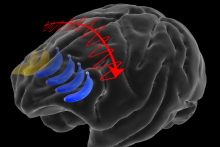
To produce your thoughts and actions, your brain processes information in a hierarchy of regions along its surface, or cortex, ranging from “lower” areas that do basic parsing of incoming sensations to “higher” executive r
More than 20 years ago, neuroscientist Nancy Kanwisher and others discovered that a small section of the brain located near the base of the skull responds much more strongly to faces than to other objects we see.
Tristan Davies | Department of Brain and Cognitive Sciences
BCS and Building 46 leadership, faculty, postdocs, graduate students and staff have taken a firm stand against anti-Black racism and begun collaborating on actions and commitments to recognize, understand, and address systemic racism in our own community and society at large.
David Orenstein | Picower Institute for Learning and Memory
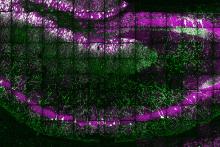
Among the many things rodents have taught neuroscientists is that, in a region called the hippocampus, the brain creates a new map for every unique spatial context — for instance, a different room or maze.
While doing a postdoc about 15 years ago, Ila Fiete began searching for faculty jobs in computational neuroscience — a field that uses mathematical tools to investigate brain function.
Sabbi Lall | McGovern Institute for Brain Research
Deep learning systems are revolutionizing technology around us, from voice recognition that pairs you with your phone to autonomous vehicles that are increasingly able to see and recognize obstacles ahead.