

Main navigation

  • About BCS
    • Mission
    • History
    • Building 46
      • Building 46 Room Reservations
    • Leadership
    • Employment
    • Contact
      • BCS Spot Awards
      • Building 46 Email and Slack
    • Directory
  • Faculty + Research
    • Faculty
    • Areas of Research
    • Postdoctoral Research
      • Postdoctoral Association and Committees
    • Core Facilities
    • InBrain
      • InBRAIN Collaboration Data Sharing Policy
  • Academics
    • Course 9: Brain and Cognitive Sciences
    • Course 6-9: Computation and Cognition
      • Course 6-9 MEng
    • Brain and Cognitive Sciences PhD
      • How to Apply
      • Program Details
      • Classes
      • Research
      • Student Life
      • For Current Students
    • Molecular and Cellular Neuroscience Program
      • How to Apply to MCN
      • MCN Faculty and Research Areas
      • MCN Curriculum
      • Model Systems
      • MCN Events
      • MCN FAQ
      • MCN Contacts
    • Research Scholars Program
    • Course Offerings
  • News + Events
    • News
    • Events
    • Recordings
    • Newsletter
  • Community + Culture
    • Community + Culture
    • Community Stories
    • Outreach
      • MIT Summer Research Program (MSRP)
      • Conferences, Outreach and Networking Opportunities
    • Post-Baccalaureate Research Scholars Program
    • Get Involved (MIT login required)
    • Resources (MIT login Required)
  • Give to BCS
    • Join the Champions of the Brain Fellows Society
    • Meet Our Donors

Utility Menu

  • Directory
  • Apply to BCS
  • Contact Us

Footer

  • Contact Us
  • Employment
  • Be a Test Subject
  • Login

Footer 2

  • McGovern
  • Picower

Utility Menu

  • Directory
  • Apply to BCS
  • Contact Us
Brain and Cognitive Sciences
Menu
MIT

Main navigation

  • About BCS
    • Mission
    • History
    • Building 46
    • Leadership
    • Employment
    • Contact
    • Directory
  • Faculty + Research
    • Faculty
    • Areas of Research
    • Postdoctoral Research
    • Core Facilities
    • InBrain
  • Academics
    • Course 9: Brain and Cognitive Sciences
    • Course 6-9: Computation and Cognition
    • Brain and Cognitive Sciences PhD
    • Molecular and Cellular Neuroscience Program
    • Research Scholars Program
    • Course Offerings
  • News + Events
    • News
    • Events
    • Recordings
    • Newsletter
  • Community + Culture
    • Community + Culture
    • Community Stories
    • Outreach
    • Post-Baccalaureate Research Scholars Program
    • Get Involved (MIT login required)
    • Resources (MIT login Required)
  • Give to BCS
    • Join the Champions of the Brain Fellows Society
    • Meet Our Donors

News

News Menu

  • News
  • Events
  • Newsletters

Breadcrumb

  1. Home
  2. News
  3. Emery Brown wins Swartz Prize for Theoretical and Computational Neuroscience
October 26, 2020

Emery Brown wins Swartz Prize for Theoretical and Computational Neuroscience

by
David Orenstein | Picower Institute for Learning and Memory
Image
emery-brown-mit-a1.jpg
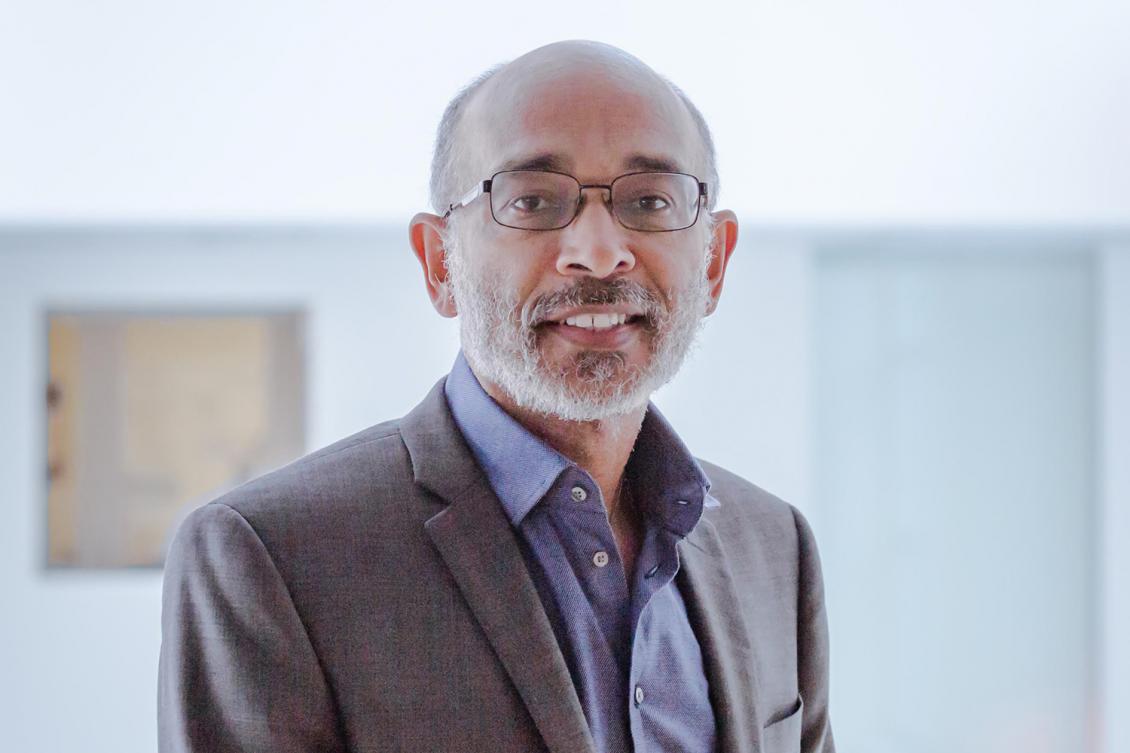
A neuroscientist, statistician, and anesthesiologist, Emery Brown was recognized for his many contributions to understanding brain activity and the neuroscience of anesthesia.

The Society for Neuroscience (SfN) announced today that it has awarded the Swartz Prize for Theoretical and Computational Neuroscience to Emery N. Brown, the Edward Hood Taplin Professor of Medical Engineering and Computational Neuroscience at MIT.

Brown, a member of The Picower Institute for Learning and Memory and the Institute for Medical Engineering and Science, as well as the Warren M. Zapol Professor at Harvard Medical School, is a neuroscientist, a statistician, and a practicing anesthesiologist at Massachusetts General Hospital. His research has produced principled and efficient new methods for decoding patterns of neural and brain network activity and has advanced neuroscientific understanding of how anesthetics affect the brain, which can improve patient care.

“Dr. Brown’s seminal scientific contributions to neural signal processing and the theory of anesthetic mechanisms, together with his service as an educator and a physician, make him highly deserving of the 2020 Swartz Prize,” SfN President Barry Everitt said in a press release announcing the award. “Dr. Brown has demonstrated an unusually broad knowledge of neuroscience, a deep understanding of theoretical and computational tools, and an uncanny ability to find explanatory simplicity lurking beneath complicated observational phenomena.”

In its announcement, the world’s largest neuroscience organization elaborated on the breadth and depth of Brown’s influence in many lines of research.

“Brown’s insights and approaches have been critical to the development of some of the first models estimating functional connectivity among a group of simultaneously recorded neurons,” SfN’s announcement stated. “He has contributed statistical methods to analyze recordings of circadian rhythms and signal processing methods to analyze neuronal spike trains, local field potentials and EEG recordings.”

With regard to anesthesiology, the statement continued: “Brown has proposed that the altered arousal states produced by the principal classes of anesthetics can be characterized by analyzing the locations of their molecular targets, along with the anatomy and physiology of the circuits that connect these locations. Overall, his systems neuroscience paradigm, supported by mechanistic modeling and cutting-edge statistical evaluation of evidence, is transforming anesthesiology from an empirical, clinical practice into a principled neuroscience-based discipline.”

Brown says the recognition made him thankful for the chances his research, teaching, and medical practice have given him to work with colleagues and students.

“Receiving the Swartz Prize is a great honor,” he says. “The prize recognizes my group’s work to characterize more accurately the properties of neural systems by developing and applying statistical methods and signal processing algorithms that capture their dynamical features. It further recognizes our efforts to uncover the neurophysiological mechanisms of how anesthetics work, and to translate those insights into new practices for managing patients receiving anesthesia care.

“Finally,” he adds, “receipt of the Swartz Prize makes me eternally grateful for the outstanding colleagues, graduate students, postdocs, undergraduates, research assistants, and staff with whom I have had the good fortune to work.”

The prize, which includes $30,000, was awarded during SfN’s Awards Announcement Week, Oct. 26-29.

Read the Original Article
Don't miss our next newsletter!
Sign Up

Footer menu

  • Contact Us
  • Employment
  • Be a Test Subject
  • Login

Footer 2

  • McGovern
  • Picower
Brain and Cognitive Sciences

MIT Department of Brain and Cognitive Sciences

Massachusetts Institute of Technology

77 Massachusetts Avenue, Room 46-2005

Cambridge, MA 02139-4307 | (617) 253-5748

For Emergencies | Accessibility

Massachusetts Institute of Technology