January 19, 2021An intro to the fast-paced world of artificial intelligence by Kim Martineau | MIT Quest for Intelligence In two years, the MIT Quest for Intelligence has allowed hundreds of students to explore AI in its many applications.
January 14, 2021James DiCarlo named director of the MIT Quest for Intelligence by School of Science | MIT Schwarzman College of Computing Brain and cognitive sciences professor will lead the Institute’s interdisciplinary initiative to advance research in natural and artificial intelligence.
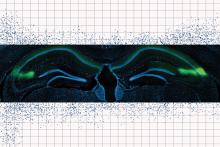
January 14, 2021Scientists seek insight into Parkinson’s, addiction by tracking gene expression in the brain by David Orenstein | Julie Pryor | Picower Institute for Learning and Memory | McGovern Institute for Brain Research Two MIT faculty members earn funding from the G. Harold and Leila Y. Mathers Foundation.
January 12, 2021Stars, brains, and enzymes: a celebration of MIT science by Nicole Estvanik Taylor | MIT Alumni Association First virtual MIT Better World gathering featured MIT researchers sharing some of the ways the Institute excels as a hub of science and innovation.
January 12, 2021Professor Antonio Torralba elected 2021 AAAI Fellow by Jane Halpern | Department of Electrical Engineering and Computer Science EECS faculty head of artificial intelligence and decision making honored for significant and extended contributions to the field of AI.
January 12, 2021Brain waves guide us in spotlighting surprises by David Orenstein | Picower Institute for Learning and Memory The brain uses different frequency rhythms and cortical layers to suppress expected stimulation and increase activity for what’s novel.
January 11, 2021Neuroscientists identify brain circuit that encodes timing of events by Anne Trafton | MIT News Office Findings suggest this hippocampal circuit helps us to maintain our timeline of memories.
January 4, 2021Cortex over reflex: Study traces circuits where executive control overcomes instinct by David Orenstein | Picower Institute for Learning and Memory Frontal brain region overrides reflexive inclination of a deeper, older region when rules require.
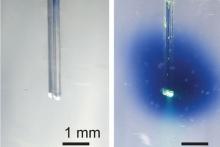
December 17, 2020Controlling drug activity with light by Jill Crittenden | McGovern Institute for Brain Research Miniaturized device activates drugs in a small region deep within the brain.
December 15, 2020To the brain, reading computer code is not the same as reading language by Anne Trafton | MIT News Office Neuroscientists find that interpreting code activates a general-purpose brain network, but not language-processing centers.