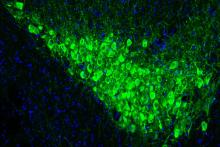
November 18, 2020Identifying the structure and function of a brain hub by Jill Crittenden | McGovern Institute for Brain Research A direct comparison of sensory and higher-order thalamic circuits reveals fundamental differences in how they control the cerebral cortex.
November 18, 2020Bhavik Nagda: Delving into the deployment of new technologies by Hannah Meiseles | MIT News correspondent “We need more technologists in the room while policies are formulated,” says the MIT senior.
November 5, 2020Using machine learning to track the pandemic’s impact on mental health by Anne Trafton | MIT News Office Textual analysis of social media posts finds users’ anxiety and suicide-risk levels are rising, among other negative trends.
November 3, 2020Scientists identify specific brain region and circuits controlling attention by David Orenstein | Picower Institute for Learning and Memory Norepinephrine-producing neurons in the locus coeruleus produce attention focus, impulse control via two distinct connections to prefrontal cortex.
October 27, 2020Study helps explain why motivation to learn declines with age by Anne Trafton | MIT News Office Research on mice suggests aging affects a brain circuit critical for learning to make some types of decisions.
October 27, 2020How a worm may yield insights into the gut-brain relationship by Alison Gold | School of Science The naked eye can barely spot the transparent nematodes at the center of PhD student Gurrein Madan’s neuroscience research. While C.
October 27, 2020Study helps explain why motivation to learn declines with age by Anne Trafton | MIT News Office As people age, they often lose their motivation to learn new things or engage in everyday activities.
October 27, 2020Morgan Sheng wins Julius Axelrod Prize for distinguished achievements in neuropharmacology by Tristan Davies | Department of Brain and Cognitive Sciences, via Society for Neuroscience The Society for Neuroscience has announced that Morgan Sheng, MBBS is the recipient of the 2020 Julius Axelrod Prize.
October 26, 2020Emery Brown wins Swartz Prize for Theoretical and Computational Neuroscience by David Orenstein | Picower Institute for Learning and Memory The Society for Neuroscience (SfN) announced today that it has awarded the Swartz Prize for Theoretical and Computational Neuroscience to Emery N.
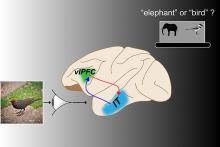
October 20, 2020Neural pathway crucial to successful rapid object recognition in primates by Alli Gold | School of Science MIT researchers have identified a brain pathway critical in enabling primates to effortlessly identify objects in their field of vision.