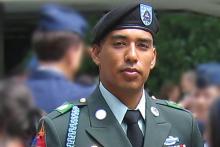
April 28, 2021Investigating the embattled brain by Laura Carter | School of Science Combat veteran and PhD candidate Omar Rutledge drives research on post-traumatic stress disorder.
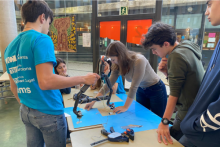
April 26, 2021Sparking studies and conversations in Spain by Brigid McMahan | MISTI MIT-Spain students deliver virtual learning challenges to over 1,800 Spanish students.
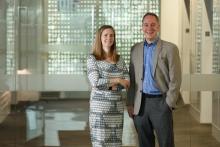
April 22, 2021Five from MIT elected to American Academy of Arts and Sciences for 2021 by MIT News Office Prestigious honor society announces more than 250 new members.
April 13, 2021Nine MIT students awarded 2021 Paul and Daisy Soros Fellowships for New Americans by Julia Mongo | Office of Distinguished Fellowships Fellowship funds graduate studies for outstanding immigrants and children of immigrants.
April 6, 2021School of Science announces 2021 Infinite Mile awards by School of Science Thirteen staff members recognized for dedication to School of Science and to MIT.
March 31, 2021Mice naturally engage in physical distancing, study finds by Anne Trafton | MIT News Office MIT neuroscientists have identified a brain circuit that stops mice from mating with others that appear to be sick.
March 29, 2021Method offers inexpensive imaging at the scale of virus particles by Anne Trafton | MIT News Office Using an ordinary light microscope, researchers can now obtain images with unprecedented accuracy.
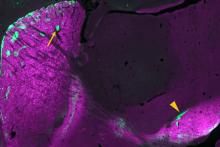
March 24, 2021Gene changes linked to severe repetitive behaviors by McGovern Institute for Brain Research Graybiel lab identifies genes linked to abnormal repetitive behaviors often seen in models of addiction and schizophrenia.
March 12, 2021Artificial intelligence that more closely mimics the mind by Zach Winn | MIT News Office Leveraging years of MIT cognitive science research, Nara Logics incorporates findings about the brain into its AI platform.
March 9, 2021Celebrating the life of undergraduate Sergio Dominguez by Office of the Vice Chancellor A voracious learner, he fulfilled his dream of attending MIT like his hero, Tony Stark.