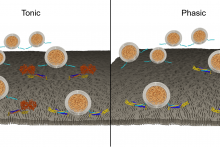
June 9, 2021A new technique for correcting disease-causing mutations by Jill Crittenden | McGovern Institute for Brain Research Novel method, developed by McGovern Institute researchers, may lead to safer, more efficient gene therapies.
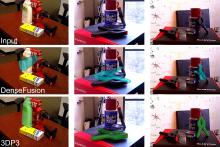
June 9, 2021Training robots to manipulate soft and deformable objects by Kim Martineau | MIT Quest for Intelligence A virtual environment embedded with knowledge of the physical world speeds up problem-solving.
June 3, 2021On systemic sources of early life stress, and empathetic responses by David Orenstein | Picower Institute for Learning and Memory At Picower Institute symposium, speakers describe harms of early exposure to trauma, racism, as well as the restorative power of understanding, nurturing, and extending opportunity.
May 26, 2021New algorithms show accuracy, reliability in gauging unconsciousness under general anesthesia by David Orenstein | Picower Institute for Learning and Memory Machine learning software advances could help anesthesiologists optimize drug dose.
May 11, 2021New system cleans messy data tables automatically by Department of Brain and Cognitive Sciences With just 50 lines of code, the program spots and fixes likely errors.
May 11, 2021Anesthesia doesn't simply turn off the brain — it changes its rhythms by David Orenstein | Picower Institute for Learning and Memory Simultaneous measurement of neural rhythms and spikes across five brain areas reveals how propofol induces unconsciousness.
May 7, 2021Michale Fee appointed head of the Department of Brain and Cognitive Sciences by Department of Brain and Cognitive Sciences Will continue initiatives in academics, mentoring, and DEIJ while building on legacy of academic and scientific excellence.
May 3, 2021Undergraduates explore practical applications of artificial intelligence by Kim Martineau | MIT Quest for Intelligence SuperUROP scholars apply deep learning to improve accuracy of climate models, profitably match computers in the cloud with customers, and more.
May 2, 2021Josh McDermott seeks to replicate the human auditory system by Anne Trafton | MIT News Office Computer models that mimic humans’ extraordinary hearing abilities could improve treatments for hearing loss.