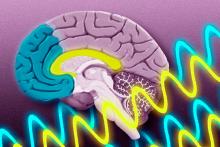
Optogenetics, a technology that allows scientists to control brain activity by shining light on neurons, relies on light-sensitive proteins that can suppress or stimulate electrical signals within cells.
For the first time, MIT neuroscientists have shown they can control muscle movement by applying optogenetics — a technique that allows scientists to control neurons’ electrical impulses with light — to the spinal cords of
Amyotrophic lateral sclerosis (ALS) — also known as Lou Gehrig’s disease — is a neurodegenerative disease that destroys the neurons that control muscle movement.
The birth of artificial-intelligence research as an autonomous discipline is generally thought to have been the monthlong Dartmouth Summer Research Project on Artificial Intelligence in 1956, which convened 10 leading electri
“Reverse-engineering the brain” is one of the National Academy of Engineering’s Grand Challenges for the 21st Century, and last spring President Barack Obama renewed the call for more advanced neurological research by launchi
Anxiety disorders, which include posttraumatic stress disorder, social phobias and obsessive-compulsive disorder, affect 40 million American adults in a given year.
The human brain has 100 billion neurons, connected to each other in networks that allow us to interpret the world around us, plan for the future, and control our actions and movements.