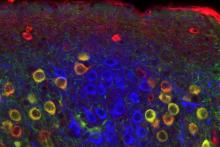
A team including the scientist who first harnessed the CRISPR-Cas9 system for mammalian genome editing has now identified a different CRISPR system with the potential for even simpler and more precise genome engineering.
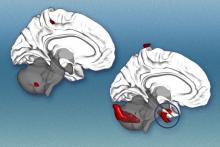
In 2011, MIT neuroscientist Rebecca Saxe and colleagues reported that in blind adults, brain regions normally dedicated to vision processing instead participate in language tasks such as speech and comprehension.
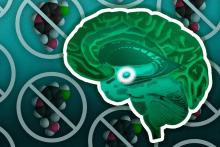
Nitrous oxide, commonly known as “laughing gas,” has been used in anesthesiology practice since the 1800s, but the way it works to create altered states is not well understood.