




Colloquium on the Brain and Cognition with Jesse Goldberg
Description
Talk Title: A sparse neural code for acoustic targets enables speech-like vocal flexibility in parrots
Abstract: English speech flexibly recombines 44 phonemes into more than 20,000 words and limitless phrases. Here we identify a novel neural code supporting combinatorial vocal control in budgerigar parrots. Deep learning–based acoustic analyses show that both English-imitated and natural warble songs are composed of subsyllabic acoustic elements that are flexibly reused across acoustic contexts, analogous to phoneme reuse in words. Such reuse poses a scaling problem for songbird-inspired timing-based codes, which require distinct neural sequences for distinct syllables even when syllables share acoustic components. We identified neurons in the parrot frontal cortical nucleus MO that exhibit sparse bursts locked to reused acoustic elements independent of syllable identity, timing, or surrounding acoustic context. These results provide the first evidence for a sparse, acoustically grounded vocal-motor code that can be flexibly reused to assemble a large and combinatorial vocal repertoire.
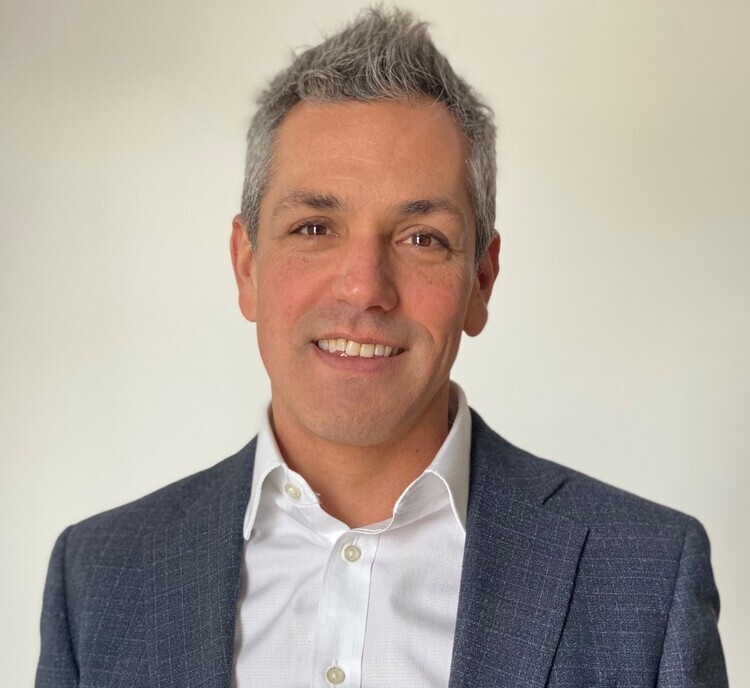
Bio: Jesse trained as an MD/PhD, developing an early interest in the neural circuits underlying movement disorders such as Parkinson’s disease and dystonia. Motivated by the limits of existing treatments, he left clinical medicine to pursue basic research on motor control and learning, completing postdoctoral training with Michael Fee at Massachusetts Institute of Technology, where he used songbirds to study basal ganglia–dependent trial-and-error learning. At Cornell University, Jesse leads a comparative systems neuroscience lab studying motor control across songbirds, parrots, and mice, integrating high-density electrophysiology, closed-loop optogenetics, and machine-learning–based behavioral analysis to understand how distributed brain circuits generate natural behavior.
Followed by a reception with food and drink in 3rd floor atrium