

Main navigation

  • About BCS
    • Mission
    • History
    • Building 46
      • Building 46 Room Reservations
    • Leadership
    • Employment
    • Contact
      • BCS Spot Awards
      • Building 46 Email and Slack
    • Directory
  • Faculty + Research
    • Faculty
    • Areas of Research
    • Postdoctoral Research
      • Postdoctoral Association and Committees
    • Core Facilities
    • InBrain
      • InBRAIN Collaboration Data Sharing Policy
  • Academics
    • Course 9: Brain and Cognitive Sciences
    • Course 6-9: Computation and Cognition
      • Course 6-9 MEng
    • Brain and Cognitive Sciences PhD
      • How to Apply
      • Program Details
      • Classes
      • Research
      • Student Life
      • For Current Students
    • Molecular and Cellular Neuroscience Program
      • How to Apply to MCN
      • MCN Faculty and Research Areas
      • MCN Curriculum
      • Model Systems
      • MCN Events
      • MCN FAQ
      • MCN Contacts
    • Research Scholars Program
    • Course Offerings
  • News + Events
    • News
    • Events
    • Recordings
    • Newsletter
  • Community + Culture
    • Community + Culture
    • Community Stories
    • Outreach
      • MIT Summer Research Program (MSRP)
      • Conferences, Outreach and Networking Opportunities
    • Post-Baccalaureate Research Scholars Program
    • Get Involved (MIT login required)
    • Resources (MIT login Required)
  • Give to BCS
    • Join the Champions of the Brain Fellows Society
    • Meet Our Donors

Utility Menu

  • Directory
  • Apply to BCS
  • Contact Us

Footer

  • Contact Us
  • Employment
  • Be a Test Subject
  • Login

Footer 2

  • McGovern
  • Picower

Utility Menu

  • Directory
  • Apply to BCS
  • Contact Us
Brain and Cognitive Sciences
Menu
MIT

Main navigation

  • About BCS
    • Mission
    • History
    • Building 46
    • Leadership
    • Employment
    • Contact
    • Directory
  • Faculty + Research
    • Faculty
    • Areas of Research
    • Postdoctoral Research
    • Core Facilities
    • InBrain
  • Academics
    • Course 9: Brain and Cognitive Sciences
    • Course 6-9: Computation and Cognition
    • Brain and Cognitive Sciences PhD
    • Molecular and Cellular Neuroscience Program
    • Research Scholars Program
    • Course Offerings
  • News + Events
    • News
    • Events
    • Recordings
    • Newsletter
  • Community + Culture
    • Community + Culture
    • Community Stories
    • Outreach
    • Post-Baccalaureate Research Scholars Program
    • Get Involved (MIT login required)
    • Resources (MIT login Required)
  • Give to BCS
    • Join the Champions of the Brain Fellows Society
    • Meet Our Donors

Events

News Menu

  • News
  • Events
  • Newsletters

Breadcrumb

  1. Home
  2. Events
  3. Arc as a master regulator of neuronal plasticity: signaling protein or retroviral-like capsid
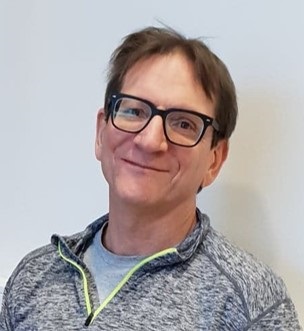
Clive Bramham photo.jpg
Simons Center for the Social Brain
Special Seminar

Arc as a master regulator of neuronal plasticity: signaling protein or retroviral-like capsid

Speaker(s)
Clive R. Bramham, M.D., Ph.D.
Add to CalendarAmerica/New_YorkArc as a master regulator of neuronal plasticity: signaling protein or retroviral-like capsid04/22/2019 8:00 pm04/22/2019 9:00 pmSingleton Auditorium, 46-3002
April 22, 2019
8:00 pm - 9:00 pm
Location
Singleton Auditorium, 46-3002
Contact
Alexandra Sokhina
    Description

    Monday, April 22, 2019
    Time: 4:00 pm-5:00 pm
    Speaker: Clive R. Bramham, M.D., Ph.D.
    Affiliation: Professor and Head of Neuroscience, Department of Biomedicine, University of Bergen, Norway

    Host: Mriganka Sur, Ph.D., FRS

    Talk title: Arc as a master regulator of neuronal plasticity: signaling protein or retroviral-like capsid.

    Abstract: The immediate early gene, Arc, is a pivotal regulator of synaptic plasticity, memory, and cognitive flexibility. But what is Arc protein, how does it work? Recent work has provided surprising insights into the structural and biochemical properties of the Arc protein. Inside the neuron, Arc is protein interaction hub and dynamic regulator of synaptic plasticity. In radical contrast, Arc protein can also self-assemble into retrovirus-like capsids that are released in extracellular vesicles and capable of intercellular transfer of RNA. Resolving this dichotomy is of major importance for understanding how neuronal activity shapes connectivity in neural networks.

    Upcoming Events

    Apr
    Fri
    3
    Simons Center for the Social Brain

    SCSB Lunch Series with Dr. Wenyu Tu: Neural correlates of visual behavior in normal and ASD-model marmosets

    12:00pm to 1:00pm
    Add to CalendarAmerica/New_YorkSCSB Lunch Series with Dr. Wenyu Tu: Neural correlates of visual behavior in normal and ASD-model marmosets04/03/2026 12:00 pm04/03/2026 1:00 pmSimons Center Conference room, 46-6011,46-6011
    Apr
    Fri
    3
    Department of Brain and Cognitive Sciences (BCS)

    Molecular and Cellular Neuroscience Seminar - Steve McCarroll (Harvard Medical School) Title: The ticking DNA clock: How somatic expansion of a DNA repeat over a human lifetime leads to Huntington’s disease

    4:00pm to 5:00pm
    Add to CalendarAmerica/New_YorkMolecular and Cellular Neuroscience Seminar - Steve McCarroll (Harvard Medical School) Title: The ticking DNA clock: How somatic expansion of a DNA repeat over a human lifetime leads to Huntington’s disease04/03/2026 4:00 pm04/03/2026 5:00 pmBuilding 46,Room 3002 - Singleton Auditorium
    Apr
    Wed
    8

    BOOST Meeting: Collecting Human Behavioral Data Online

    12:00pm to 1:00pm
    Add to CalendarAmerica/New_YorkBOOST Meeting: Collecting Human Behavioral Data Online04/08/2026 12:00 pm04/08/2026 1:00 pm46-3037
    See All Events
    Don't miss our next newsletter!
    Sign Up

    Footer menu

    • Contact Us
    • Employment
    • Be a Test Subject
    • Login

    Footer 2

    • McGovern
    • Picower
    Brain and Cognitive Sciences

    MIT Department of Brain and Cognitive Sciences

    Massachusetts Institute of Technology

    77 Massachusetts Avenue, Room 46-2005

    Cambridge, MA 02139-4307 | (617) 253-5748

    For Emergencies | Accessibility

    Massachusetts Institute of Technology