
Main navigation

  • About BCS
    • Mission
    • History
    • Building 46
      • Building 46 Room Reservations
    • Leadership
    • Employment
    • Contact
      • BCS Spot Awards
      • Building 46 Email and Slack
    • Directory
  • Faculty + Research
    • Faculty
    • Areas of Research
    • Postdoctoral Research
      • Postdoctoral Association and Committees
    • Core Facilities
    • InBrain
      • InBRAIN Collaboration Data Sharing Policy
  • Academics
    • Course 9: Brain and Cognitive Sciences
    • Course 6-9: Computation and Cognition
      • Course 6-9 MEng
    • Brain and Cognitive Sciences PhD
      • How to Apply
      • Program Details
      • Classes
      • Research
      • Student Life
      • For Current Students
    • Molecular and Cellular Neuroscience Program
      • How to Apply to MCN
      • MCN Faculty and Research Areas
      • MCN Curriculum
      • Model Systems
      • MCN Events
      • MCN FAQ
      • MCN Contacts
    • Research Scholars Program
    • Course Offerings
  • News + Events
    • News
    • Events
    • Recordings
    • Newsletter
  • Community + Culture
    • Community + Culture
    • Community Stories
    • Outreach
      • MIT Summer Research Program (MSRP)
      • Conferences, Outreach and Networking Opportunities
    • Post-Baccalaureate Research Scholars Program
    • Get Involved (MIT login required)
    • Resources (MIT login Required)
  • Give to BCS
    • Join the Champions of the Brain Fellows Society
    • Meet Our Donors

Utility Menu

  • Directory
  • Apply to BCS
  • Contact Us

Footer

  • Contact Us
  • Employment
  • Be a Test Subject
  • Login

Footer 2

  • McGovern
  • Picower

Utility Menu

  • Directory
  • Apply to BCS
  • Contact Us
Brain and Cognitive Sciences
Menu
MIT

Main navigation

  • About BCS
    • Mission
    • History
    • Building 46
    • Leadership
    • Employment
    • Contact
    • Directory
  • Faculty + Research
    • Faculty
    • Areas of Research
    • Postdoctoral Research
    • Core Facilities
    • InBrain
  • Academics
    • Course 9: Brain and Cognitive Sciences
    • Course 6-9: Computation and Cognition
    • Brain and Cognitive Sciences PhD
    • Molecular and Cellular Neuroscience Program
    • Research Scholars Program
    • Course Offerings
  • News + Events
    • News
    • Events
    • Recordings
    • Newsletter
  • Community + Culture
    • Community + Culture
    • Community Stories
    • Outreach
    • Post-Baccalaureate Research Scholars Program
    • Get Involved (MIT login required)
    • Resources (MIT login Required)
  • Give to BCS
    • Join the Champions of the Brain Fellows Society
    • Meet Our Donors
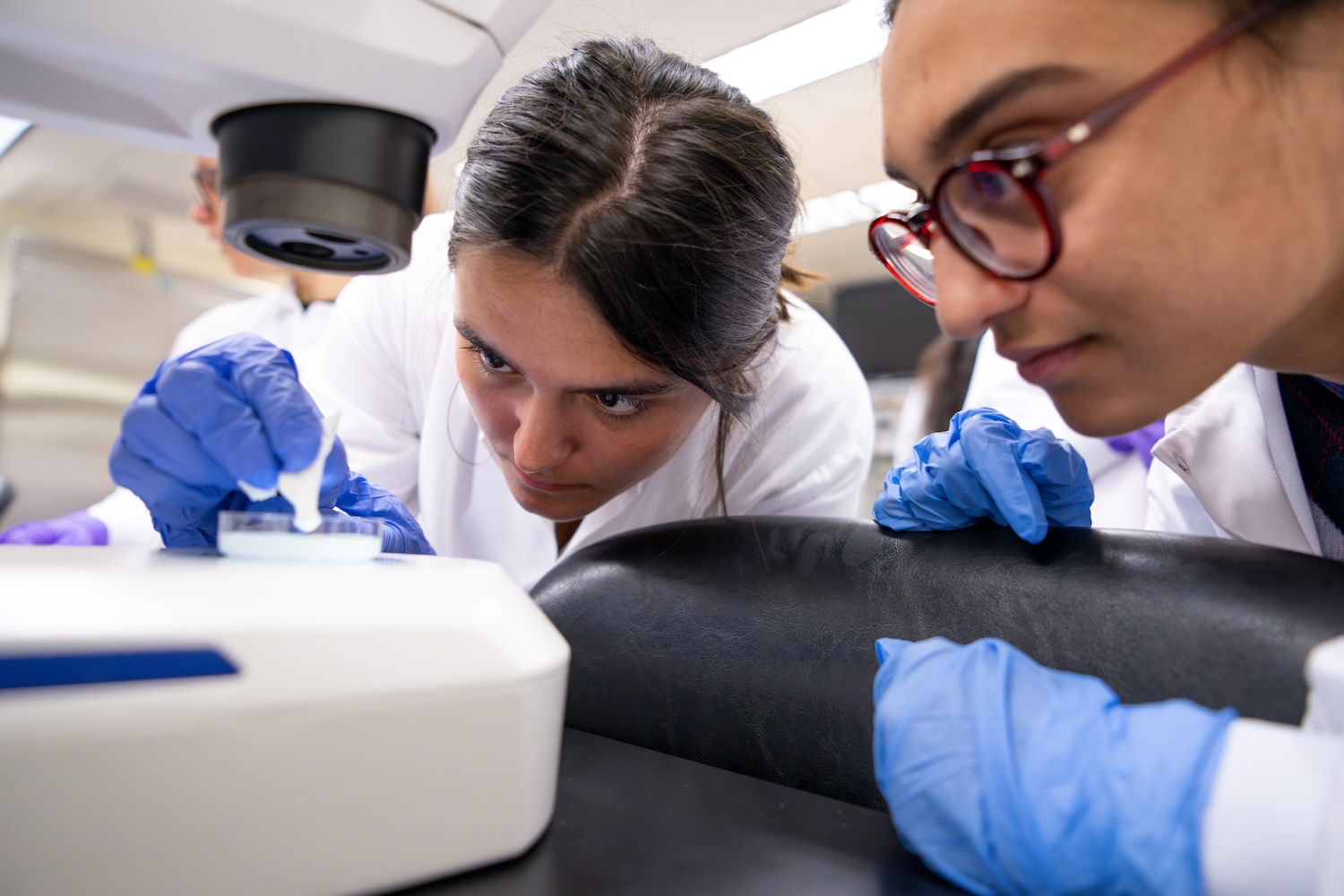
Close shot of two researchers working in a wet lab

Understanding the brain. Comprehending the mind.

Featured News

A pair of headphones on top of a book
Learning with audiobooks

For students who are struggling with reading, using text-supplemented audiobooks can help dramatically, but only when paired with one-on-one instruction, according to a new study from MIT researchers.

Ola Ozernov-Palchik and Halie Olson, scientists in the lab of Grover M. Hermann Professor of Brain and Cognitive Sciences John Gabrieli, launched the audiobook study in 2020, when most schools in the United States had closed to slow the spread of Covid-19. The pandemic meant the researchers would not be able to ask families to visit an MIT lab to participate in the study — but it also underscored the urgency of understanding which educational technologies are effective, and for whom.

The study found that Children who were poor readers showed no improvement from audiobooks alone, but did make significant gains in vocabulary when the audiobooks were paired with one-on-one instruction. Even good readers learned more vocabulary when they received tutoring, although the differences for this group were less dramatic. The group’s findings were reported in the journal Developmental Science.

More News

Featured News

MIT scientists investigated how genetic mutations that cause the disorder Rett syndrome affect the brain’s blood vessels. The Rett syndrome endothelial cells seen here showed less expression of ZO-1 (green), a key protein for forming a tight seal in blood vessels, than control cells (not pictured).
With navigating nematodes, scientists map out how brains implement behaviors

Animal behavior reflects a complex interplay between an animal’s brain and its sensory surroundings. Only rarely have scientists been able to discern how actions emerge from this interaction. A new open-access study in Nature Neuroscience by researchers in The Picower Institute for Learning and Memory at MIT offers one example by revealing how circuits of neurons within C. elegans nematode worms respond to odors and generate movement as they pursue smells they like and evade ones they don’t.

“Across the animal kingdom, there are just so many remarkable behaviors,” says study senior author Steven Flavell, associate professor in the Picower Institute and MIT’s Department of Brain and Cognitive Sciences and an investigator for the Howard Hughes Medical Institute. “With modern neuroscience tools, we are finally gaining the ability to map their mechanistic underpinnings.”

By the end of the study, which former graduate student Talya Kramer PhD ’25 led as her doctoral thesis research, the team was able to show which neurons in the worm’s brain did which of the jobs needed to sense where smells were coming from, plan turns toward or away from them, shift to reverse (like old-fashioned radio-controlled cars, C. elegans worms turn in reverse), execute the turns, and then go back to moving forward.

Not only did the study reveal the sequence and each neuron’s role in it, it also demonstrated that worms are more skillful and intentional in these actions than perhaps they’ve received credit for. And finally, the study demonstrated that it’s all coordinated by the neuromodulatory chemical tyramine.

More News

Featured News

ajani stewart
Ajani Stewart explores questions about hearing and the brain process

In the lab of Professor Josh McDermott, Ajani Stewart explores questions about audition and the brain process. The answers could eventually lead to designs of cochlear implants, or other kinds of implants, to improve hearing. Stewart also teaches coding at MIT’s Quantitative Methods Workshop and demonstrates spatial-hearing illusions to middle-schoolers.

More News
Don't miss our next newsletter!
Sign Up

Footer menu

  • Contact Us
  • Employment
  • Be a Test Subject
  • Login

Footer 2

  • McGovern
  • Picower
Brain and Cognitive Sciences

MIT Department of Brain and Cognitive Sciences

Massachusetts Institute of Technology

77 Massachusetts Avenue, Room 46-2005

Cambridge, MA 02139-4307 | (617) 253-5748

For Emergencies | Accessibility

Massachusetts Institute of Technology