Julie Pryor | McGovern Institute for Brain Research
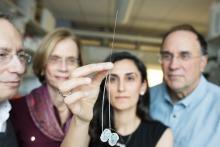
Polina Anikeeva, the Class of 1942 Associate Professor in the Department of Materials Science and Engineering and associate director of the Research Laboratory of
MIT today announced the launch of the MIT Intelligence Quest, an initiative to discover the foundations of human intelligence and drive the development of technological tools that can positively influence virtually every a
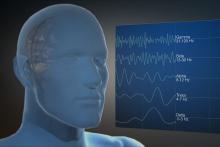
MIT neuroscientists have found evidence that the brain’s ability to control what it’s thinking about relies on low-frequency brain waves known as beta rhythms.
David Orenstein | Picower Institute for Learning and Memory
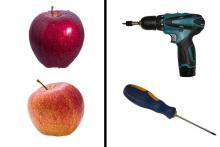
We categorize pretty much everything we see, and remarkably, we often achieve that feat whether the items look patently similar — such as Fuji and McIntosh apples — or they share a more abstract similarity — such as a scre
David Orenstein | Picower Institute for Learning and Memory
The amygdala is a tiny hub of emotions where in 2016 a team led by MIT neuroscientist Kay Tye found specific populations of neurons that assign good or bad feelings, or “valence,” to experience.
David Orenstein | Picower Institute for Learning and Memory
The amygdala is a tiny hub of emotions where in 2016 a team led by MIT neuroscientist Kay Tye found specific populations of neurons that assign good or bad feelings, or “valence,” to experience.
Sara Cody | Department of Brain and Cognitive Sciences
Josh McDermott, assistant professor in the Department of Brain and Cognitive Sciences, is a recipient of the Troland Research Award from the National Academy of Sciences (NAS).
David Orenstein | Picower Institute for Learning and Memory
Working memory is a sort of “mental sketchpad” that allows you to accomplish everyday tasks such as calling in your hungry family’s takeout order and finding the bathroom you were just told “will be the third door on the r