




Study: Fragile X syndrome neurons can be restored
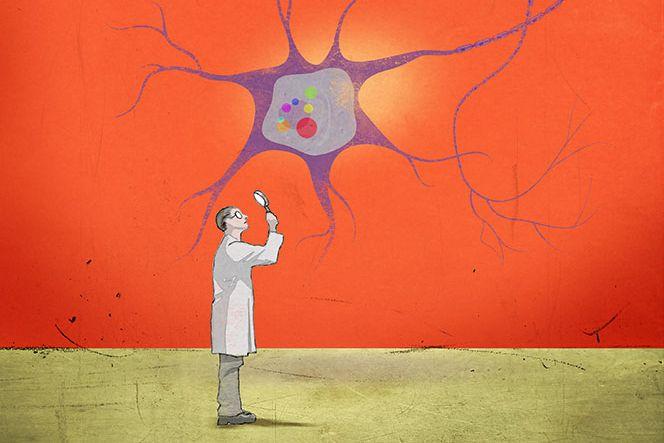
Fragile X syndrome is the most frequent cause of intellectual disability in males, affecting one out of every 3,600 boys born. The syndrome can also cause autistic traits, such as social and communication deficits, as well as attention problems and hyperactivity. Currently, there is no cure for this disorder.
Fragile X syndrome is caused by mutations in the FMR1 gene on the X chromosome, which prevent the gene’s expression. This absence of the FMR1-encoded protein during brain development has been shown to cause the overexcitability in neurons associated with the syndrome. Now, for the first time, researchers at Whitehead Institute have restored activity to the fragile X syndrome gene in affected neurons using a modified CRISPR/Cas9 system they developed that removes the methylation — the molecular tags that keep the mutant gene shut off — suggesting that this method may prove to be a useful paradigm for targeting diseases caused by abnormal methylation.
Research by the lab of Whitehead Institute for Biomedical Research Founding Member Rudolf Jaenisch, which is described online this week in the journal Cell, is the first direct evidence that removing the methylation from a specific segment within the FMR1 locus can reactivate the gene and rescue fragile X syndrome neurons.
The FMR1 gene sequence includes a series of three nucleotide (CGG) repeats, and the length of these repeats determines whether or not a person will develop fragile X syndrome: A normal version of the gene contains anywhere from 5 to 55 CGG repeats, versions with 56 to 200 repeats are considered to be at a higher risk of generating some of the syndrome’s symptoms, and those versions with more than 200 repeats will produce fragile X syndrome.
Until now, the mechanism linking the excessive repeats in FMR1 to fragile X syndrome was not well-understood. But Shawn Liu, a postdoc in Jaenisch’s lab and first author of the Cell study, and others thought that the methylation blanketing those nucleotide repeats might play an important role in shutting down the gene’s expression.
In order to test this hypothesis, Liu removed the methylation tags from the FMR1 repeats using a CRISPR/Cas9-based technique he recently developed with Hao Wu, a postdoc in the Jaenisch lab. This technique can either add or delete methylation tags from specific stretches of DNA. Removal of the tags revived the FMR1 gene’s expression to the level of the normal gene.
“These results are quite surprising — this work produced almost a full restoration of wild type expression levels of the FMR1 gene,” says Jaenisch, whose primary affiliation is with Whitehead Institute, where his laboratory is located and his research is conducted. He is also a professor of biology at MIT. “Often when scientists test therapeutic interventions, they only achieve partial restoration, so these results are substantial,” he says.
The reactivated FMR1 gene rescues neurons derived from fragile X syndrome induced pluripotent stem (iPS) cells, reversing the abnormal electrical activity associated with the syndrome. When rescued neurons were engrafted into the brains of mice, the FMR1 gene remained active in the neurons for at least three months, suggesting that the corrected methylation may be sustainable in the animal.
“We showed that this disorder is reversible at the neuron level,” says Liu. “When we removed methylation of CGG repeats in the neurons derived from fragile X syndrome iPS cells, we achieved full activation of FMR1.”
The CRISPR/Cas-9-based technique may also prove useful for other diseases caused by abnormal methylation including facioscapulohumeral muscular dystrophy and imprinting diseases.
“This work validates the approach of targeting the methylation on genes, and it will be a paradigm for scientists to follow this approach for other diseases,” says Jaenisch.
This work was supported by the National Institutes of Health, the Damon Runyon Cancer Foundation, the Rett Syndrome Research Trust, the Brain and Behavior Research Foundation, and the Helen Hay Whitney Foundation. Jaenisch is co-founder of Fate Therapeutics, Fulcrum Therapeutics, and Omega Therapeutics.