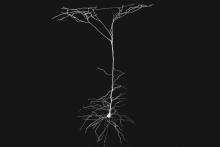
Most neurons have many branching extensions called dendrites that receive input from thousands of other neurons. Dendrites aren’t just passive information-carriers, however.
Starting in 2008, as she pursued dual undergraduate degrees in physics, and nuclear science and engineering (NSE), and then a doctorate in health sciences and technology, there has been one constant in Agata Wiśniowska's l
Several years ago, MIT neuroscientists showed that they could dramatically reduce the amyloid plaques seen in mice with Alzheimer’s disease simply by exposing the animals to light flickering at a specific frequency.
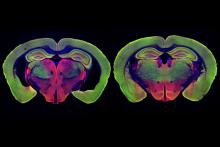
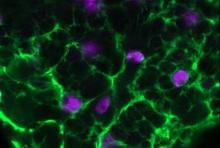
A new study provides potential new targets for treating epilepsy and new fundamental insights into the relationship between neurons and their glial “helper” cells.
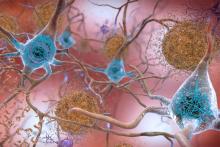
MIT researchers have performed the first comprehensive analysis of the genes that are expressed in individual brain cells of patients with Alzheimer’s disease.