




What Children Can Teach Us About Building Better AI
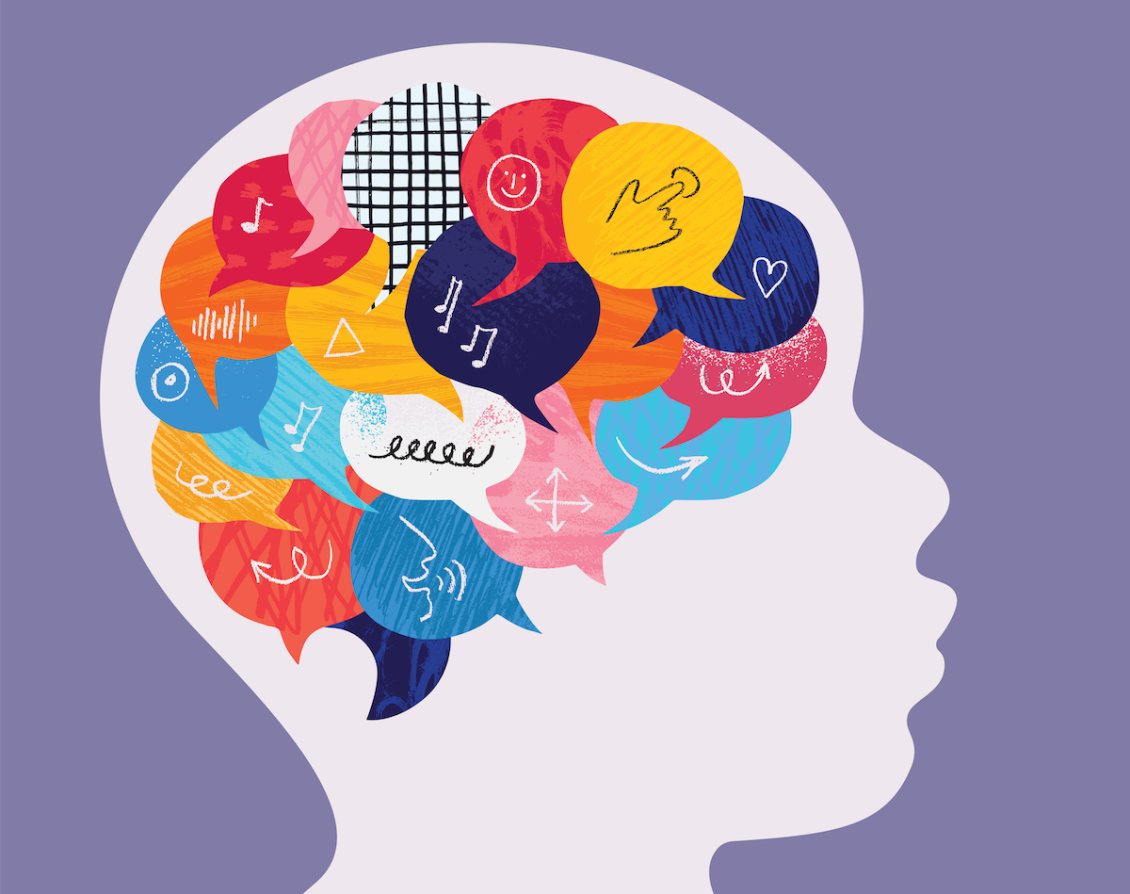
Modern Artificial Intelligence models are built on a simple premise: Give a generative AI platform like ChatGPT or Gemini as much data as possible, and intelligence — or something that looks like it — will emerge.
These models can summarize books and pass professional exams, and there are high hopes for AI to handle increasingly demanding tasks independently, from driving cars to performing medical screenings.
At the same time, generative AI has its flaws. It sometimes misinterprets data, resulting in incorrect or incoherent responses. It requires vast computing power to work, putting a strain on data centers that is expected to increase in the coming years. It also routinely fails basic intuitive human tasks.
At an event hosted by the MIT Quest for Intelligence last fall, BCS Professor of Computational Cognitive Science Josh Tenenbaum demonstrated one example of a simple task where AI fails. He displayed a typical CAPTCHA test – one of those fuzzy boxes with a word rendered inside it that websites often implement to prove users are human. He asked the audience to identify the word, and participants could do it with ease: The text read: “uncertainty.” But ask a generative AI platform, and it misidentifies the text as a “CAPTCHA.” Ask it how confident it is, and it replies that it is highly certain.
“Think how odd it is that we have systems that can do better than human biologists at protein folding, and they don't know what a protein is. They don't know what a cell is. They don't know what a body is. Today's AI can start very dumb and become very smart,” said Tenenbaum, who heads the Computational Cognitive Science Group at MIT. “That's nothing like human learning. Humans are intelligent from the start. We start out intelligent at simple things, and then we become intelligent at more and more complex things. Our learning is cumulative.”
What if the secret to building truly intelligent machines lies not in massive datasets or billion-parameter large language models, but in the messy, curious, social way that babies learn about the world?
That was the focus of the conversation with Tenenbaum last fall. It was part of Matter of Minds, a day-long symposium hosted by the Quest for Intelligence, an MIT initiative that aims to understand how brains produce intelligence and how it can be replicated in artificial systems. The event also featured Department of Brain and Cognitive Sciences professors Rebecca Saxe, Laura Schulz, and Ev Fedorenko, and EECS Associate Professor Jacob Andreas.
“Imagine if we could build a machine that grows into intelligence the way a person does, that starts like a baby and learns like a child. This has been the oldest dream, the original vision, going back to Alan Turing, for how to build an AI system,” Tenenbaum said at the event. “If you think about it, a human child is the only learning system in the known universe that reliably, robustly, reproducibly grows into full human intelligence starting from less. If we could understand that, it would be a roadmap, maybe its own kind of scaling root for building AI. It would also be a way to understand ourselves, where our own minds come from.”
Big Science Meets Tiny Minds
Laura Schulz, the John and Dorothy Wilson Professor of Brain and Cognitive Sciences and Associate Department Head for BCS, is a development psychologist and cognitive scientist who leads the Early Childhood Cognition Lab. Her group seeks answers to complex questions across the spectrum of cognitive sciences through simple, child-friendly behavioral experiments and computational modeling.
Babies are selective learners from the start of their lives. They choose what to look at, how long to look at it, and when to look away. And as soon as they can act on the world, they pursue their own goals, their own problems, Schulz says. This early intelligence is not about absorbing big data. It’s about curiosity, agency, and social engagement.
“Nobody in the history of the universe has ever told a toddler to try to put clothespins on a cat, or Play-Doh under the couch to catch a velociraptor,” she said at the event. “Yet, children do things like that every day.”
Crucially, children learn from others—not just by observation, but through rich interpersonal interaction. They ask questions, interpret gestures, and tailor their communication to what others do or don’t know. Unlike AI, they don't need millions of examples.
"The amount of data used to train GPT-4 compared to what a child receives is like the population of Tokyo versus this room," Schulz said at the event.
While AI is trained primarily through language, the human brain works differently. Language is, of course, essential for sharing knowledge, building culture, and teaching new generations. However, it doesn’t drive cognition, it works alongside it, according to Ev Fedorenko, an associate professor in the Department of Brain and Cognitive Sciences and investigator for the McGovern Institute. She studies how the language system works and how it fits into the broader landscape of the human mind and brain through a combination of brain imaging techniques and computational modelling. For example, her lab has found that people with severe aphasia can still think logically, appreciate music, or strategize.
“If you come into the lab and we put you in the fMRI scanner, in about five minutes, we can find the parts of your brain that do language. And then we can ask, how are these areas working when I'm asking you to solve a math problem? Or to read a piece of computer code if you're a programmer, or to solve a logic puzzle like Sudoku,” Fedorenko said. “And we find time and again across many different tasks that your language regions are silent when you're engaging in many kinds of thinking. Other parts of the brain are working hard, but the language representations don't seem to be engaged.”
If intelligence isn’t built by language alone, then how should machines learn? Jacob Andreas, an associate professor of electrical engineering and computer science and a member of the Computer Science and Artificial Intelligence Laboratory, believes that current language models may be built backwards: they rely on the output of human intelligence— typically written language—while skipping the learning that precedes it in human development.
“Whatever it is that evolution has seen, whatever it is that evolution has done that puts you in that magical state you're in as an infant when you start learning, it really has very little to do with language,” Andreas said. “It has everything to do with the kind of more general families of reasoning and learning problems that the entire history of life has experienced. And this is totally different, again, from the ways in which we're training language models right now.”
Andreas and collaborators are working on alternatives: probabilistic models of reasoning, computation, and planning that are more robust, reliable, predictable, and efficient. But the process of building these models is slow and laborious.
“We're going to need tools to help us do this, to help us do it better, and to help us do it faster,” he said.
While some tools in this line of research are still only a dream, a quiet transformation in the way early childhood cognitive development is studied is supporting the revolution in developmental AI. Until recently, studies involving children and families often posed many challenges. Scheduling, travel, and one-on-one observation of subjects were more complicated than with adults. During the COVID-19 pandemic shutdown, Schulz’s lab developed Children Helping Science and Lookit, online platforms that make it considerably easier for families to participate in studies.
These new options can greatly improve the volume and diversity of study participants while easing the research workload, says Rebecca Saxe, the John W. Jarve Professor of Cognitive Neuroscience and Associate Dean of the School of Science at MIT, who uses these platforms in her research.
Saxe described a study where babies were shown animated animals repeatedly, with occasional novel ones mixed in. Using automated gaze tracking and parent-run experiments, researchers could collect massive datasets on infant attention, preference, and learning patterns. Their gaze patterns matched a probabilistic model of rational exploration: they looked longer at new information and shorter at familiar scenes. This pattern of curiosity is something AI models struggle to replicate. Using Lookit, the study was able to include data from 144 babies.
“I did this kind of research when I was trained. At that time, it would have taken four people's PhDs to get this one experiment done,” she said. “Instead, this is one piece of one PhD now. And that's the beta version. That's just as we're getting started.”
Toward a New Kind of Machine Intelligence
Tenenbaum’s vision is to chart a different path for AI—one that mirrors human cognitive development. That means designing machines that begin with basic models of the world, learn through interaction, and gradually build up complex skills, including language.
He describes building “a new computing stack:” blending neural networks with symbolic reasoning, probabilistic inference, and real-world interaction. Instead of training machines to predict the next word, the goal is to help them predict what might happen in the world, and why.
“The grand challenge for the next generation of AI is to understand and engineer an intelligence that is always intelligent, and where it cannot, and does not, have radical gaps and discontinuities in its learning, because knowledge grows systematically,” he said.
Tenenbaum highlighted a recent competition held by the Defense Advanced Research Projects Agency to build machines with infant stage of common sense. Vikash Mansinghka, a principal research scientist in the Department of Brain and Cognitive Sciences and leader of QUEST’s Probabilistic Computing Project, led a group in the competition. The model from the MIT group used a combination of Bayesian inverse planning – a form of statistics that aims to infer goals, preferences, and beliefs through a generative model of an agent’s plans – and Theory of Mind Neural Network, a computational model inspired by the human brain. It had a 98 percent success rate across a series of tasks aligned with infant development benchmarks. While the results were impressive, there is still a long way to go, Tenenbaum says.
“We need a much better, bigger, faster, more virtuous cycle of experimenting and benchmarks to drive our algorithms,” Tenenbaum said. “These very simple first steps need to go much more frequently and faster.”