




MIT BrainTrust supports neighbors living with brain injuries
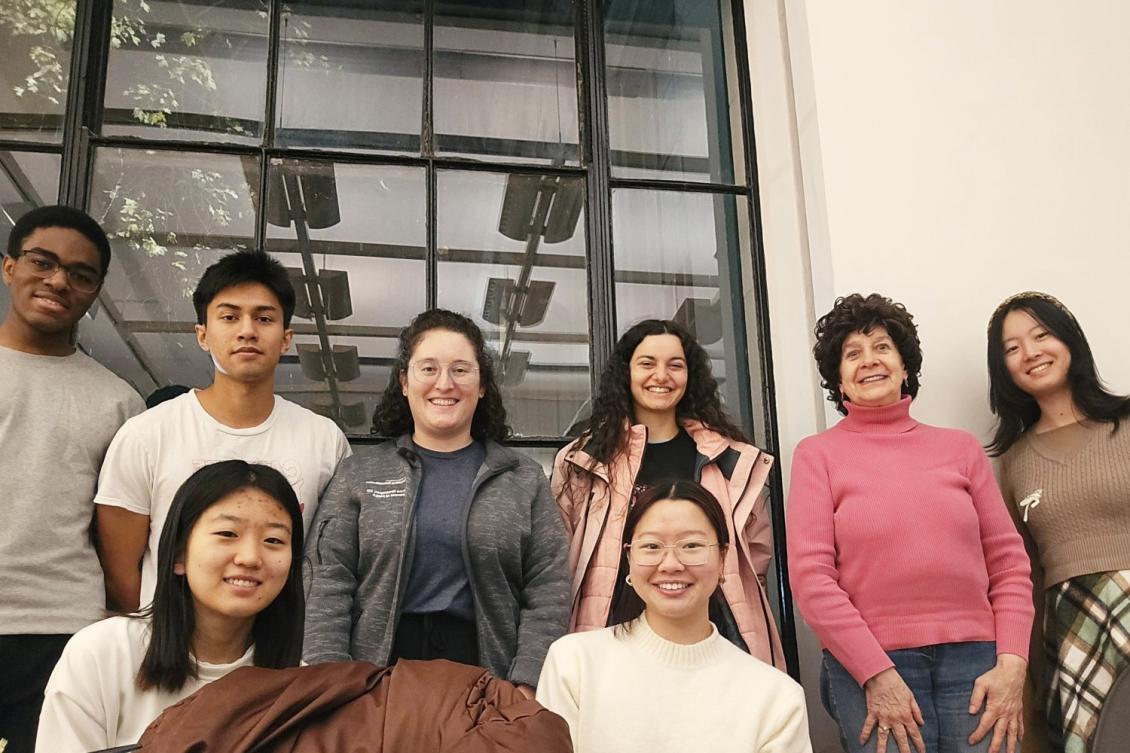
Since 1998, members of MIT’s BrainTrust club have helped Boston-area residents with brain injuries or other neurological disorders through their buddy program. The organization’s members also visit patients in nursing homes suffering from neurological issues.
BrainTrust is one of the founding chapters of Synapse National, an organization created by MIT alumna Alissa Totman ’13. Synapse’s goal is to provide social support for individuals living with brain injuries and to educate and inspire student leaders in the field of brain injury.
“Learning directly from individuals who had experienced brain injury during my time in BrainTrust gave me an appreciation of the gaps in resources and opportunities for improvement in brain injury care, which ultimately motivated me to pursue a career in brain injury medicine. My experience in BrainTrust continues to shape my approach to patient care and my professional goal of improving access to specialized care for individuals with brain injury by serving as a consulting provider in the acute care hospital, as well as by training the next generation of leaders in the field,” says Totman.
The club’s president, junior Karie Shen, who is pursuing a double major in biology (Course 7) and brain and cognitive science (Course 9), says, “BrainTrust is a student-run service organization that provides support for individuals with brain injury and other neurological disorders. I joined BrainTrust because it seemed like the perfect intersection of community service and neuroscience, and I care about these two things deeply.”
BrainTrust volunteers participate in training and then are paired with a local buddy who has experienced a brain injury. Members can also spend time on the weekends with patients in nursing homes who have dementia, Alzheimer’s disease, or who have had a stroke.
Shen, along with Elizabeth Zhang, president of the MIT Pre-Med Society, recently developed a program that allows BrainTrust members to visit patients in hospice. “It’s an experience that is deeply valuable for students. We work through a third-party organization called Compassus. Because the pairing process is HIPAA-protected, our role as BrainTrust executive members is to recruit students and connect them with the hospice volunteer coordinator for training. We also provide funding for transportation, generously supported by the UA Community Service Committee,” says Shen.
Shen, who plans to go to medical school and specialize in neurology, neuro-oncology, or geriatric medicine when she completes her degree, finds the experience rewarding, at times difficult, but also offers a glimpse into the reality of working with people with brain injuries.
“Visiting the people in hospice or a nursing home is hard. I’ve seen residents cry for no apparent reason that the nurses or I can understand. But I have also come to understand that caring for a patient’s quality of life and dignity is equally important. What I came to realize is that my presence itself mattered. That perspective has shaped how I think about the kind of physician I want to become,” says Shen.
First-year student Jordan Lacsamana heard about the club during Campus Preview Weekend and was immediately interested. Lacsamana, who will major in brain and cognitive sciences, is a volunteer in the Buddy Program and meets with her buddy at least once a month.
“I joined the club because it aligned with my interests academically, but I also wanted to support someone in the Boston community. I’m pre-med, and I’m interested in surgery, possibly neurosurgery or cardiovascular surgery. But I also think it’s nice to have someone outside of MIT to talk with. It’s great to learn more about them and have that one-on-one friendship, which really is the goal,” says Lacsamana.
Lacsamana says she enjoys spending time with Amanda, her buddy, and exploring Boston and Harvard Square, meeting for coffee or meals, and getting as much out of the relationship as Amanda does.
“I see her as a mentor because coming to Boston from Dallas was such a big change, so I’ve also been able to look to her for advice. But I think one of the great things about the program is that you get to learn more about them as an individual, instead of seeing them as just a person with an injury,” says Lacsamana.
“Many of our brain injury buddies simply enjoy being around students, staying connected to what we are learning and doing. Some have been with the club for years, even upwards of a decade, and still keep up with former student members long after they graduate. It is really wonderful to see how BrainTrust has created this web of friendships between people who would otherwise never have met,” says Shen.
“Amanda has stayed in touch with her former buddy since she graduated from MIT and is going to her wedding,” says Lacsamana. “I think it’s a testament to how amazing this program is at forming those connections.”
MIT students who seek real-world opportunities in fields such as cognitive science, health care, medicine, and cognitive/neurological prosthetics, or who want to help a local resident, can join BrainTrust. Email braintrust-exec@mit.edu for more information.