

Main navigation

  • About BCS
    • Mission
    • History
    • Building 46
      • Building 46 Room Reservations
    • Leadership
    • Employment
    • Contact
      • BCS Spot Awards
      • Building 46 Email and Slack
    • Directory
  • Faculty + Research
    • Faculty
    • Areas of Research
    • Postdoctoral Research
      • Postdoctoral Association and Committees
    • Core Facilities
    • InBrain
      • InBRAIN Collaboration Data Sharing Policy
  • Academics
    • Course 9: Brain and Cognitive Sciences
    • Course 6-9: Computation and Cognition
      • Course 6-9 MEng
    • Brain and Cognitive Sciences PhD
      • How to Apply
      • Program Details
      • Classes
      • Research
      • Student Life
      • For Current Students
    • Molecular and Cellular Neuroscience Program
      • How to Apply to MCN
      • MCN Faculty and Research Areas
      • MCN Curriculum
      • Model Systems
      • MCN Events
      • MCN FAQ
      • MCN Contacts
    • Research Scholars Program
    • Course Offerings
  • News + Events
    • News
    • Events
    • Recordings
    • Newsletter
  • Community + Culture
    • Community + Culture
    • Community Stories
    • Outreach
      • MIT Summer Research Program (MSRP)
      • Conferences, Outreach and Networking Opportunities
    • Post-Baccalaureate Research Scholars Program
    • Get Involved (MIT login required)
    • Resources (MIT login Required)
  • Give to BCS
    • Join the Champions of the Brain Fellows Society
    • Meet Our Donors

Utility Menu

  • Directory
  • Apply to BCS
  • Contact Us

Footer

  • Contact Us
  • Employment
  • Be a Test Subject
  • Login

Footer 2

  • McGovern
  • Picower

Utility Menu

  • Directory
  • Apply to BCS
  • Contact Us
Brain and Cognitive Sciences
Menu
MIT

Main navigation

  • About BCS
    • Mission
    • History
    • Building 46
    • Leadership
    • Employment
    • Contact
    • Directory
  • Faculty + Research
    • Faculty
    • Areas of Research
    • Postdoctoral Research
    • Core Facilities
    • InBrain
  • Academics
    • Course 9: Brain and Cognitive Sciences
    • Course 6-9: Computation and Cognition
    • Brain and Cognitive Sciences PhD
    • Molecular and Cellular Neuroscience Program
    • Research Scholars Program
    • Course Offerings
  • News + Events
    • News
    • Events
    • Recordings
    • Newsletter
  • Community + Culture
    • Community + Culture
    • Community Stories
    • Outreach
    • Post-Baccalaureate Research Scholars Program
    • Get Involved (MIT login required)
    • Resources (MIT login Required)
  • Give to BCS
    • Join the Champions of the Brain Fellows Society
    • Meet Our Donors

News

News Menu

  • News
  • Events
  • Newsletters

Breadcrumb

  1. Home
  2. News
  3. Kay Tye receives Freedman Prize for Exceptional Basic Research
August 3, 2016

Kay Tye receives Freedman Prize for Exceptional Basic Research

by
Joshua Sariñana | Picower Institute for Learning and Memory
Image
Kay-Tye-Picower-MIT.jpg
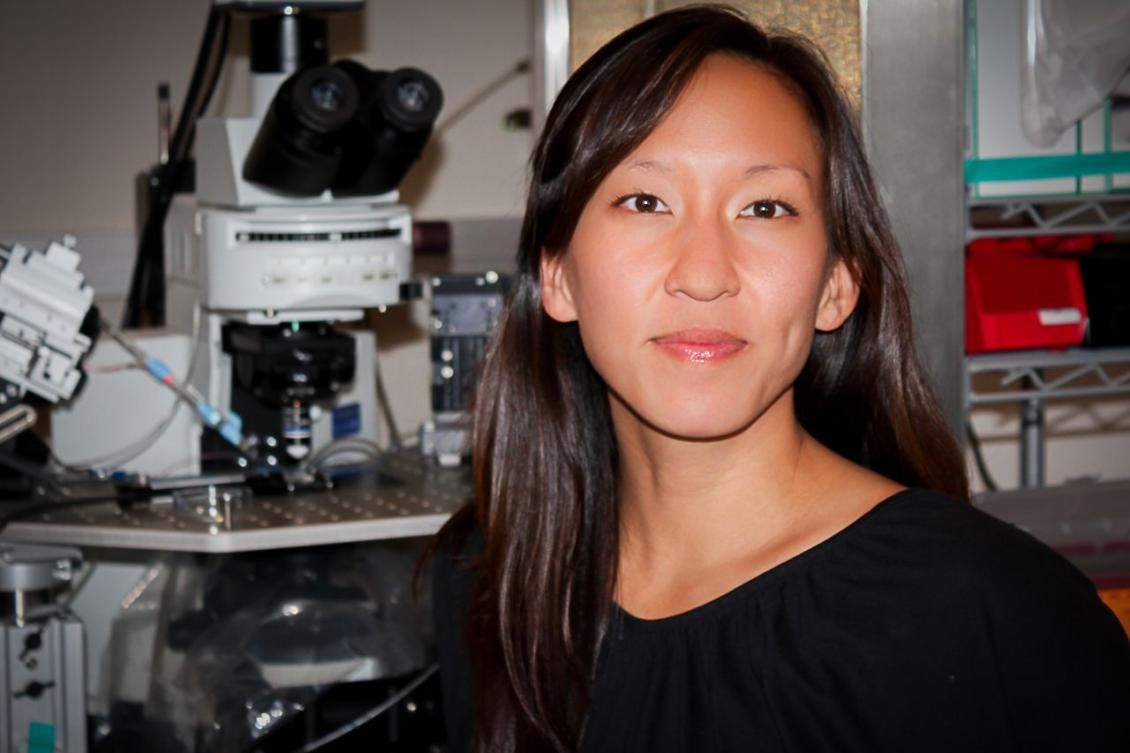
Kay Tye, the Whitehead Career Development Assistant Professor of Brain and Cognitive Sciences and a member of the Picower Institute for Learning and Memory, has been awarded the 2016 Freedman Prize for Exceptional Basic Research.

On Tuesday, the Brain and Behavior Research Foundation announced the winners of its annual Klerman and Freedman Prizes. Kay M. Tye, the Whitehead Career Development Assistant Professor of Brain and Cognitive Sciences and a member of the Picower Institute for Learning and Memory, was awarded the 2016 Freedman Prize for Exceptional Basic Research for her project “Identifying Unique Neural Circuits for Anxiety Control.” The Klerman and Freedman Prizes are granted to exceptional researchers that have been supported by the NARSAD Young Investigator Grant.

Using optogenetic, pharmacological, electrophysiological, and imaging techniques, Tye's laboratory interrogates brain circuitry to elucidate pathways implicated in anxiety disorders, which represent the most common form of psychiatric illnesses. “Anxiety can be thought of as a pathological imbalance in the motivation to avoid anticipated threats relative to the motivation to seek out potential rewards,” says Tye. Such imbalances are likely a result of imbalances in excitation and inhibition in specific brain circuits.

Pharmacological therapies to treat anxiety disorders, which are moderately effective and have potentially harmful side effects, cannot discriminate between particular brain pathways. In using optogenetics along with other techniques, her lab can identify specific brain circuits with exceptional precision. We “will hopefully facilitate the development of treatments that are more efficacious and have fewer side effects,” says Tye.

“The NARSAD Young Investigator award was critical in helping me launch my career as an independent investigator, allowing us to pursue research on the neural circuitry underlying behaviors relevant to mental illnesses,” says Tye.

“These prizes bestowed annually recognize young researchers whose work in child and adolescent depression, anxiety, unipolar and bipolar depression, and schizophrenia further advance the quest to identify the biological roots of mental illness,” says Jeffrey Borenstein, president and CEO of the Brain and Behavior Research Foundation.

Winners of the Klerman and Freedman Prizes were selected by the Foundation’s Scientific Council, comprising experts across disciplines in brain and behavior research including Nobel Prize winners, former directors of the National Institute of Mental Health, recipients of the National Medal of Science, and members of the National Academy of Sciences.

Read the Original Article
Don't miss our next newsletter!
Sign Up

Footer menu

  • Contact Us
  • Employment
  • Be a Test Subject
  • Login

Footer 2

  • McGovern
  • Picower
Brain and Cognitive Sciences

MIT Department of Brain and Cognitive Sciences

Massachusetts Institute of Technology

77 Massachusetts Avenue, Room 46-2005

Cambridge, MA 02139-4307 | (617) 253-5748

For Emergencies | Accessibility

Massachusetts Institute of Technology