

Main navigation

  • About BCS
    • Mission
    • History
    • Building 46
      • Building 46 Room Reservations
    • Leadership
    • Employment
    • Contact
      • BCS Spot Awards
      • Building 46 Email and Slack
    • Directory
  • Faculty + Research
    • Faculty
    • Areas of Research
    • Postdoctoral Research
      • Postdoctoral Association and Committees
    • Core Facilities
    • InBrain
      • InBRAIN Collaboration Data Sharing Policy
  • Academics
    • Course 9: Brain and Cognitive Sciences
    • Course 6-9: Computation and Cognition
      • Course 6-9 MEng
    • Brain and Cognitive Sciences PhD
      • How to Apply
      • Program Details
      • Classes
      • Research
      • Student Life
      • For Current Students
    • Molecular and Cellular Neuroscience Program
      • How to Apply to MCN
      • MCN Faculty and Research Areas
      • MCN Curriculum
      • Model Systems
      • MCN Events
      • MCN FAQ
      • MCN Contacts
    • Research Scholars Program
    • Course Offerings
  • News + Events
    • News
    • Events
    • Recordings
    • Newsletter
  • Community + Culture
    • Community + Culture
    • Community Stories
    • Outreach
      • MIT Summer Research Program (MSRP)
      • Conferences, Outreach and Networking Opportunities
    • Post-Baccalaureate Research Scholars Program
    • Get Involved (MIT login required)
    • Resources (MIT login Required)
  • Give to BCS
    • Join the Champions of the Brain Fellows Society
    • Meet Our Donors

Utility Menu

  • Directory
  • Apply to BCS
  • Contact Us

Footer

  • Contact Us
  • Employment
  • Be a Test Subject
  • Login

Footer 2

  • McGovern
  • Picower

Utility Menu

  • Directory
  • Apply to BCS
  • Contact Us
Brain and Cognitive Sciences
Menu
MIT

Main navigation

  • About BCS
    • Mission
    • History
    • Building 46
    • Leadership
    • Employment
    • Contact
    • Directory
  • Faculty + Research
    • Faculty
    • Areas of Research
    • Postdoctoral Research
    • Core Facilities
    • InBrain
  • Academics
    • Course 9: Brain and Cognitive Sciences
    • Course 6-9: Computation and Cognition
    • Brain and Cognitive Sciences PhD
    • Molecular and Cellular Neuroscience Program
    • Research Scholars Program
    • Course Offerings
  • News + Events
    • News
    • Events
    • Recordings
    • Newsletter
  • Community + Culture
    • Community + Culture
    • Community Stories
    • Outreach
    • Post-Baccalaureate Research Scholars Program
    • Get Involved (MIT login required)
    • Resources (MIT login Required)
  • Give to BCS
    • Join the Champions of the Brain Fellows Society
    • Meet Our Donors

News

News Menu

  • News
  • Events
  • Newsletters

Breadcrumb

  1. Home
  2. News
  3. Josh Tenenbaum named Innovator of the Year by R&D Magazine
December 19, 2018

Josh Tenenbaum named Innovator of the Year by R&D Magazine

by
Sara Cody | Department of Brain and Cognitive Sciences
Image
Josh-Tenenbaum-MIT-00.jpeg
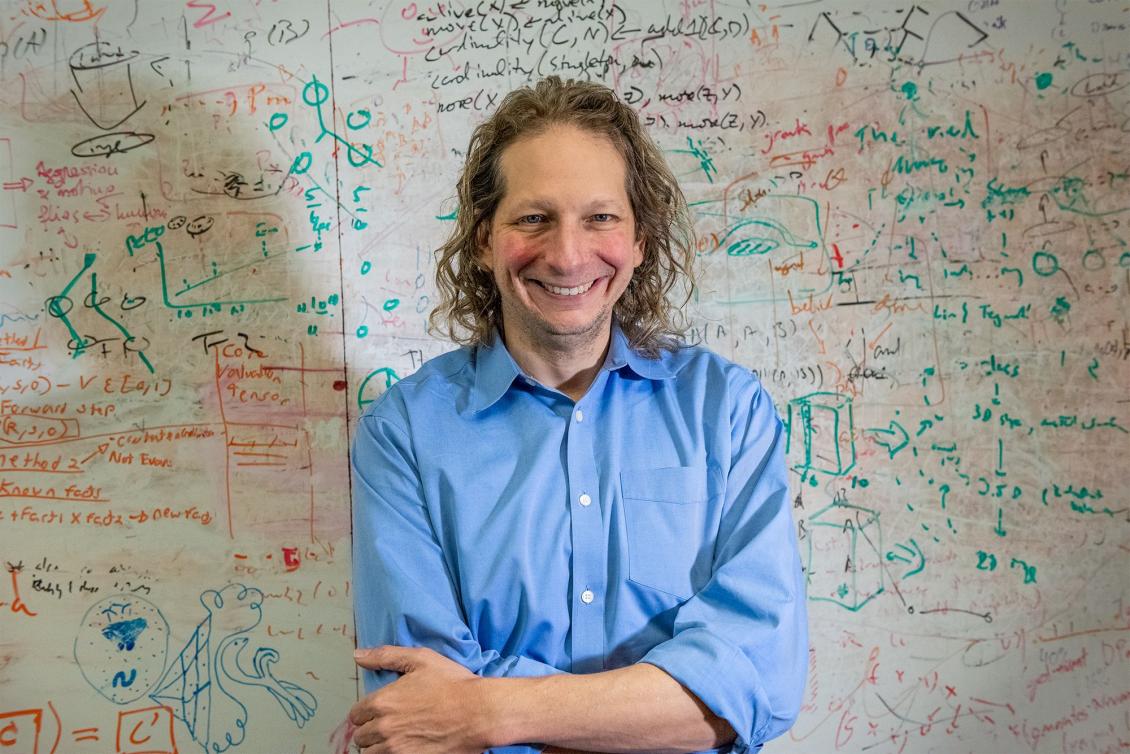
Josh Tenenbaum of MIT

R&D Magazine has named Josh Tenenbaum the 2018 Innovator of the Year. Tenenbaum, a professor of computational cognitive science in the Department of Brain and Cognitive Sciences at MIT, was recognized for his work studying the nature and origins of intelligence in the human mind and brain and applying that knowledge to build more human-like intelligence in machines. The award, part of the annual R&D 100 Awards, honor pioneers in science and technology.

“We selected Josh as our 2018 Innovator of the Year not only because of his accomplishments in the fields of cognitive science and artificial intelligence, but because of his willingness to partner with experts across the board — from computer scientists and engineers to neuroscientists and cognitive psychologists — in the name of innovation,” said Bea Riemschneider, editorial director of R&D Magazine in a press release announcing the award.

Tenenbaum’s research currently focuses on two areas: describing the structure, content, and development of people’s commonsense theories, especially intuitive physics and intuitive psychology, and understanding how people are able to learn and generalize new concepts, models, theories and tasks from very few examples — often called "one-shot learning.” Through a combination of mathematical modeling, computer simulation and behavioral experiments, his team works to uncover the logic behind our everyday inductive leaps: constructing perceptual representations, separating “style” and “content” in perception, learning concepts and words, judging similarity or representativeness, inferring causal connections, noticing coincidences, and predicting the future.

“In a long tradition of recognizing great scientists and engineers, R&D Magazine stands for excellence both in basic science and engineering and for making a bridge between those fields,” said Tenenbaum. “It’s especially exciting to receive this award because here at MIT we are trying to do exactly that — build a bridge between science and engineering to address great questions of intelligence around how human intelligence arises in the mind and brain and how we can use those insights to build smarter, more human-like forms of intelligence in machines so we are truly smarter and better-off.”

Tenenbaum is a member of MIT's Computer Science and Artificial Intelligence Laboratory (CSAIL) and Center for Brains, Minds and Machines (CBMM). He also leads the Computational Cognitive Science lab at MIT and is a scientific director for the MIT Quest for Intelligence Core.

Read the Original Article
Don't miss our next newsletter!
Sign Up

Footer menu

  • Contact Us
  • Employment
  • Be a Test Subject
  • Login

Footer 2

  • McGovern
  • Picower
Brain and Cognitive Sciences

MIT Department of Brain and Cognitive Sciences

Massachusetts Institute of Technology

77 Massachusetts Avenue, Room 46-2005

Cambridge, MA 02139-4307 | (617) 253-5748

For Emergencies | Accessibility

Massachusetts Institute of Technology