

Main navigation

  • About BCS
    • Mission
    • History
    • Building 46
      • Building 46 Room Reservations
    • Leadership
    • Employment
    • Contact
      • BCS Spot Awards
      • Building 46 Email and Slack
    • Directory
  • Faculty + Research
    • Faculty
    • Areas of Research
    • Postdoctoral Research
      • Postdoctoral Association and Committees
    • Core Facilities
    • InBrain
      • InBRAIN Collaboration Data Sharing Policy
  • Academics
    • Course 9: Brain and Cognitive Sciences
    • Course 6-9: Computation and Cognition
      • Course 6-9 MEng
    • Brain and Cognitive Sciences PhD
      • How to Apply
      • Program Details
      • Classes
      • Research
      • Student Life
      • For Current Students
    • Molecular and Cellular Neuroscience Program
      • How to Apply to MCN
      • MCN Faculty and Research Areas
      • MCN Curriculum
      • Model Systems
      • MCN Events
      • MCN FAQ
      • MCN Contacts
    • Research Scholars Program
    • Course Offerings
  • News + Events
    • News
    • Events
    • Recordings
    • Newsletter
  • Community + Culture
    • Community + Culture
    • Community Stories
    • Outreach
      • MIT Summer Research Program (MSRP)
      • Conferences, Outreach and Networking Opportunities
    • Post-Baccalaureate Research Scholars Program
    • Get Involved (MIT login required)
    • Resources (MIT login Required)
  • Give to BCS
    • Join the Champions of the Brain Fellows Society
    • Meet Our Donors

Utility Menu

  • Directory
  • Apply to BCS
  • Contact Us

Footer

  • Contact Us
  • Employment
  • Be a Test Subject
  • Login

Footer 2

  • McGovern
  • Picower

Utility Menu

  • Directory
  • Apply to BCS
  • Contact Us
Brain and Cognitive Sciences
Menu
MIT

Main navigation

  • About BCS
    • Mission
    • History
    • Building 46
    • Leadership
    • Employment
    • Contact
    • Directory
  • Faculty + Research
    • Faculty
    • Areas of Research
    • Postdoctoral Research
    • Core Facilities
    • InBrain
  • Academics
    • Course 9: Brain and Cognitive Sciences
    • Course 6-9: Computation and Cognition
    • Brain and Cognitive Sciences PhD
    • Molecular and Cellular Neuroscience Program
    • Research Scholars Program
    • Course Offerings
  • News + Events
    • News
    • Events
    • Recordings
    • Newsletter
  • Community + Culture
    • Community + Culture
    • Community Stories
    • Outreach
    • Post-Baccalaureate Research Scholars Program
    • Get Involved (MIT login required)
    • Resources (MIT login Required)
  • Give to BCS
    • Join the Champions of the Brain Fellows Society
    • Meet Our Donors

News

News Menu

  • News
  • Events
  • Newsletters

Breadcrumb

  1. Home
  2. News
  3. In her own words: BCS graduate student Rachel Magid studies child development
May 16, 2016

In her own words: BCS graduate student Rachel Magid studies child development

by
Rachel Magid
Image
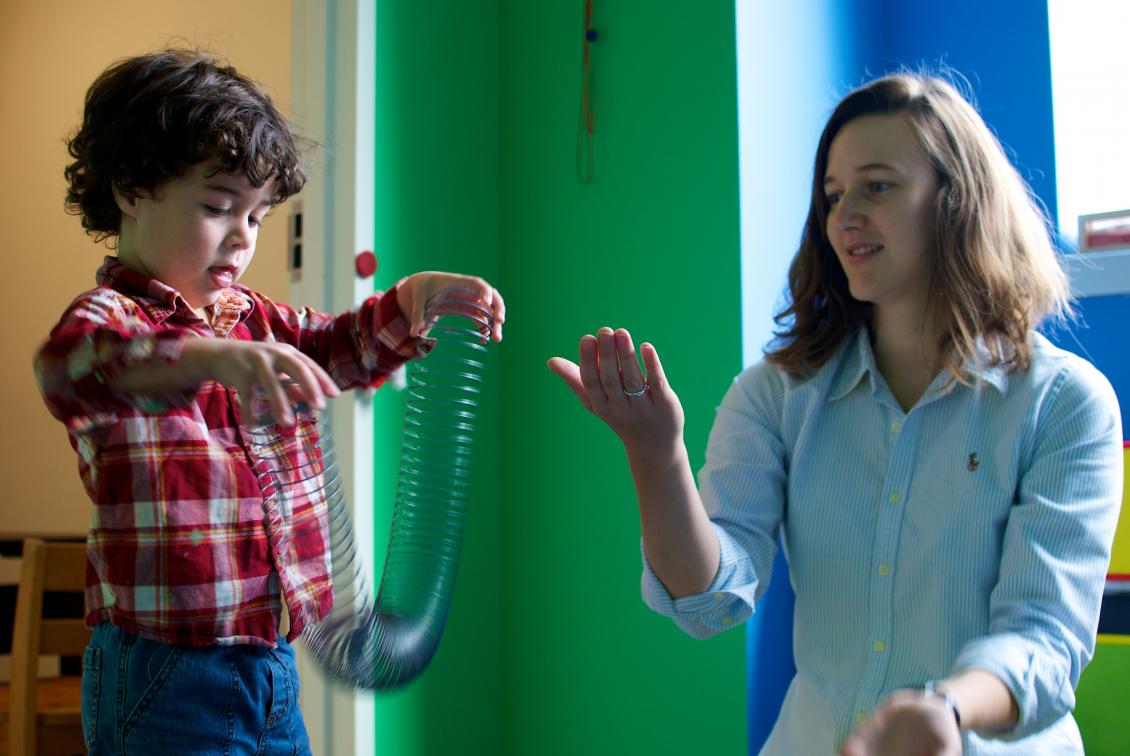
BCSNSS15 - 50th Anniversary First PhDs Rachel Magid.jpg

My interest in cognitive science first manifested itself as a passion for learning foreign languages, in my case French and American Sign Language. It struck me was that although it was possible to learn foreign languages as a young adolescent, I had done something seemingly even more remarkable—learned a first language—as a young child without being explicitly taught. Moreover, I’m not special at all for having done this.

As children, we toddle around, taking in the linguistic evidence from adults around us, making mappings between words and what they describe, and inferring hidden structure in the sentences spoken around us. But learning language is far from our only achievement. We spend our childhoods, which are elongated compared to those of other mammals, accomplishing many extraordinary achievements. We transition from beings who needed round-the-clock care to the competent adults— adults with our own specific set of skills and values. And we’ve each chosen which endeavors to pursue to make use of our particular skills and values. How does this happen? My main research interests lie in what we need to know about ourselves, as well as how we learn it, to allow that to unfold.

While I considered a more traditional psychology department for graduate school, where there might be an entire sub-area of research on child development, I decided to study and train at MIT because I feel a deep intellectual connection to this department. It is unlikely I would have taken the classes I have elsewhere, including a systems neuroscience class and a computational cognitive science class. These courses, as well as interactions with my fellow graduate students studying diverse areas of neuroscience and cognitive science, have greatly enriched my thinking and learning.

I have a particularly salient memory from graduate interview day, where a subset of the faculty gave “lightning” talks, presenting highlights of recent cutting edge work from their labs. Sitting in Singleton Auditorium listening to these talks, I felt like I was so close to the edge of knowledge, hearing from people who are making discoveries almost daily, often in collaboration with their graduate students. This gave me a deeper appreciation for the groundbreaking contributions of those in this department. This is one of the first places where people started studying the mind and brain in tandem. The department does a fantastic job of enabling us, as students, to drive this research confluence, and develop as scientists, mentors, and members of a global-community engaged in the pursuit of a better understanding of what’s going on in each and every of our heads. 

After I have completed my PhD, I would love to be a professor and have a lab that studies cognitive development.  Most PhDs in cognitive science complete some postdoctoral work after finishing graduate studies, and look forward to exploring that.

Don't miss our next newsletter!
Sign Up

Footer menu

  • Contact Us
  • Employment
  • Be a Test Subject
  • Login

Footer 2

  • McGovern
  • Picower
Brain and Cognitive Sciences

MIT Department of Brain and Cognitive Sciences

Massachusetts Institute of Technology

77 Massachusetts Avenue, Room 46-2005

Cambridge, MA 02139-4307 | (617) 253-5748

For Emergencies | Accessibility

Massachusetts Institute of Technology