




Gloria Choi to join McGovern Institute
by
Charles Jennings | McGovern Institute for Brain Research
Image
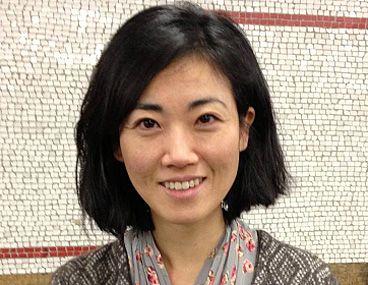
Gloria Choi uses molecular, anatomical and behavioral methods to study how sensory representations are encoded in the brain and how they acquire behavioral significance.
MIT’s McGovern Institute for Brain Research has announced the appointment of Gloria Choi as a new principal investigator, beginning this summer. She will also serve as an assistant professor in the Department of Brain and Cognitive Sciences.
Choi’s research addresses the mechanisms by which the brain learns to recognize olfactory stimuli and to associate them with appropriate behavioral responses.
Much recent work has been devoted to the question of how the binding of odorant molecules to their receptors in the olfactory epithelium leads to the perception of odors. In other sensory modalities — such as vision, touch or hearing — the primary sensory cortex shows a topographical organization in which stimulus features are systematically mapped on the cortical surface. In the piriform cortex, however, no such order has been found; while individual inputs to the cortex are tuned to specific odorants, their projections within the piriform cortex appears topographically random. Consistent with this, olfactory stimuli typically activate sparse ensembles of piriform cells, with no obvious spatial pattern. Yet somehow the brain must learn to recognize these apparently arbitrary spatial patterns of activity and to endow them with behavioral significance.
Choi uses the power of rodent molecular genetics to study how this happens. Using the optogenetic molecule Channelrhodopsin2, she has been able to activate sparse, arbitrarily chosen populations of neurons within the piriform cortex using direct light stimulation. She has shown that animals can learn to recognize and distinguish these artificial “smell-like” cues, which can be flexibly associated with certain stimuli to drive the appropriate behavioral responses.
In her own lab at MIT, Choi plans to study the brain circuits underlying this behavior to understand how sensory representations in piriform cortex can drive downstream targets to generate learned behavioral responses. She also plans to extend her approach to study social behavior, which in rodents is strongly affected by olfactory cues. One important modulator of social behavior is the hormone oxytocin, and Choi plans to study how oxytocin may control the mechanisms by which animals learn to attribute social significance to olfactory stimuli.
Olfactory learning also provides an opportunity to study more general questions about how the brain learns to categorize sensory stimuli and to associate them with complex rule-based behaviors. Such cognitive processes have been linked to the prefrontal cortex in humans and other species, and olfactory behavior in mice may offer a new and genetically tractable system for exploring these issues.
Choi received her bachelor’s degree from the University of California at Berkeley, and her PhD from Caltech, where she studied with David Anderson, an investigator at the Howard Hughes Medical Institute. She is currently a postdoctoral research scientist in the laboratory of Richard Axel at Columbia University.
Choi’s research addresses the mechanisms by which the brain learns to recognize olfactory stimuli and to associate them with appropriate behavioral responses.
Much recent work has been devoted to the question of how the binding of odorant molecules to their receptors in the olfactory epithelium leads to the perception of odors. In other sensory modalities — such as vision, touch or hearing — the primary sensory cortex shows a topographical organization in which stimulus features are systematically mapped on the cortical surface. In the piriform cortex, however, no such order has been found; while individual inputs to the cortex are tuned to specific odorants, their projections within the piriform cortex appears topographically random. Consistent with this, olfactory stimuli typically activate sparse ensembles of piriform cells, with no obvious spatial pattern. Yet somehow the brain must learn to recognize these apparently arbitrary spatial patterns of activity and to endow them with behavioral significance.
Choi uses the power of rodent molecular genetics to study how this happens. Using the optogenetic molecule Channelrhodopsin2, she has been able to activate sparse, arbitrarily chosen populations of neurons within the piriform cortex using direct light stimulation. She has shown that animals can learn to recognize and distinguish these artificial “smell-like” cues, which can be flexibly associated with certain stimuli to drive the appropriate behavioral responses.
In her own lab at MIT, Choi plans to study the brain circuits underlying this behavior to understand how sensory representations in piriform cortex can drive downstream targets to generate learned behavioral responses. She also plans to extend her approach to study social behavior, which in rodents is strongly affected by olfactory cues. One important modulator of social behavior is the hormone oxytocin, and Choi plans to study how oxytocin may control the mechanisms by which animals learn to attribute social significance to olfactory stimuli.
Olfactory learning also provides an opportunity to study more general questions about how the brain learns to categorize sensory stimuli and to associate them with complex rule-based behaviors. Such cognitive processes have been linked to the prefrontal cortex in humans and other species, and olfactory behavior in mice may offer a new and genetically tractable system for exploring these issues.
Choi received her bachelor’s degree from the University of California at Berkeley, and her PhD from Caltech, where she studied with David Anderson, an investigator at the Howard Hughes Medical Institute. She is currently a postdoctoral research scientist in the laboratory of Richard Axel at Columbia University.