

Main navigation

  • About BCS
    • Mission
    • History
    • Building 46
      • Building 46 Room Reservations
    • Leadership
    • Employment
    • Contact
      • BCS Spot Awards
      • Building 46 Email and Slack
    • Directory
  • Faculty + Research
    • Faculty
    • Areas of Research
    • Postdoctoral Research
      • Postdoctoral Association and Committees
    • Core Facilities
    • InBrain
      • InBRAIN Collaboration Data Sharing Policy
  • Academics
    • Course 9: Brain and Cognitive Sciences
    • Course 6-9: Computation and Cognition
      • Course 6-9 MEng
    • Brain and Cognitive Sciences PhD
      • How to Apply
      • Program Details
      • Classes
      • Research
      • Student Life
      • For Current Students
    • Molecular and Cellular Neuroscience Program
      • How to Apply to MCN
      • MCN Faculty and Research Areas
      • MCN Curriculum
      • Model Systems
      • MCN Events
      • MCN FAQ
      • MCN Contacts
    • Research Scholars Program
    • Course Offerings
  • News + Events
    • News
    • Events
    • Recordings
    • Newsletter
  • Community + Culture
    • Community + Culture
    • Community Stories
    • Outreach
      • MIT Summer Research Program (MSRP)
      • Conferences, Outreach and Networking Opportunities
    • Post-Baccalaureate Research Scholars Program
    • Get Involved (MIT login required)
    • Resources (MIT login Required)
  • Give to BCS
    • Join the Champions of the Brain Fellows Society
    • Meet Our Donors

Utility Menu

  • Directory
  • Apply to BCS
  • Contact Us

Footer

  • Contact Us
  • Employment
  • Be a Test Subject
  • Login

Footer 2

  • McGovern
  • Picower

Utility Menu

  • Directory
  • Apply to BCS
  • Contact Us
Brain and Cognitive Sciences
Menu
MIT

Main navigation

  • About BCS
    • Mission
    • History
    • Building 46
    • Leadership
    • Employment
    • Contact
    • Directory
  • Faculty + Research
    • Faculty
    • Areas of Research
    • Postdoctoral Research
    • Core Facilities
    • InBrain
  • Academics
    • Course 9: Brain and Cognitive Sciences
    • Course 6-9: Computation and Cognition
    • Brain and Cognitive Sciences PhD
    • Molecular and Cellular Neuroscience Program
    • Research Scholars Program
    • Course Offerings
  • News + Events
    • News
    • Events
    • Recordings
    • Newsletter
  • Community + Culture
    • Community + Culture
    • Community Stories
    • Outreach
    • Post-Baccalaureate Research Scholars Program
    • Get Involved (MIT login required)
    • Resources (MIT login Required)
  • Give to BCS
    • Join the Champions of the Brain Fellows Society
    • Meet Our Donors

News

News Menu

  • News
  • Events
  • Newsletters

Breadcrumb

  1. Home
  2. News
  3. Four MIT professors named inaugural Faculty Scholars
September 22, 2016

Four MIT professors named inaugural Faculty Scholars

by
MIT News Office
Image
hhmi-mit-faculty-scholars.png
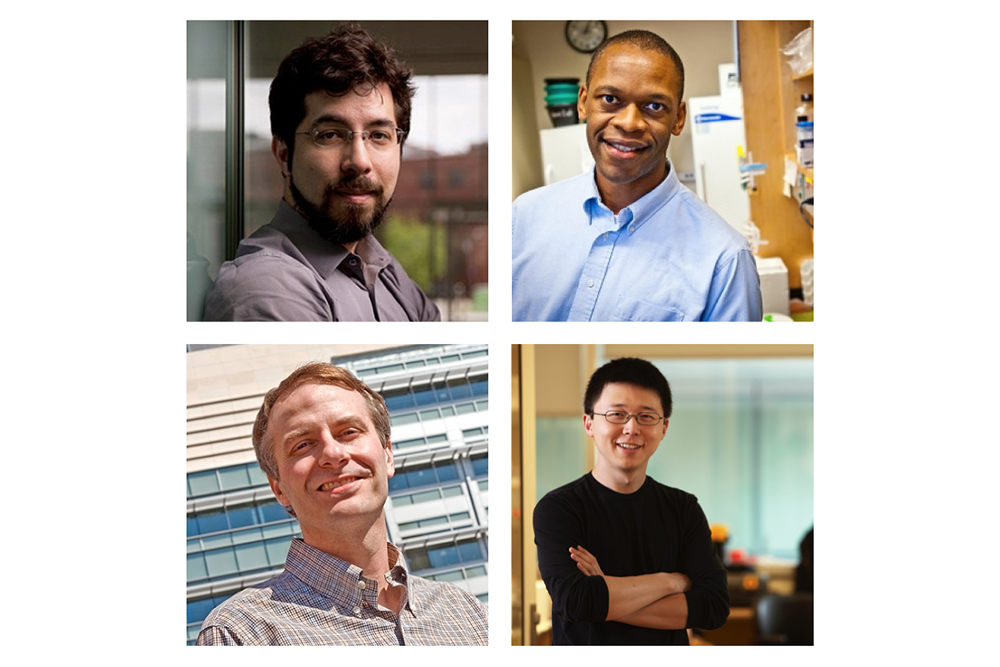
Clockwise from top left: MIT professors Ed Boyden, Jacquin Niles, Feng Zhang, and Matthew Vander Heiden have been named HHMI Faculty Scholars.

The Howard Hughes Medical Institute (HHMI), the Simons Foundation, and the Bill and Melinda Gates Foundation have announced that MIT faculty members Ed Boyden, Jacquin Niles, Matthew Vander Heiden, and Feng Zhang have been selected as Faculty Scholars. They are among 84 early career scientists from 43 institutions across the United States who are being recognized for their “great potential to make unique contributions to their field.”

This is the first collaboration between HHMI, the Simons Foundation and the Bill and Melinda Gates Foundation. The philanthropies created the new Faculty Scholars Program in response to “growing concern about the significant challenges that early-career scientists are facing.”

Scientists reviewed and evaluated more than 1,400 applicants on their potential for significant research productivity and originality, as judged by their doctoral and postdoctoral work, results from their independent research program, and their future research plans. Through the new program, the three philanthropies will spend about $83 million over five years to support the first cohort of scholars, with each one receiving between $600,000 and $1.8 million to support research endeavors.

The four MIT professors were selected among eligible faculty at more than 220 institutions:

Ed Boyden (HHMI-Simons Faculty Scholar), a professor of biological engineering and brain and cognitive sciences at MIT and a member of MIT’s Media Lab and McGovern Institute for Brain Research, plans to expand his lab’s toolbox for analyzing and engineering brain circuits and other complex biological systems. Most recently, Boyden developed a strategy called expansion microscopy to visualize the nanoscale structure of the brain and other tissues.

Jacquin Niles ’94, ’01 PhD (HHMI-Simons Faculty Scholar), associate professor of engineering in the Department of Biological Engineering, plans to expand his efforts to eliminate malaria by re-engineering the parasite into a drug delivery vehicle. Niles studies functional genetics in the malarial pathogen Plasmodium falciparum, as well as pathogen-host interactions. He’s working toward a clearer understanding of the parasite and disease to provide the scientific foundation for new malarial diagnostics, treatments, and prevention/elimination strategies.

Matthew Vander Heiden (HHMI-Faculty Scholar), an associate professor of biology at the Koch Institute for Integrative Cancer Research at MIT uses mouse models to study cancer cell metabolism. Vander Heiden is working to identify critical steps in metabolic pathways, such as the breakdown of glucose and the production of basic subunits of DNA, that may lead to new cancer therapies.

Feng Zhang (HHMI-Simons Faculty Scholar), an associate professor of biological engineering and brain and cognitive sciences at MIT, an investigator at the McGovern Institute for Brain Research, and a core member of the Broad Institute of MIT and Harvard, is developing tools to better understand nervous system function and disease. Zhang was a pioneer in the development of CRISPR-Cas9, a powerful genome-editing technology with many applications in biomedical research.

“This program will provide these scientists with much needed flexible resources so they can follow their best research ideas,” said HHMI Vice President and Chief Scientific Officer David Clapham.

Read the Original Article
Don't miss our next newsletter!
Sign Up

Footer menu

  • Contact Us
  • Employment
  • Be a Test Subject
  • Login

Footer 2

  • McGovern
  • Picower
Brain and Cognitive Sciences

MIT Department of Brain and Cognitive Sciences

Massachusetts Institute of Technology

77 Massachusetts Avenue, Room 46-2005

Cambridge, MA 02139-4307 | (617) 253-5748

For Emergencies | Accessibility

Massachusetts Institute of Technology