

Main navigation

  • About BCS
    • Mission
    • History
    • Building 46
      • Building 46 Room Reservations
    • Leadership
    • Employment
    • Contact
      • BCS Spot Awards
      • Building 46 Email and Slack
    • Directory
  • Faculty + Research
    • Faculty
    • Areas of Research
    • Postdoctoral Research
      • Postdoctoral Association and Committees
    • Core Facilities
    • InBrain
      • InBRAIN Collaboration Data Sharing Policy
  • Academics
    • Course 9: Brain and Cognitive Sciences
    • Course 6-9: Computation and Cognition
      • Course 6-9 MEng
    • Brain and Cognitive Sciences PhD
      • How to Apply
      • Program Details
      • Classes
      • Research
      • Student Life
      • For Current Students
    • Molecular and Cellular Neuroscience Program
      • How to Apply to MCN
      • MCN Faculty and Research Areas
      • MCN Curriculum
      • Model Systems
      • MCN Events
      • MCN FAQ
      • MCN Contacts
    • Research Scholars Program
    • Course Offerings
  • News + Events
    • News
    • Events
    • Recordings
    • Newsletter
  • Community + Culture
    • Community + Culture
    • Community Stories
    • Outreach
      • MIT Summer Research Program (MSRP)
      • Conferences, Outreach and Networking Opportunities
    • Post-Baccalaureate Research Scholars Program
    • Get Involved (MIT login required)
    • Resources (MIT login Required)
  • Give to BCS
    • Join the Champions of the Brain Fellows Society
    • Meet Our Donors

Utility Menu

  • Directory
  • Apply to BCS
  • Contact Us

Footer

  • Contact Us
  • Employment
  • Be a Test Subject
  • Login

Footer 2

  • McGovern
  • Picower

Utility Menu

  • Directory
  • Apply to BCS
  • Contact Us
Brain and Cognitive Sciences
Menu
MIT

Main navigation

  • About BCS
    • Mission
    • History
    • Building 46
    • Leadership
    • Employment
    • Contact
    • Directory
  • Faculty + Research
    • Faculty
    • Areas of Research
    • Postdoctoral Research
    • Core Facilities
    • InBrain
  • Academics
    • Course 9: Brain and Cognitive Sciences
    • Course 6-9: Computation and Cognition
    • Brain and Cognitive Sciences PhD
    • Molecular and Cellular Neuroscience Program
    • Research Scholars Program
    • Course Offerings
  • News + Events
    • News
    • Events
    • Recordings
    • Newsletter
  • Community + Culture
    • Community + Culture
    • Community Stories
    • Outreach
    • Post-Baccalaureate Research Scholars Program
    • Get Involved (MIT login required)
    • Resources (MIT login Required)
  • Give to BCS
    • Join the Champions of the Brain Fellows Society
    • Meet Our Donors

News

News Menu

  • News
  • Events
  • Newsletters

Breadcrumb

  1. Home
  2. News
  3. Feng Zhang wins 2018 Keio Medical Science Prize
September 19, 2018

Feng Zhang wins 2018 Keio Medical Science Prize

by
Sabbi Lall | McGovern Institute for Brain Research
Image
Keio-Medical-Science-Prize-winner-2018-Feng-Zhang-cropped-MIT-00.jpg
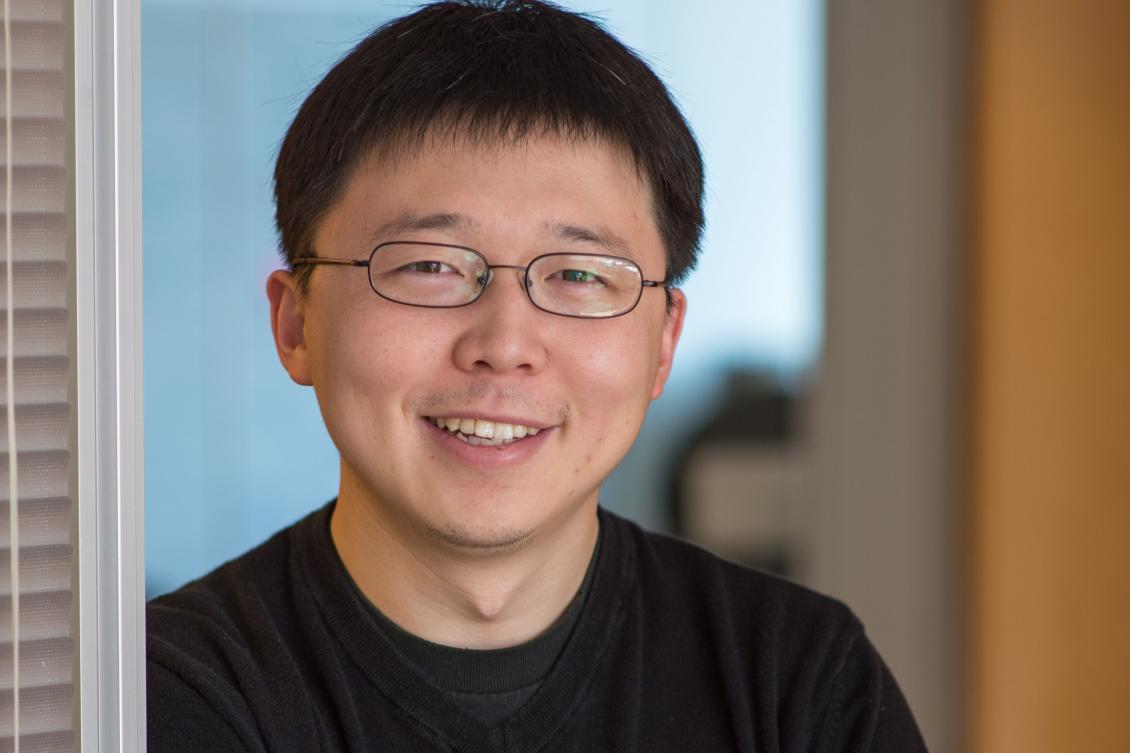
McGovern Institute investigator Feng Zhang is the winner of the 2018 Keio Medical Science Prize.

Molecular biologist Feng Zhang has been named a winner of the prestigious Keio Medical Science Prize. He is being recognized for the groundbreaking development of CRISPR-Cas9-mediated genome engineering in cells and its application for medical science. 

Zhang is the James and Patricia Poitras Professor of Neuroscience at MIT, an associate professor in the departments of Brain and Cognitive Sciences and Biological Engineering, a Howard Hughes Medical Institute investigator, an investigator at the McGovern Institute for Brain Research, and a core member of the Broad Institute of MIT and Harvard.

“We are delighted that Feng is now a Keio Prize laureate,” says McGovern Institute Director Robert Desimone. “This truly recognizes the remarkable achievements that he has made at such a young age.”

Zhang is a molecular biologist who has contributed to the development of multiple molecular tools to accelerate the understanding of human disease and create new therapeutic modalities. During his graduate work, Zhang contributed to the development of optogenetics, a system for activating neurons using light, which has advanced our understanding of brain connectivity.

Zhang went on to pioneer the deployment of the microbial CRISPR-Cas9 system for genome engineering in eukaryotic cells. The ease and specificity of the system has led to its widespread use across the life sciences and it has groundbreaking implications for disease therapeutics, biotechnology, and agriculture. He has continued to mine bacterial CRISPR systems for additional enzymes with useful properties, leading to the discovery of Cas13, which targets RNA, rather than DNA, and may potentially be a way to treat genetic diseases without altering the genome. Zhang has also developed a molecular detection system called SHERLOCK based on the Cas13 family, which can sense trace amounts of genetic material, including viruses and alterations in genes that might be linked to cancer.

“I am tremendously honored to have our work recognized by the Keio Medical Prize,” says Zhang. “It is an inspiration to us to continue our work to improve human health.”

Now in its 23rd year, the Keio Medical Science Prize is awarded to a maximum of two scientists each year. The other 2018 laureate, Masashi Yanagisawa, director of the International Institute for Integrative Sleep Medicine at the University of Tsukuba, is being recognized for his seminal work on sleep control mechanisms.

The prize is offered by Keio University, and the selection committee specifically looks for laureates that have made an outstanding contribution to medicine or the life sciences. The prize was initially endowed by Mitsunada Sakaguchi in 1994, with the express condition that it be used to commend outstanding science, promote advances in medicine and the life sciences, expand researcher networks, and contribute to the wellbeing of humankind. The winners receive a certificate of merit, a medal, and a monetary award of approximately $90,000.

The prize ceremony will be held on Dec. 18 at Keio University in Tokyo.

Read the Original Article
Don't miss our next newsletter!
Sign Up

Footer menu

  • Contact Us
  • Employment
  • Be a Test Subject
  • Login

Footer 2

  • McGovern
  • Picower
Brain and Cognitive Sciences

MIT Department of Brain and Cognitive Sciences

Massachusetts Institute of Technology

77 Massachusetts Avenue, Room 46-2005

Cambridge, MA 02139-4307 | (617) 253-5748

For Emergencies | Accessibility

Massachusetts Institute of Technology