

Main navigation

  • About BCS
    • Mission
    • History
    • Building 46
      • Building 46 Room Reservations
    • Leadership
    • Employment
    • Contact
      • BCS Spot Awards
      • Building 46 Email and Slack
    • Directory
  • Faculty + Research
    • Faculty
    • Areas of Research
    • Postdoctoral Research
      • Postdoctoral Association and Committees
    • Core Facilities
    • InBrain
      • InBRAIN Collaboration Data Sharing Policy
  • Academics
    • Course 9: Brain and Cognitive Sciences
    • Course 6-9: Computation and Cognition
      • Course 6-9 MEng
    • Brain and Cognitive Sciences PhD
      • How to Apply
      • Program Details
      • Classes
      • Research
      • Student Life
      • For Current Students
    • Molecular and Cellular Neuroscience Program
      • How to Apply to MCN
      • MCN Faculty and Research Areas
      • MCN Curriculum
      • Model Systems
      • MCN Events
      • MCN FAQ
      • MCN Contacts
    • Research Scholars Program
    • Course Offerings
  • News + Events
    • News
    • Events
    • Recordings
    • Newsletter
  • Community + Culture
    • Community + Culture
    • Community Stories
    • Outreach
      • MIT Summer Research Program (MSRP)
      • Conferences, Outreach and Networking Opportunities
    • Post-Baccalaureate Research Scholars Program
    • Get Involved (MIT login required)
    • Resources (MIT login Required)
  • Give to BCS
    • Join the Champions of the Brain Fellows Society
    • Meet Our Donors

Utility Menu

  • Directory
  • Apply to BCS
  • Contact Us

Footer

  • Contact Us
  • Employment
  • Be a Test Subject
  • Login

Footer 2

  • McGovern
  • Picower

Utility Menu

  • Directory
  • Apply to BCS
  • Contact Us
Brain and Cognitive Sciences
Menu
MIT

Main navigation

  • About BCS
    • Mission
    • History
    • Building 46
    • Leadership
    • Employment
    • Contact
    • Directory
  • Faculty + Research
    • Faculty
    • Areas of Research
    • Postdoctoral Research
    • Core Facilities
    • InBrain
  • Academics
    • Course 9: Brain and Cognitive Sciences
    • Course 6-9: Computation and Cognition
    • Brain and Cognitive Sciences PhD
    • Molecular and Cellular Neuroscience Program
    • Research Scholars Program
    • Course Offerings
  • News + Events
    • News
    • Events
    • Recordings
    • Newsletter
  • Community + Culture
    • Community + Culture
    • Community Stories
    • Outreach
    • Post-Baccalaureate Research Scholars Program
    • Get Involved (MIT login required)
    • Resources (MIT login Required)
  • Give to BCS
    • Join the Champions of the Brain Fellows Society
    • Meet Our Donors

News

News Menu

  • News
  • Events
  • Newsletters

Breadcrumb

  1. Home
  2. News
  3. BCS Professor Emeritus Stephan Chorover dies at 82
February 26, 2015

BCS Professor Emeritus Stephan Chorover dies at 82

by
Department of Brain and Cognitive Sciences
Image
stephan-chorover-mit.jpg
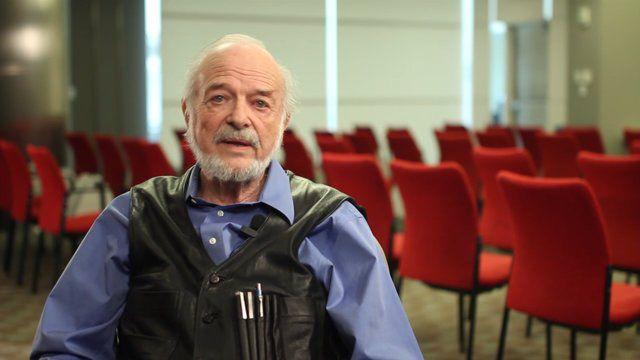
Stephan Chorover

Professor Emeritus Stephan Chorover, a founding member of the Department of Brain and Cognitive Sciences, passed away on Friday, Feb. 20, at age 82. His more than 50 years at MIT were marked by a passion for social justice, innovation in educational practices, and a love of philosophical inquiry.

Chorover graduated from the Bronx High School of Science in 1950. He received his Bachelor of Science from City College of New York in 1955 and a PhD in neuropsychology from New York University in 1959. Trained as a physiological psychologist, his early research focused on learning and memory in animals, and interactions between the central nervous system, human behavior, and socioenvironmental contexts. While at MIT, he became increasingly interested in human systems in composite biological, psychological, and social terms.

He was a strong advocate against the misuse of psychology and neuroscience as means of sociopolitical control, which he explored in his book, "From Genesis to Genocide: The Meaning of Human Nature and the Power of Behavior Control." Chorover became an oft-cited opponent of the use of psychosurgery, especially as a treatment of violent prisoners and indigent populations. His interest in the social context of behavior control motivated his research focus on social psychology during later years.

Chorover's commitment to students began during the early days of his MIT career, where he was instrumental in creating the department's first academic programs. Over the years he taught and mentored thousands of undergraduate and graduate students. A proponent of collaborative learning in higher education, he built that perspective into his teaching at MIT, focusing on how human societies interrelate with environmental systems. Chorover sought to enhance his students’ understanding of the human and ecological implications of their scientific research. He retired in 1998 but continued teaching 9.70 (Social Psychology) and 9.68 (Affect: Aspects of Feelings) to MIT undergraduate students for an additional 15 years.

He served on several MIT committees tasked with improving the Institute's curriculum and student life, and in 1996 co-authored a study of the first-year experience at MIT with his 9.70 students. He also served for several years on the editorial board of the MIT faculty newsletter, and was a member of the Second Committee on Women Faculty in the School of Science.

He is survived by his beloved wife of 62 years, Bea, and three children: Nora (and partner Steve Cooley), Jon (and wife Gina Gargano), and Katya (and husband John Grandt); as well as four grandchildren, Talia, Nathan, Sarah, and Annaluna. 

A memorial will be held in the MIT Chapel on March 14 from 12:30-2:30 p.m.

Read the Original Article
Don't miss our next newsletter!
Sign Up

Footer menu

  • Contact Us
  • Employment
  • Be a Test Subject
  • Login

Footer 2

  • McGovern
  • Picower
Brain and Cognitive Sciences

MIT Department of Brain and Cognitive Sciences

Massachusetts Institute of Technology

77 Massachusetts Avenue, Room 46-2005

Cambridge, MA 02139-4307 | (617) 253-5748

For Emergencies | Accessibility

Massachusetts Institute of Technology