

Main navigation

  • About BCS
    • Mission
    • History
    • Building 46
      • Building 46 Room Reservations
    • Leadership
    • Employment
    • Contact
      • BCS Spot Awards
      • Building 46 Email and Slack
    • Directory
  • Faculty + Research
    • Faculty
    • Areas of Research
    • Postdoctoral Research
      • Postdoctoral Association and Committees
    • Core Facilities
    • InBrain
      • InBRAIN Collaboration Data Sharing Policy
  • Academics
    • Course 9: Brain and Cognitive Sciences
    • Course 6-9: Computation and Cognition
      • Course 6-9 MEng
    • Brain and Cognitive Sciences PhD
      • How to Apply
      • Program Details
      • Classes
      • Research
      • Student Life
      • For Current Students
    • Molecular and Cellular Neuroscience Program
      • How to Apply to MCN
      • MCN Faculty and Research Areas
      • MCN Curriculum
      • Model Systems
      • MCN Events
      • MCN FAQ
      • MCN Contacts
    • Research Scholars Program
    • Course Offerings
  • News + Events
    • News
    • Events
    • Recordings
    • Newsletter
  • Community + Culture
    • Community + Culture
    • Community Stories
    • Outreach
      • MIT Summer Research Program (MSRP)
      • Conferences, Outreach and Networking Opportunities
    • Post-Baccalaureate Research Scholars Program
    • Get Involved (MIT login required)
    • Resources (MIT login Required)
  • Give to BCS
    • Join the Champions of the Brain Fellows Society
    • Meet Our Donors

Utility Menu

  • Directory
  • Apply to BCS
  • Contact Us

Footer

  • Contact Us
  • Employment
  • Be a Test Subject
  • Login

Footer 2

  • McGovern
  • Picower

Utility Menu

  • Directory
  • Apply to BCS
  • Contact Us
Brain and Cognitive Sciences
Menu
MIT

Main navigation

  • About BCS
    • Mission
    • History
    • Building 46
    • Leadership
    • Employment
    • Contact
    • Directory
  • Faculty + Research
    • Faculty
    • Areas of Research
    • Postdoctoral Research
    • Core Facilities
    • InBrain
  • Academics
    • Course 9: Brain and Cognitive Sciences
    • Course 6-9: Computation and Cognition
    • Brain and Cognitive Sciences PhD
    • Molecular and Cellular Neuroscience Program
    • Research Scholars Program
    • Course Offerings
  • News + Events
    • News
    • Events
    • Recordings
    • Newsletter
  • Community + Culture
    • Community + Culture
    • Community Stories
    • Outreach
    • Post-Baccalaureate Research Scholars Program
    • Get Involved (MIT login required)
    • Resources (MIT login Required)
  • Give to BCS
    • Join the Champions of the Brain Fellows Society
    • Meet Our Donors

News

News Menu

  • News
  • Events
  • Newsletters

Breadcrumb

  1. Home
  2. News
  3. #AskMIT — Using your full brain
March 15, 2017

#AskMIT — Using your full brain

by
MIT News Office
Image
featured-video-mit-brain-cells-hannah-iaccarino-00.png

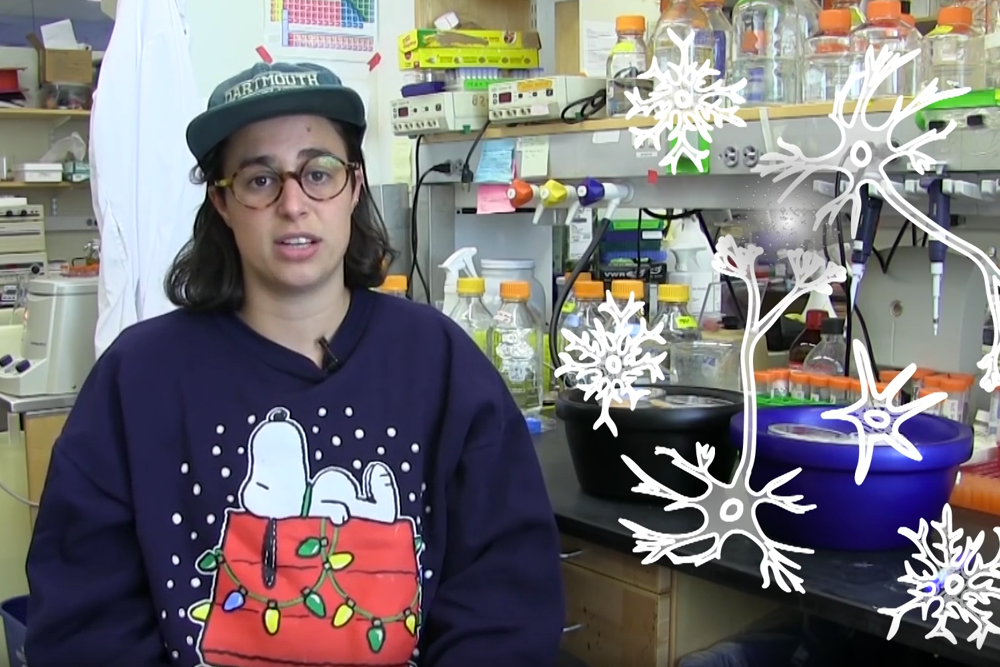
Hannah Iaccarino PhD '16 answers a question about brain cells for Ask MIT, part of MIT+K12 Videos.

Featured video: Kids ask tough questions; MIT students, staff, and faculty answer. This episode of "#AskMIT" describes how much of our brains we really use.
 

How much of our brain do we really utilize? Does of any of our gray matter go unused, just taking up space in our noggins? A fifth grader recently contacted MIT to find out. She asked, "Why don't we use all our brain cells, and what do we do with the ones we don't use?" 

Her video, and the response from Hannah Iaccarino PhD '16, then a graduate student in the MIT Department of Brain and Cognitive Sciences and a researcher at the Picower Institute for Learning and Memory, is part of the Ask MIT Q&A series produced by MIT+K12 Videos, an educational outreach media program in the Office of Digital Learning. Ask MIT invites kindergarten through 12th-grade students from all over the world to ask any question related to STEM (science, technology, engineering, or mathematics), and to submit it as a video via Facebook, Twitter, or email. Then, an MIT chemist, geneticist, nuclear engineer, roboticist, or rocket scientist provides the answer in a video online.

Starting in February, Ask MIT teamed up with Curiosity.com to produce a biweekly series. While Curiosity has been sharing MIT-produced videos to its site and Facebook page for the past few years, the new collaboration will bring new audiences to the series. "Collaborating with MIT was a logical step for us, enabling our audience to ask questions and receive real answers from thought leaders in science, engineering, technology, and math fields," says Michael Burke, head of strategy and partnerships at Curiosity. "We're excited to be working with the brilliant minds at MIT and look forward to inspiring our audience to get smarter about the world around them."

Do you or a young person you know have a question for MIT? Ask a teacher or parent to post your video on Facebook or Twitter with #askMIT, or email it to askmit@curiosity.com. Then, watch and explore #askMIT on Curiosity. Undergrads interested in producing the #askMIT series are also welcome to apply by emailing mitk12videos@mit.edu.

Submitted by: Office of Digital Learning | Video by: MIT+K12 Videos | 2 min, 56 sec

Read the Original Article
Don't miss our next newsletter!
Sign Up

Footer menu

  • Contact Us
  • Employment
  • Be a Test Subject
  • Login

Footer 2

  • McGovern
  • Picower
Brain and Cognitive Sciences

MIT Department of Brain and Cognitive Sciences

Massachusetts Institute of Technology

77 Massachusetts Avenue, Room 46-2005

Cambridge, MA 02139-4307 | (617) 253-5748

For Emergencies | Accessibility

Massachusetts Institute of Technology