




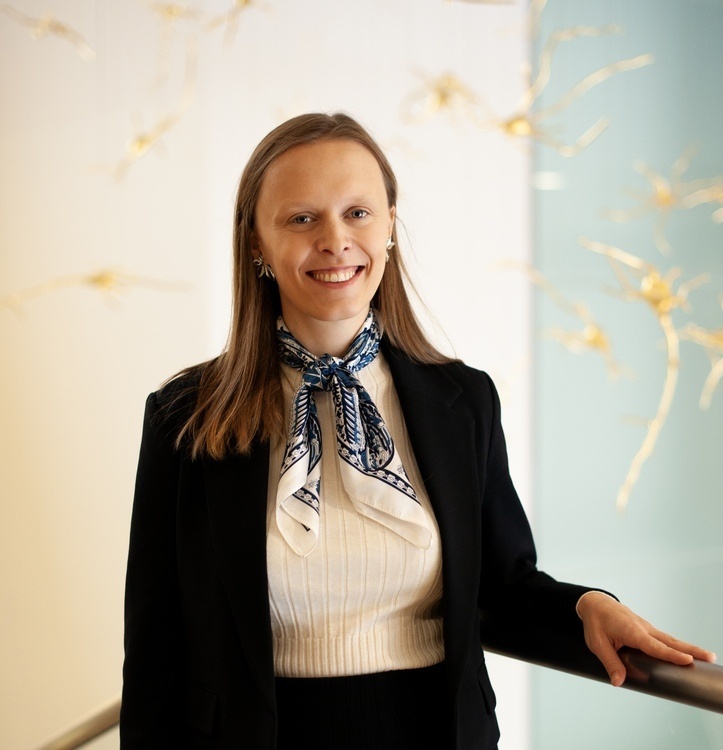
SCSB Lunch Series with Dr. Agata Wolna: Mapping the cognitive and neural infrastructure of speech articulation
Description
Date: Friday, February 13, 2026
Time: 12:00pm – 1:00pm
Location: Simons Center Conference room 46-6011 + Zoom [https://mit.zoom.us/j/94786291788]
Speaker: Agata Wolna, Ph.D.
Affiliation: Simons Postdoctoral Fellow, Fedorenko Lab, BCS
Talk title: Mapping the cognitive and neural infrastructure of speech articulation
Abstract: Language production requires knowing what words mean and how to put them together to create sentences, but it also critically relies on the motor system to prepare and execute sequences of rapid mouth movements. Paul Broca’s report of an acquired selective articulatory deficit was a cornerstone finding in the history of cognitive neuroscience, and speech-motor deficits are commonly reported across developmental disorders, including autism. However, despite extensive research on the neural bases of speech articulation, key aspects of its brain basis and its relationship to other cognitive abilities remain debated. In this talk, I will present the results from a series of fMRI experiments in neurotypical adults, aimed at understanding which brain areas support articulation and how they relate to other, known systems. To do so, I developed a functional localizer that quickly and reliably identifies a set of brain areas sensitive to speech articulation, and then systematically characterized these regions’ functional profiles and their overlap with higher-level language areas and areas sensitive to general cognitive effort. I found that the articulation system is largely distinct from both the language and the general-cognitive networks, and two small areas—one in “Broca’s area” and one in superior precentral gyrus—show sensitivity to articulatory effort.
I will finish by describing an ongoing effort to perform a large-scale behavioral evaluation of articulatory abilities—along with higher-level linguistic and general-cognitive abilities—in neurotypical individuals and individuals with autism, with the hope to eventually link individual differences in articulatory performance to aspects of the neural organization of the articulation network.