




McGovern Institute Special Seminar with Paul Nuyujukian
Description
Date: Friday, February 6, 2026
Time: 12:00 pm – 1:00 pm
Location: Seminar Room 3189
Title: Perturbing the brain from the inside out
Abstract:
The majority of motor systems studies, particularly in large animals, have been correlational in nature, motivating novel perturbation studies to explore the generalization and causality of neural low-dimensional states. Here, I will share novel findings, enabled through perturbations (internal, external, and computational), that reveal the low-dimensional structure of motor cortex. Studies capturing freely-moving behavior demonstrate that the low-dimensional structure and dynamics of arm movements depend not solely on arm kinematics but also on the behavioral context. Longitudinal studies of arm reaching and high-electrode count (10^3 electrodes) recordings help define lower and upper bounds on the dimensionality of motor cortex. Windowed construction of subspaces within a behavioral session reveal that neural subspace axes are not fixed, but rapidly switching among a small subset. Finally, internal perturbations can reveal stable features of the neural state. Lesion studies uncover relationships between behavioral performance and neural activity spanning both spiking activity and the local field potential. Human seizures are characterized by stereotyped alterations in brain-wide information. Taken together, these findings indicate that to advance systems neuroscience, it will be important to 1) capture complex, rich behavior, 2) leverage high electrode count recordings, 3) carefully select neural state modeling techniques, and 4) explore causal neural perturbations. Such advancements will be crucial for the successful translation of these basic science findings to novel clinical therapies for brain disease.
Bio:
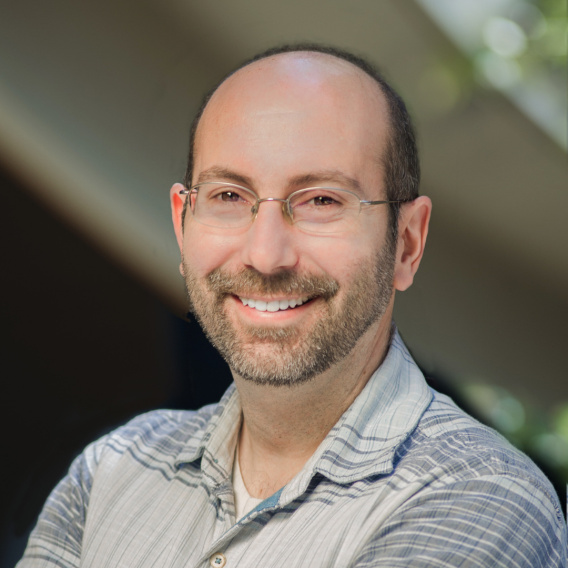
Paul Nuyujukian
Faculty Scholar, Wu Tsai Neurosciences Institute
Assistant Professor, Bioengineering
Assistant Professor, Neurosurgery
Paul is an Assistant Professor in the Department of Bioengineering, Neurosurgery, and (by courtesy) Electrical Engineering; and a Faculty Scholar of the Wu Tsai Neurosciences Institute. He completed his undergraduate training at UCLA in 2006. He earned his MS and PhD in Bioengineering at Stanford in 2011 and 2012, respectively, with Krishna Shenoy in the Neural Prosthetics Systems Laboratory and completed his MD from Stanford in 2014. His postdoctoral work was with Jaimie Henderson and Krishna Shenoy in the Neural Prosthetics Translational Laboratory.