




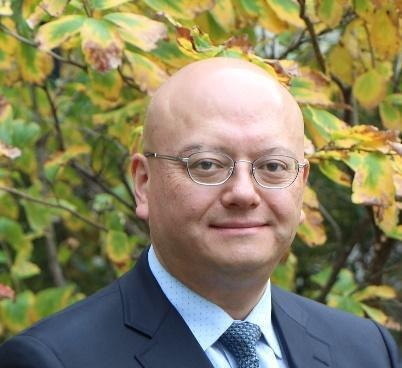
Colloquium on the Brain and Cognition with Takao Hensch
Description
Time: 4:00pm
Location: 46-3002, Singleton Auditorium (Third floor of MIT Building 46)
Talk Title: Translating critical periods
Takao K. Hensch Professor, Molecular Cellular Biology, Harvard University
Professor, Neurology (Boston Children’s Hospital), Harvard Medical School
Director, International Research Center for Neurointelligence (UTIAS)
Takao K. Hensch is joint Professor of Molecular Cellular Biology at Harvard’s Center for Brain Science and Professor of Neurology, Harvard Medical School at Boston Children’s Hospital. He is a graduate of Harvard, the University of Tokyo, UCSF and a former Fulbright Fellow at the Max-Planck Institute (Frankfurt). After his PhD, Hensch helped to launch the RIKEN Brain Science Institute (Japan) as Lab Head for Neuronal Circuit Development and Group Director of Critical Period Mechanisms Research, before returning to Harvard in 2006. There he directed the NIMH Silvio Conte Center for Mental Health Research and is a prominent leader and advisor to impactful global research networks, such as the International Research Center for Neurointelligence (Japan), CIFAR Child Brain Development network (Canada), NCCR Synapsy (Switzerland), OECD-CERI (France) and National Scientific Council on the Developing Child (USA). Professor Hensch has received several honors, including the Japanese Imperial Order of the Rising Sun, Gold Rays with Neck Ribbon (2024), the MD Sackler Prize for Developmental Psychobiology (2016), NIH Director’s Pioneer Award (2007), and Young Investigator Awards from the Society for Neuroscience both in the US (2005) and Japan (2001 Tsukahara Prize). He has served on numerous editorial boards, including Neuron, J Neurosci (reviewing editor) and Frontiers in Neural Circuits (chief editor). His lab explores how brain functions are shaped by early life experience, identifying pivotal roles for specific inhibitory circuit ‘triggers’ and molecular ‘brakes’ which can be lifted to enable adult plasticity. Such insights shed translational light on the etiology, novel biomarkers and potential reversibility of derailed neuro-developmental trajectories in cognitive disorders, early adversity, recovery from brain injury in adulthood, and life-long learning more broadly.