




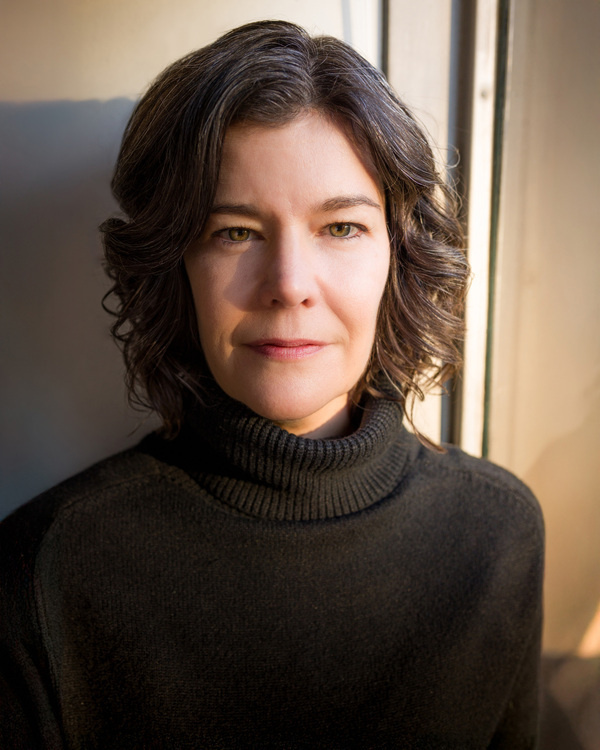
Colloquium on the Brain and Cognition with Nicole Rust
Description
Time: 4:00pm
Location: 46-3002, Singleton Auditorium (Third floor of MIT Building 46)
Talk Title: Subjective Feelings to Brain Mechanisms: Advancing the Science of Mood through Epistemic Iteration
Abstract:
What happens in our brains to generate our moods? We don't yet know. Unlike functions such as memory, which can be measured objectively, mood is typically assessed with subjective ratings, such as “On a scale of 1 to 5, how excited (or upset) are you?” At the same time, our most precise neural measurements come from nonhuman animals, who cannot report how they feel. Mood is an extreme example of a central problem in neuroscience: we need measurements to create understanding, but we need understanding to design good measurements. Once we fully understand mood, we'll know exactly how to measure it (for instance, in an animal). But how do we get there?
In this talk, I will draw on the notion of “epistemic iteration,” proposed by the philosopher Hasok Chang, to describe how scientists tackled the conceptually analogous problem of understanding temperature in the 17th century. Building on this idea, we have developed a new approach to bridge the gap between behavioral and neural measures of mood. I will describe how we have used this strategy to identify a strong neural correlate of mood, reflected in the heterogeneous, persistent responses of individual neurons in monkey anterior insular cortex — a brain area implicated in human mood via lesions, fMRI, and microstimulation. Finally, I will describe how these insights are leading us to detailed accounts of how the brain converts experiences into mood and the mechanisms that keep mood within a healthy range, rather than spiraling out of control.
Bio:
Nicole Rust, PhD, is the Rose Family Endowed Term Professor of Psychology at the University of Pennsylvania in Philadelphia. She received her B.S. in molecular biology from the University of Idaho, her Ph.D. in Neural Science from New York University, and she completed her postdoctoral training at the Massachusetts Institute of Technology. Dr. Rust's research focuses on understanding mood and memory in the brain. She is the author of the 2025 book Elusive Cures: Why Neuroscience Hasn't Solve Brain Disorders and How We Can Change That. She also serves as an editor for BrainFacts.org (a source that shares stories of scientific discovery from neuroscientists around the world) and as a contributing editor for The Transmitter (a leading brain research news magazine).
Dr. Rust's research and teaching have been recognized by numerous awards, including the Troland Research Award from the National Academy of Sciences. She is an elected member of the Memory Disorders Research Society, the recipient of a McKnight Scholar Award, a CAREER Award from the National Science Foundation, an Alfred P. Sloan Fellowship, and the Charles Ludwig Distinguished Teaching Award. She is currently a Simons Foundation Pivot Fellow.