

Main navigation

  • About BCS
    • Mission
    • History
    • Building 46
      • Building 46 Room Reservations
    • Leadership
    • Employment
    • Contact
      • BCS Spot Awards
      • Building 46 Email and Slack
    • Directory
  • Faculty + Research
    • Faculty
    • Areas of Research
    • Postdoctoral Research
      • Postdoctoral Association and Committees
    • Core Facilities
    • InBrain
      • InBRAIN Collaboration Data Sharing Policy
  • Academics
    • Course 9: Brain and Cognitive Sciences
    • Course 6-9: Computation and Cognition
      • Course 6-9 MEng
    • Brain and Cognitive Sciences PhD
      • How to Apply
      • Program Details
      • Classes
      • Research
      • Student Life
      • For Current Students
    • Molecular and Cellular Neuroscience Program
      • How to Apply to MCN
      • MCN Faculty and Research Areas
      • MCN Curriculum
      • Model Systems
      • MCN Events
      • MCN FAQ
      • MCN Contacts
    • Research Scholars Program
    • Course Offerings
  • News + Events
    • News
    • Events
    • Recordings
    • Newsletter
  • Community + Culture
    • Community + Culture
    • Community Stories
    • Outreach
      • MIT Summer Research Program (MSRP)
      • Conferences, Outreach and Networking Opportunities
    • Post-Baccalaureate Research Scholars Program
    • Get Involved (MIT login required)
    • Resources (MIT login Required)
  • Give to BCS
    • Join the Champions of the Brain Fellows Society
    • Meet Our Donors

Utility Menu

  • Directory
  • Apply to BCS
  • Contact Us

Footer

  • Contact Us
  • Employment
  • Be a Test Subject
  • Login

Footer 2

  • McGovern
  • Picower

Utility Menu

  • Directory
  • Apply to BCS
  • Contact Us
Brain and Cognitive Sciences
Menu
MIT

Main navigation

  • About BCS
    • Mission
    • History
    • Building 46
    • Leadership
    • Employment
    • Contact
    • Directory
  • Faculty + Research
    • Faculty
    • Areas of Research
    • Postdoctoral Research
    • Core Facilities
    • InBrain
  • Academics
    • Course 9: Brain and Cognitive Sciences
    • Course 6-9: Computation and Cognition
    • Brain and Cognitive Sciences PhD
    • Molecular and Cellular Neuroscience Program
    • Research Scholars Program
    • Course Offerings
  • News + Events
    • News
    • Events
    • Recordings
    • Newsletter
  • Community + Culture
    • Community + Culture
    • Community Stories
    • Outreach
    • Post-Baccalaureate Research Scholars Program
    • Get Involved (MIT login required)
    • Resources (MIT login Required)
  • Give to BCS
    • Join the Champions of the Brain Fellows Society
    • Meet Our Donors

Events

News Menu

  • News
  • Events
  • Newsletters

Breadcrumb

  1. Home
  2. Events
  3. Chromatin organization and function in the molecular etiology of autism
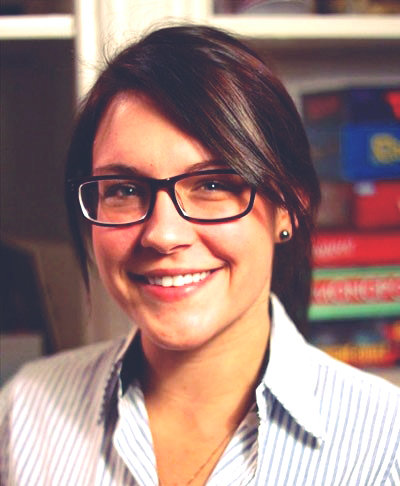
Ashley-Watson.jpg
Simons Center for the Social Brain
Lunch Series

Chromatin organization and function in the molecular etiology of autism

Speaker(s)
Ashley Watson, Ph.D.
Add to CalendarAmerica/New_YorkChromatin organization and function in the molecular etiology of autism04/07/2017 4:00 pm04/07/2017 5:00 pm46-6011 - Simons Center Conference Room
April 7, 2017
4:00 pm - 5:00 pm
Location
46-6011 - Simons Center Conference Room
Contact
Alexandra Sokhina
    Description

    Date: Friday, April 7, 2017
    Time: 12:00pm – 1:00pm
    Speaker: Ashley Watson, Ph.D.
    Affiliation: Postdoctoral Fellow, Dr. Li-Huei Tsai’s laboratory, Picower Institute for Learning and Memory

    Talk Title: Chromatin organization and function in the molecular etiology of autism
    Abstract: Spatial organization of the genome in three dimensions (3D) is an important aspect of tissue-specific developmental transcriptional regulation that involves chromatin remodeling factors, architectural proteins, and interactions between distal regulatory elements. The zinc finger protein CTCF has emerged as a critical factor in mediating long-range chromatin interactions to regulate transcription. Recent exome sequencing of autism spectrum disorder (ASD) patients identified multiple haploinsufficient mutations in the zinc finger DNA-binding domain of CTCF, suggesting that alterations in CTCF binding may contribute to abnormal neurodevelopment and disease pathogenesis. To investigate the relationship between CTCF-mediated chromatin topology and transcriptional regulation, we generated isogenic human induced pluripotent stem cell (iPSC)-derived neural progenitor cells (NPCs) harboring autism spectrum disorder (ASD)-linked CTCF mutation. I will present transcriptomic and epigenomic data to support the role of CTCF in orchestrating transcriptional programs essential for neurodevelopment. These findings shed light on the consequence of specific ASD-linked mutations and have important implications for transcriptional regulation via 3D chromatin organization in neurodevelopment.

    Upcoming Events

    Jan
    Wed
    21
    Department of Brain and Cognitive Sciences (BCS)

    BCS STIRR Graduate Research Assistant Talks and Travel Awards

    12:00pm to 2:00pm
    Add to CalendarAmerica/New_YorkBCS STIRR Graduate Research Assistant Talks and Travel Awards01/21/2026 12:00 pm01/21/2026 2:00 pmBuilding 46,3310
    Jan
    Thu
    22
    Department of Brain and Cognitive Sciences (BCS)

    BCS Special Seminar with Hongkui Zeng

    2:30pm to 3:30pm
    Add to CalendarAmerica/New_YorkBCS Special Seminar with Hongkui Zeng01/22/2026 2:30 pm01/22/2026 3:30 pmBuilding 46,Singleton Auditorium, 3002
    Feb
    Thu
    5
    McGovern Institute for Brain Research

    McGovern Institute Special Seminar with Alla Karpova

    4:00pm to 5:00pm
    Add to CalendarAmerica/New_YorkMcGovern Institute Special Seminar with Alla Karpova02/05/2026 4:00 pm02/05/2026 5:00 pmBuilding 46,Singleton Auditorium
    See All Events
    Don't miss our next newsletter!
    Sign Up

    Footer menu

    • Contact Us
    • Employment
    • Be a Test Subject
    • Login

    Footer 2

    • McGovern
    • Picower
    Brain and Cognitive Sciences

    MIT Department of Brain and Cognitive Sciences

    Massachusetts Institute of Technology

    77 Massachusetts Avenue, Room 46-2005

    Cambridge, MA 02139-4307 | (617) 253-5748

    For Emergencies | Accessibility

    Massachusetts Institute of Technology