Main navigation

  • About BCS
    • Mission
    • History
    • Building 46
      • Building 46 Room Reservations
    • Leadership
    • Employment
    • Contact
      • BCS Spot Awards
      • Building 46 Email and Slack
    • Directory
  • Faculty + Research
    • Faculty
    • Areas of Research
    • Postdoctoral Research
      • Postdoctoral Association and Committees
    • Core Facilities
    • InBrain
      • InBRAIN Collaboration Data Sharing Policy
  • Academics
    • Course 9: Brain and Cognitive Sciences
    • Course 6-9: Computation and Cognition
      • Course 6-9 MEng
    • Brain and Cognitive Sciences PhD
      • How to Apply
      • Program Details
      • Classes
      • Research
      • Student Life
      • For Current Students
    • Molecular and Cellular Neuroscience Program
      • How to Apply to MCN
      • MCN Faculty and Research Areas
      • MCN Curriculum
      • Model Systems
      • MCN Events
      • MCN FAQ
      • MCN Contacts
    • Research Scholars Program
    • Course Offerings
  • News + Events
    • News
    • Events
    • Recordings
    • Newsletter
  • Community + Culture
    • Community + Culture
    • Community Stories
    • Outreach
      • MIT Summer Research Program (MSRP)
      • Conferences, Outreach and Networking Opportunities
    • Post-Baccalaureate Research Scholars Program
    • Get Involved (MIT login required)
    • Resources (MIT login Required)
  • Give to BCS
    • Join the Champions of the Brain Fellows Society
    • Meet Our Donors

Utility Menu

  • Directory
  • Apply to BCS
  • Contact Us

Footer

  • Contact Us
  • Employment
  • Be a Test Subject
  • Login

Footer 2

  • McGovern
  • Picower

Utility Menu

  • Directory
  • Apply to BCS
  • Contact Us
Brain and Cognitive Sciences
Menu
MIT

Main navigation

  • About BCS
    • Mission
    • History
    • Building 46
    • Leadership
    • Employment
    • Contact
    • Directory
  • Faculty + Research
    • Faculty
    • Areas of Research
    • Postdoctoral Research
    • Core Facilities
    • InBrain
  • Academics
    • Course 9: Brain and Cognitive Sciences
    • Course 6-9: Computation and Cognition
    • Brain and Cognitive Sciences PhD
    • Molecular and Cellular Neuroscience Program
    • Research Scholars Program
    • Course Offerings
  • News + Events
    • News
    • Events
    • Recordings
    • Newsletter
  • Community + Culture
    • Community + Culture
    • Community Stories
    • Outreach
    • Post-Baccalaureate Research Scholars Program
    • Get Involved (MIT login required)
    • Resources (MIT login Required)
  • Give to BCS
    • Join the Champions of the Brain Fellows Society
    • Meet Our Donors
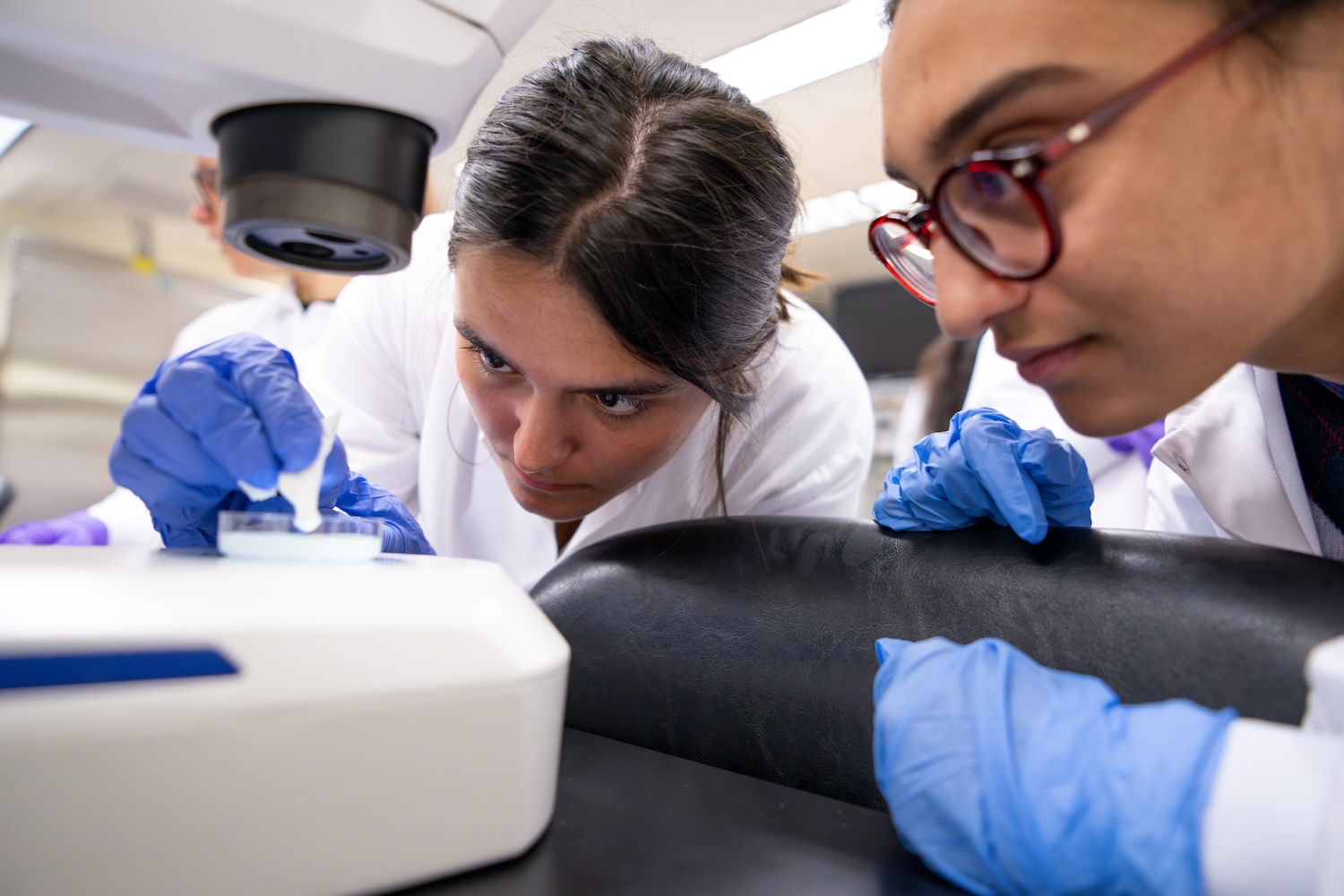
Close shot of two researchers working in a wet lab

Understanding the brain. Comprehending the mind.

Featured News

Illustration. Two people work on laptops while one person unpacked a moving box.
When it comes to language, context matters

In everyday conversation, it’s critical to understand not just the words that are spoken, but the context in which they are said. If it’s pouring rain and someone remarks on the “lovely weather,” you won’t understand their meaning unless you realize that they’re being sarcastic.

Making inferences about what someone really means when it doesn’t match the literal meaning of their words is a skill known as pragmatic language ability. This includes not only interpreting sarcasm but also understanding metaphors and white lies, among many other conversational subtleties.

“Pragmatics is trying to reason about why somebody might say something, and what is the message they’re trying to convey given that they put it in this particular way,” says Evelina Fedorenko, an associate professor of brain and cognitive sciences and a member of MIT’s McGovern Institute for Brain Research.

Research from Fedorenko and her colleagues has revealed that these abilities can be grouped together based on what types of inferences they require. In a study of 800 people, the researchers identified three clusters of pragmatic skills that are based on the same kinds of inferences and may have similar underlying neural processes. One of these clusters includes inferences that are based on our knowledge of social conventions and rules. Another depends on knowledge of how the physical world works, while the last requires the ability to interpret differences in tone, which can indicate emphasis or emotion.

Fedorenko and Edward Gibson, an MIT professor of brain and cognitive sciences, are the senior authors of the study, which appeared in the Proceedings of the National Academy of Sciences.

More News

Featured News

Close up illustration of a t-cell.
New study suggests a way to rejuvenate the immune system

As people age, their immune system function declines. T cell populations become smaller and can’t react to pathogens as quickly, making people more susceptible to a variety of infections.

To try to overcome that decline, researchers at MIT and the Broad Institute have found a way to temporarily program cells in the liver to improve T-cell function. This reprogramming can compensate for the age-related decline of the thymus, where T cell maturation normally occurs.

Using mRNA to deliver three key factors that usually promote T-cell survival, the researchers were able to rejuvenate the immune systems of mice. Aged mice that received the treatment showed much larger and more diverse T cell populations in response to vaccination, and they also responded better to cancer immunotherapy treatments.

If developed for use in patients, this type of treatment could help people lead healthier lives as they age, the researchers say.

“If we can restore something essential like the immune system, hopefully we can help people stay free of disease for a longer span of their life,” says Feng Zhang, the James and Patricia Poitras Professor of Neuroscience at MIT, who has joint appointments in the departments of Brain and Cognitive Sciences and Biological Engineering.

Zhang is the senior author of the study, which appeared in the journal Nature.

More News

Featured News

Illustration. Up close illustration of what could be an eyeball or camera lens.
A “scientific sandbox” lets researchers explore the evolution of vision systems

Why did humans evolve the eyes we have today?

While scientists can’t go back in time to study the environmental pressures that shaped the evolution of the diverse vision systems that exist in nature, a new computational framework developed by MIT researchers allows them to explore this evolution in artificial intelligence agents.

The framework they developed, in which embodied AI agents evolve eyes and learn to see over many generations, is like a “scientific sandbox” that allows researchers to recreate different evolutionary trees. The user does this by changing the structure of the world and the tasks AI agents complete, such as finding food or telling objects apart.

This allows them to study why one animal may have evolved simple, light-sensitive patches as eyes, while another has complex, camera-type eyes.

The researchers’ experiments with this framework showcase how tasks drove eye evolution in the agents. For instance, they found that navigation tasks often led to the evolution of compound eyes with many individual units, like the eyes of insects and crustaceans. On the other hand, if agents focused on object discrimination, they were more likely to evolve camera-type eyes with irises and retinas. This framework could enable scientists to probe “what-if” questions about vision systems that are difficult to study experimentally. It could also guide the design of novel sensors and cameras for robots, drones, and wearable devices that balance performance with real-world constraints like energy efficiency and manufacturability.

Tomaso Poggio, the Eugene McDermott Professor in the Department of Brain and Cognitive Sciences, an investigator in the McGovern Institute, and co-director of the Center for Brains, Minds, and Machines, is a co-author of the research, published in Science Advances.

More News
Don't miss our next newsletter!
Sign Up

Footer menu

  • Contact Us
  • Employment
  • Be a Test Subject
  • Login

Footer 2

  • McGovern
  • Picower
Brain and Cognitive Sciences

MIT Department of Brain and Cognitive Sciences

Massachusetts Institute of Technology

77 Massachusetts Avenue, Room 46-2005

Cambridge, MA 02139-4307 | (617) 253-5748

For Emergencies | Accessibility

Massachusetts Institute of Technology