
Main navigation

  • About BCS
    • Mission
    • History
    • Building 46
      • Building 46 Room Reservations
    • Leadership
    • Employment
    • Contact
      • BCS Spot Awards
      • Building 46 Email and Slack
    • Directory
  • Faculty + Research
    • Faculty
    • Areas of Research
    • Postdoctoral Research
      • Postdoctoral Association and Committees
    • Core Facilities
    • InBrain
      • InBRAIN Collaboration Data Sharing Policy
  • Academics
    • Course 9: Brain and Cognitive Sciences
    • Course 6-9: Computation and Cognition
      • Course 6-9 MEng
    • Brain and Cognitive Sciences PhD
      • How to Apply
      • Program Details
      • Classes
      • Research
      • Student Life
      • For Current Students
    • Molecular and Cellular Neuroscience Program
      • How to Apply to MCN
      • MCN Faculty and Research Areas
      • MCN Curriculum
      • Model Systems
      • MCN Events
      • MCN FAQ
      • MCN Contacts
    • Computationally-Enabled Integrative Neuroscience Program
    • Research Scholars Program
    • Course Offerings
  • News + Events
    • News
    • Events
    • Recordings
    • Newsletter
  • Community + Culture
    • Community + Culture
    • Community Stories
    • Outreach
      • MIT Summer Research Program (MSRP)
      • Conferences, Outreach and Networking Opportunities
    • Post-Baccalaureate Research Scholars Program
    • Get Involved (MIT login required)
    • Resources (MIT login Required)
  • Give to BCS
    • Join the Champions of the Brain Fellows Society
    • Meet Our Donors

Utility Menu

  • Directory
  • Apply to BCS
  • Contact Us

Footer

  • Contact Us
  • Employment
  • Be a Test Subject
  • Login

Footer 2

  • McGovern
  • Picower

Utility Menu

  • Directory
  • Apply to BCS
  • Contact Us
Brain and Cognitive Sciences
Menu
MIT

Main navigation

  • About BCS
    • Mission
    • History
    • Building 46
    • Leadership
    • Employment
    • Contact
    • Directory
  • Faculty + Research
    • Faculty
    • Areas of Research
    • Postdoctoral Research
    • Core Facilities
    • InBrain
  • Academics
    • Course 9: Brain and Cognitive Sciences
    • Course 6-9: Computation and Cognition
    • Brain and Cognitive Sciences PhD
    • Molecular and Cellular Neuroscience Program
    • Computationally-Enabled Integrative Neuroscience Program
    • Research Scholars Program
    • Course Offerings
  • News + Events
    • News
    • Events
    • Recordings
    • Newsletter
  • Community + Culture
    • Community + Culture
    • Community Stories
    • Outreach
    • Post-Baccalaureate Research Scholars Program
    • Get Involved (MIT login required)
    • Resources (MIT login Required)
  • Give to BCS
    • Join the Champions of the Brain Fellows Society
    • Meet Our Donors
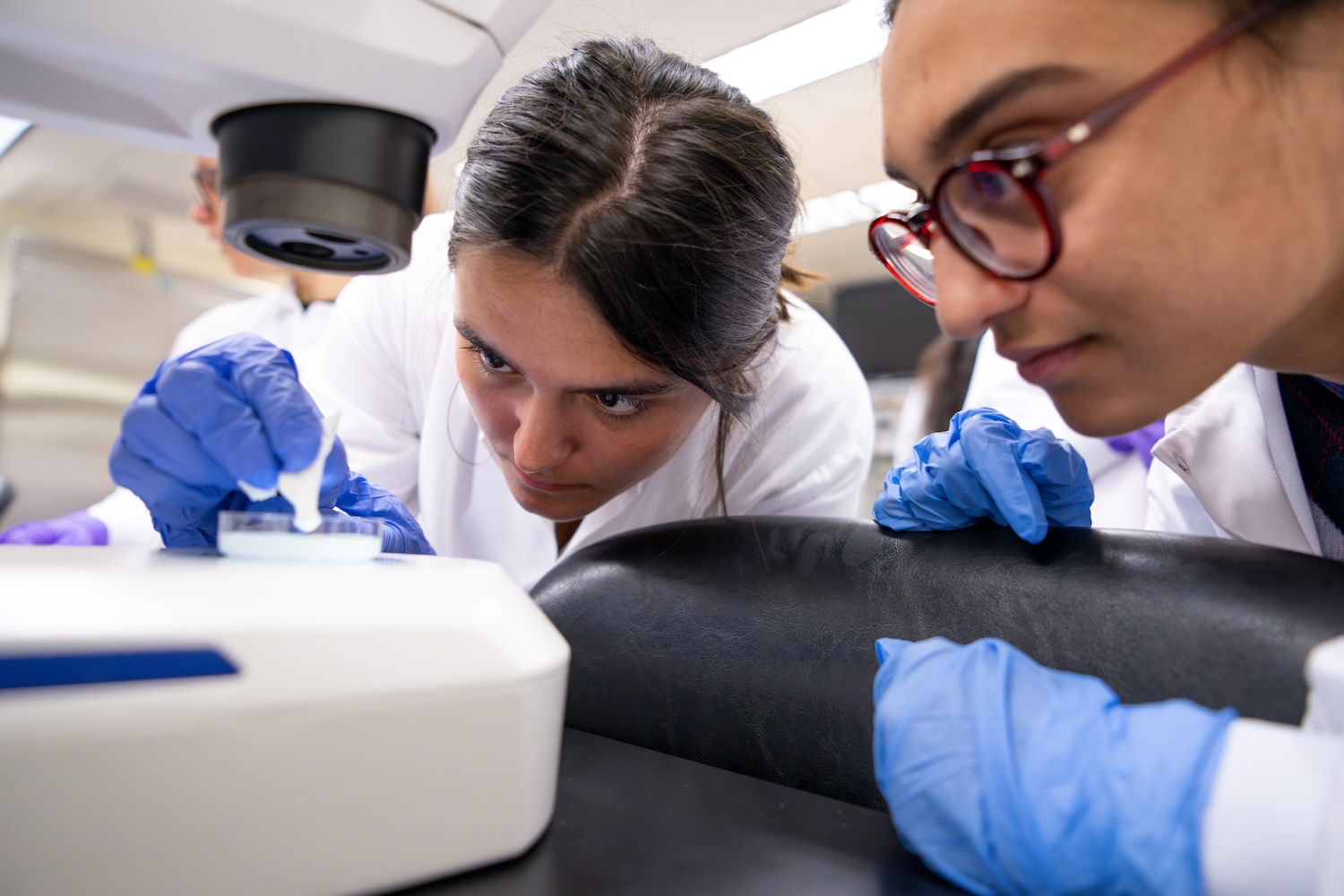
Close shot of two researchers working in a wet lab

Understanding the brain. Comprehending the mind.

Featured News

Illustration. A man, a mouse and a fly walking across a crosswalk
Staying stable

With every step we take, our brains are already thinking about the next one. If a bump in the terrain or a minor misstep has thrown us off balance, our stride may need to be altered to prevent a fall. Our two-legged posture makes maintaining stability particularly complex, which our brains solve in part by continually monitoring our bodies and adjusting where we place our feet.

Now, scientists at MIT have determined that animals with very different bodies likely use a shared strategy to balance themselves when they walk.

Nidhi Seethapathi, the Frederick A. and Carole J. Middleton Career Development Assistant Professor in Brain and Cognitive Sciences and Electrical Engineering and Computer Science at MIT, and K. Lisa Yang ICoN Center Fellow Antoine De Comite found that humans, mice, and fruit flies all use an error-correction process to guide foot placement and maintain stability while walking. Their findings, published in the journal PNAS, could inform future studies exploring how the brain achieves stability during locomotion — bridging the gap between animal models and human balance.

More News

Featured News

Matthias Michel (left), the Old Dominion Career Development Professor in the Department of Linguistics and Philosophy, and Earl Miller, the Picower Professor of Neuroscience in the Department of Brain and Cognitive Sciences.
The science of consciousness

Humans know they exist, but how does “knowing” work? Despite all that’s been learned about brain function and the bodily processes it governs, we still don't understand where the subjective experiences associated with brain functions originate.

A new interdisciplinary project seeks to find answers to these kinds of big questions around consciousness, a fundamental yet elusive phenomenon.

The MIT Consciousness Club is co-led by philosopher Matthias Michel, the Old Dominion Career Development Professor in the Department of Linguistics and Philosophy, and Earl Miller, the Picower Professor of Neuroscience in the Department of Brain and Cognitive Sciences.

Funded by a grant from the MIT Human Insight Collaborative’s (MITHIC) SHASS+ Connectivity Fund, the MIT Consciousness Club aims to build a bridge between philosophy and cognitive (neuro)science, while also engaging the Boston area’s academic community to advance consciousness research.

“It’s possible to study this scientifically,” says Michel. “MIT positioning itself as a leader in the field would change everything.”

“Matthias takes a science-based approach to the work” Miller adds. “A coherent, fact-based, research-supported understanding of and approach to consciousness can have a massive impact on our approach to public health.”
 

More News

Featured News

Kimaya Lecamwasam
Blending neuroscience, AI, and music to create mental health innovations

While studying as an undergrad at Wellesley, Kimaya Lecamwasam participated in the MIT Undergraduate Research Opportunities Program for three years. Working in the Department of Brain and Cognitive Sciences lab of Emery Brown, the Edward Hood Taplin Professor of Medical Engineering and Computational Neuroscience, she focused primarily on classifying consciousness in anesthetized patients and training brain-computer interface-enabled prosthetics using reinforcement learning.

“I still had a really deep love for music, which I was pursuing in parallel to all of my neuroscience work, but I really wanted to try to find a way to combine both of those things in grad school,” says Lecamwasam. Brown recommended that she look into the graduate programs at the MIT Media Lab within the Program in Media Arts and Sciences (MAS), which turned out to be an ideal fit.

More News
Don't miss our next newsletter!
Sign Up

Footer menu

  • Contact Us
  • Employment
  • Be a Test Subject
  • Login

Footer 2

  • McGovern
  • Picower
Brain and Cognitive Sciences

MIT Department of Brain and Cognitive Sciences

Massachusetts Institute of Technology

77 Massachusetts Avenue, Room 46-2005

Cambridge, MA 02139-4307 | (617) 253-5748

For Emergencies | Accessibility

Massachusetts Institute of Technology