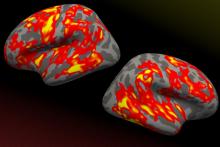
About 20 percent of children in the United States have difficulty learning to read, and educators have devised a variety of interventions to try to help them.
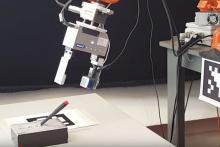
Eight years ago, Ted Adelson’s research group at MIT’s Computer Science and Artificial Intelligence Laboratory (CSAIL) unveiled a new sensor technology, called GelSight, that uses physical contact with an object to provide
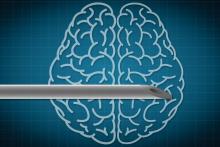
Delivering an electrical current to a part of the brain involved in movement control has proven successful in treating many Parkinson’s disease patients.
Michale Fee, the Glen V. and Phyllis F. Dorflinger Professor in the Department of Brain and Cognitive Sciences, has received the Fundamental Science Investigator Award.
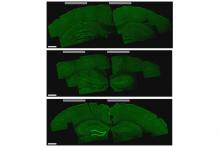
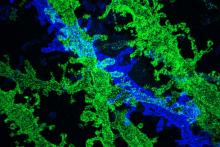
MIT researchers have developed a way to make extremely high-resolution images of tissue samples, at a fraction of the cost of other techniques that offer similar resolution.
In the past 10 years, the best-performing artificial-intelligence systems — such as the speech recognizers on smartphones or Google’s latest automatic translator — have resulted from a technique called “deep learning.”
A team of scientists from the Broad Institute of MIT and Harvard, the McGovern Institute for Brain Research at MIT, the Institute for Medical Engineering and Science at MIT, and the Wyss Institute for Biologically Inspired