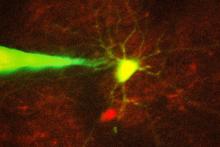
Recording electrical signals from inside a neuron in the living brain can reveal a great deal of information about that neuron’s function and how it coordinates with other cells in the brain.
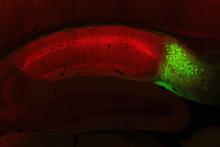
When we have a new experience, the memory of that event is stored in a neural circuit that connects several parts of the hippocampus and other brain structures.
Feng Zhang, a member of the McGovern Institute for Brain Research and an associate professor in the Departments of Brain and Cognitive Sciences and of Biological Engineering, has been named a winner of the 2017 Albany Medi
In the brains of Alzheimer’s patients, many of the genes required to form new memories are shut down by a genetic blockade, contributing to the cognitive decline seen in those patients.
Solve — MIT’s initiative that brings together problem-solvers of all stripes to tackle the world’s pressing problems — has four new global challenges for 2017: brain health; sustainable urban communities; women and technol
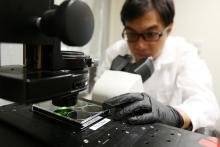
MIT and Harvard Medical School researchers have devised a way to image biopsy samples with much higher resolution — an advance that could help doctors develop more accurate and inexpensive diagnostic tests.