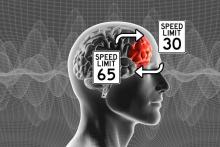
Cognitive flexibility — the brain’s ability to switch between different rules or action plans depending on the context — is key to many of our everyday activities.
The journey through graduate school is rarely straight and smooth. There are challenges and setbacks, students experience varying degrees of doubt and struggle, and many redefine their goals along the way.
Schizophrenia, a brain disorder that produces hallucinations, delusions, and cognitive impairments, usually strikes during adolescence or young adulthood.
Imagine a herd of deer grazing in the forest. Suddenly, a twig snaps nearby, and they look up from the grass. The thought of food is forgotten, and the animals are primed to respond to any threat that might appear.
In the summer of 2006, before their teenage years began, Mahdi Ramadan and Alexi Choueiri were spirited from their homes amid political unrest in Lebanon. Evacuated on short notice by the U.S.
David Orenstein | Picower Institute for Learning and Memory
Important because it is mundane, working memory gets us through each day by allowing us, for example, to follow the receptionist’s directions to find the doctor’s office, or to sort through the costs and benefits of one se
Imagine trying to write your name so that it can be read in a mirror. Your brain has all of the visual information you need, and you’re a pro at writing your own name. Still, this task is very difficult for most people.