David Orenstein | The Picower Institute for Learning and Memory
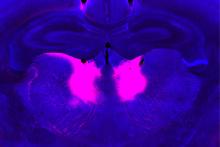
Opening a new window on the brainstem, a new tool reliably and finely resolves distinct nerve bundles in live diffusion MRI scans, revealing signs of injury or disease.
David Orenstein | The Picower Institute for Learning and Memory
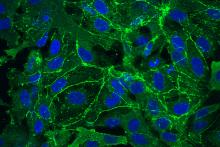
Somatostatin-expressing neurons follow a unique trajectory when forming connections in the visual cortex that may help establish the conditions needed for sensory experience to refine circuits.
David Orenstein | The Picower Institute for Learning and Memory
New “biomimetic” model of brain circuits and function at multiple scales produced naturalistic dynamics and learning, and even identified curious behavior by some neurons.
David Orenstein | The Picower Institute for Learning and Memory
MIT researchers tested their theory of spatial computing, which holds that the brain recruits and controls ad hoc groups of neurons for cognitive tasks by applying brain waves to patches of the cortex.
With support from the Siegel Family Endowment, the newly renamed MIT Siegel Family Quest for Intelligence investigates how brains produce intelligence and how it can be replicated to solve problems.
For decades, Professor Ted Gibson has taught the meaning of language to first-year graduate students in the Department of Brain and Cognitive Sciences.