




New integrative computational neuroscience center established at MIT’s McGovern Institute
With the tools of modern neuroscience, researchers can peer into the brain with unprecedented accuracy. Recording devices listen in on the electrical conversations between neurons, picking up the voices of hundreds of cells at a time. Genetic tools allow us to focus on specific types of neurons based on their molecular signatures. Microscopes zoom in to illuminate the brain’s circuitry, capturing thousands of images of elaborately branched dendrites. Functional MRIs detect changes in blood flow to map activity within a person’s brain, generating a complete picture by compiling hundreds of scans.
This deluge of data provides insights into brain function and dynamics at different levels — molecules, cells, circuits, and behavior — but the insights remain compartmentalized in separate research silos for each level. An innovative new center at MIT’s McGovern Institute for Brain Research aims to leverage them into powerful revelations of the brain’s inner workings.
The K. Lisa Yang Integrative Computational Neuroscience (ICoN) Center will create advanced mathematical models and computational tools to synthesize the deluge of data across scales and advance our understanding of the brain and mental health.
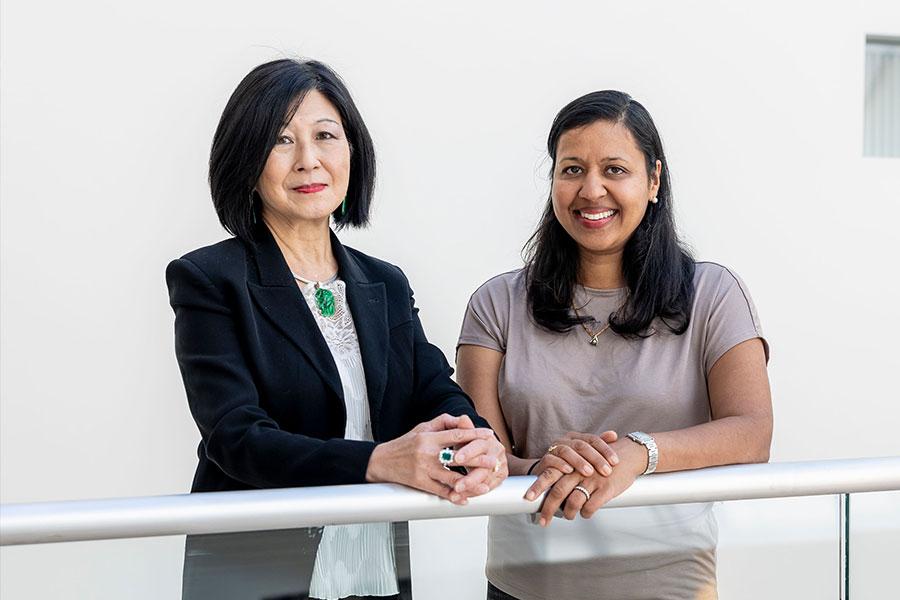
The center, funded by a $24 million donation from philanthropist Lisa Yang and led by McGovern Institute Associate Investigator Ila Fiete, will take a collaborative approach to computational neuroscience, integrating cutting-edge modeling techniques and data from MIT labs to explain brain function at every level, from the molecular to the behavioral.
“Our goal is that sophisticated, truly integrated computational models of the brain will make it possible to identify how ‘control knobs’ such as genes, proteins, chemicals, and environment drive thoughts and behavior, and to make inroads toward urgent unmet needs in understanding and treating brain disorders,” says Fiete, who is also a brain and cognitive sciences professor at MIT.
“Driven by technologies that generate massive amounts of data, we are entering a new era of translational neuroscience research,” says Yang, whose philanthropic investment in MIT research now exceeds $130 million. “I am confident that the multidisciplinary expertise convened by the ICoN center will revolutionize how we synthesize this data and ultimately understand the brain in health and disease.”
Connecting the data
It is impossible to separate the molecules in the brain from their effects on behavior — although those aspects of neuroscience have traditionally been studied independently, by researchers with vastly different expertise. The ICoN Center will eliminate the divides, bringing together neuroscientists and software engineers to deal with all types of data about the brain.
“The center’s highly collaborative structure, which is essential for unifying multiple levels of understanding, will enable us to recruit talented young scientists eager to revolutionize the field of computational neuroscience,” says Robert Desimone, director of the McGovern Institute. “It is our hope that the ICoN Center’s unique research environment will truly demonstrate a new academic research structure that catalyzes bold, creative research.”
To foster interdisciplinary collaboration, every postdoc and engineer at the center will work with multiple faculty mentors. In order to attract young scientists and engineers to the field of computational neuroscience, the center will also provide four graduate fellowships to MIT students each year in perpetuity. Interacting closely with three scientific cores, engineers and fellows will develop computational models and technologies for analyzing molecular data, neural circuits, and behavior, such as tools to identify patterns in neural recordings or automate the analysis of human behavior to aid psychiatric diagnoses. These technologies and models will be instrumental in synthesizing data into knowledge and understanding.
Center priorities
In its first five years, the ICoN Center will prioritize four areas of investigation: episodic memory and exploration, including functions like navigation and spatial memory; complex or stereotypical behavior, such as the perseverative behaviors associated with autism and obsessive-compulsive disorder; cognition and attention; and sleep. Models of complex behavior will be created in collaboration with clinicians and researchers at Children’s Hospital of Philadelphia.
The goal, Fiete says, is to model the neuronal interactions that underlie these functions so that researchers can predict what will happen when something changes — when certain neurons become more active or when a genetic mutation is introduced, for example. When paired with experimental data from MIT labs, the center’s models will help explain not just how these circuits work, but also how they are altered by genes, the environment, aging, and disease. These focus areas encompass circuits and behaviors often affected by psychiatric disorders and neurodegeneration, and models will give researchers new opportunities to explore their origins and potential treatment strategies.
“Lisa Yang is focused on helping the scientific community realize its goals in translational research,” says Nergis Mavalvala, dean of the School of Science and the Curtis and Kathleen Marble Professor of Astrophysics. “With her generous support, we can accelerate the pace of research by connecting the data to the delivery of tangible results.”