

Main navigation

  • About BCS
    • Mission
    • History
    • Building 46
      • Building 46 Room Reservations
    • Leadership
    • Employment
    • Contact
      • BCS Spot Awards
      • Building 46 Email and Slack
    • Directory
  • Faculty + Research
    • Faculty
    • Areas of Research
    • Postdoctoral Research
      • Postdoctoral Association and Committees
    • Core Facilities
    • InBrain
      • InBRAIN Collaboration Data Sharing Policy
  • Academics
    • Course 9: Brain and Cognitive Sciences
    • Course 6-9: Computation and Cognition
      • Course 6-9 MEng
    • Brain and Cognitive Sciences PhD
      • How to Apply
      • Program Details
      • Classes
      • Research
      • Student Life
      • For Current Students
    • Molecular and Cellular Neuroscience Program
      • How to Apply to MCN
      • MCN Faculty and Research Areas
      • MCN Curriculum
      • Model Systems
      • MCN Events
      • MCN FAQ
      • MCN Contacts
    • Research Scholars Program
    • Course Offerings
  • News + Events
    • News
    • Events
    • Recordings
    • Newsletter
  • Community + Culture
    • Community + Culture
    • Community Stories
    • Outreach
      • MIT Summer Research Program (MSRP)
      • Conferences, Outreach and Networking Opportunities
    • Post-Baccalaureate Research Scholars Program
    • Get Involved (MIT login required)
    • Resources (MIT login Required)
  • Give to BCS
    • Join the Champions of the Brain Fellows Society
    • Meet Our Donors

Utility Menu

  • Directory
  • Apply to BCS
  • Contact Us

Footer

  • Contact Us
  • Employment
  • Be a Test Subject
  • Login

Footer 2

  • McGovern
  • Picower

Utility Menu

  • Directory
  • Apply to BCS
  • Contact Us
Brain and Cognitive Sciences
Menu
MIT

Main navigation

  • About BCS
    • Mission
    • History
    • Building 46
    • Leadership
    • Employment
    • Contact
    • Directory
  • Faculty + Research
    • Faculty
    • Areas of Research
    • Postdoctoral Research
    • Core Facilities
    • InBrain
  • Academics
    • Course 9: Brain and Cognitive Sciences
    • Course 6-9: Computation and Cognition
    • Brain and Cognitive Sciences PhD
    • Molecular and Cellular Neuroscience Program
    • Research Scholars Program
    • Course Offerings
  • News + Events
    • News
    • Events
    • Recordings
    • Newsletter
  • Community + Culture
    • Community + Culture
    • Community Stories
    • Outreach
    • Post-Baccalaureate Research Scholars Program
    • Get Involved (MIT login required)
    • Resources (MIT login Required)
  • Give to BCS
    • Join the Champions of the Brain Fellows Society
    • Meet Our Donors

News

News Menu

  • News
  • Events
  • Newsletters

Breadcrumb

  1. Home
  2. News
  3. Josh Tenenbaum receives 2019 MacArthur Fellowship
September 25, 2019

Josh Tenenbaum receives 2019 MacArthur Fellowship

by
Anne Trafton | MIT News Office
Image
MIT-Joshua_Tenenbaum-01.jpg
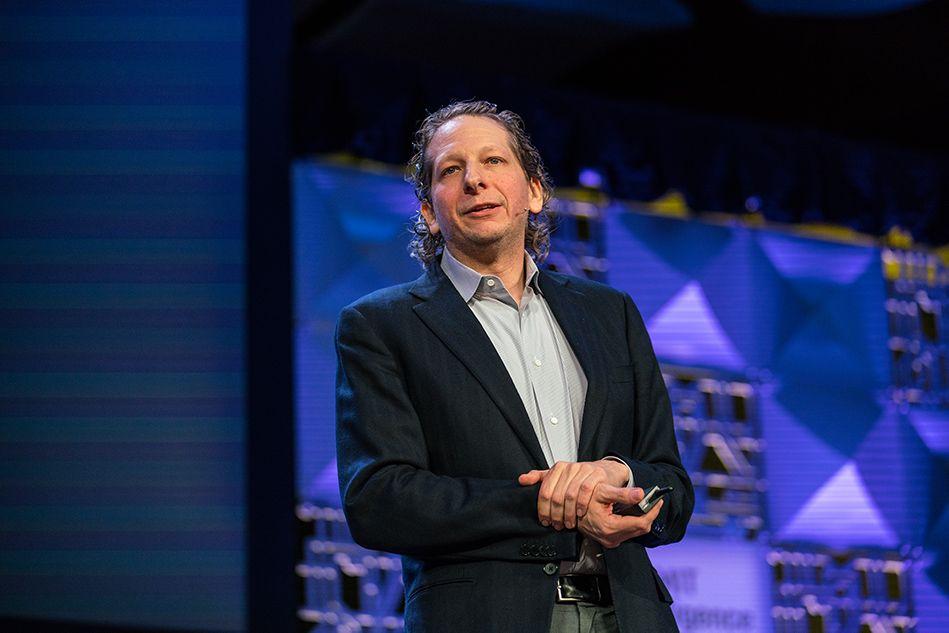
Josh Tenenbaum

Josh Tenenbaum, a professor in MIT’s Department of Brain and Cognitive Sciences who studies human cognition, has been named a recipient of a 2019 MacArthur Fellowship.

The fellowships, often referred to as “genius grants,” come with a five-year, $625,000 prize, which recipients are free to use as they see fit.

“It’s an amazing honor, and very unexpected. There are a very small number of cognitive scientists who have ever received it, so it’s an incredible honor to be in their company,” says Tenenbaum, a professor of computational cognitive science and a member of MIT’s Computer Science and Artificial Intelligence Laboratory (CSAIL) and the Center for Brains, Minds and Machines (CBMM).

Using computer modeling and behavioral experiments, Tenenbaum seeks to understand a key aspect of human intelligence: how people are able to rapidly learn new concepts and tasks based on very little information. This phenomenon is particularly noticeable in babies and young children, who can quickly learn meanings of new words, or how objects behave in the physical world, after minimal exposure to them.

“One thing we’re trying to understand is how are these basic ways of understanding the world built, in very young children? What are babies born with? How do children really learn and how can we describe those ideas in engineering terms?” Tenenbaum says.

Additionally, his lab explores how the mind performs cognitive processes such as making predictions about future events, inferring the mental states of other people, making judgments regarding cause and effect, and constructing theories about rules that govern physical interactions or social behavior.

Tenenbaum says he would like to use the grant money to fund some of the more creative student projects in his lab, which are harder to get funding for, as well as collaborations with MIT colleagues that he sees as key partners in studying various aspects of cognition. He also hopes to use some of the funding to support his department’s efforts to increase research participation of under-represented minority students.

Tenenbaum also studies machine learning and artificial intelligence, with the goal of bringing machine-learning algorithms closer to the capacities of human learning. This could lead to more powerful AI systems as well as more powerful theoretical paradigms for understanding human cognition.

Tenenbaum received his PhD from MIT in 1999, and after a brief postdoc with the MIT AI Lab he joined the Stanford University faculty as an assistant professor of psychology. He returned to MIT as a faculty member in 2002. Last year, he was named a scientific director of The Core, a part of MIT’s Quest for Intelligence that focuses on advancing the science and engineering of both human and machine intelligence.

Including Tenenbaum, 24 MIT faculty members and three staff members have won the MacArthur fellowship.

MIT faculty who have won the award over the last decade include health care economist Amy Finkelstein and media studies scholar Lisa Parks (2018); computer scientist Regina Barzilay (2017); economist Heidi Williams (2015); computer scientist Dina Kitabi and astrophysicist Sara Seager (2013); writer Junot Diaz (2012); physicist Nergis Mavalvala (2010); and economist Esther Duflo (2009).

Read the Original Article
Don't miss our next newsletter!
Sign Up

Footer menu

  • Contact Us
  • Employment
  • Be a Test Subject
  • Login

Footer 2

  • McGovern
  • Picower
Brain and Cognitive Sciences

MIT Department of Brain and Cognitive Sciences

Massachusetts Institute of Technology

77 Massachusetts Avenue, Room 46-2005

Cambridge, MA 02139-4307 | (617) 253-5748

For Emergencies | Accessibility

Massachusetts Institute of Technology