




‘How to Change a Memory’ mixes the deeply personal with the hard science
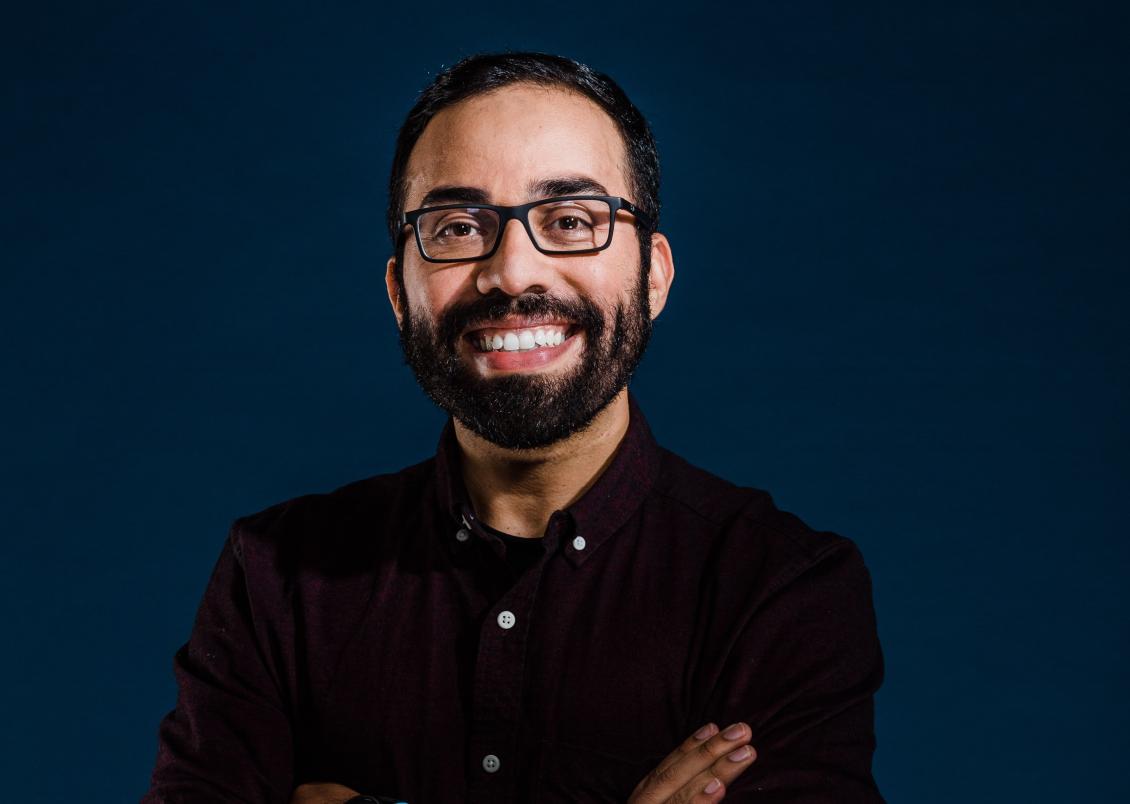
When Steve Ramirez was taken along to the grocery store by his parents as an elementary-schooler, he always wanted to peel off into the bookstore next door. He was attracted by the Pokemon cards and comic books, but eventually his interests started to change.
“Little by little, I started to get into whatever books happened to be on sale that week. Then I started gravitating towards the non-fiction sections, on everything from art to science to philosophy,” he recalled. “I knew then that someday, I would write a book. I had no idea when I would write it, or what it would be about.”
As he grew older, he developed another interest: in biology and neuroscience. He majored in neuroscience at Boston University and was then accepted to MIT's Department of Brain and Cognitive Sciences as a graduate student. He found a place in the lab of Nobel Prize Laureate Susumu Tonegawa and found a research partner in Xu Liu, a post-doctoral researcher in the Tonegawa Lab, with whom he quickly formed a deep bond.
“We agreed, literally from day one, that we were going to present our posters together, our talks together, publish papers as co-first authors, and really just try to make it in science by being lab partners and sharing that success with each other,” Ramirez says.
The approach worked. They had papers published in major journals on using optogenetic stimulation in mice to activate memory recall and on creating false memory in the hippocampus of mice by manipulating engram-bearing cells. In 2013, they delivered a Tedx Talk, titled “A mouse. A laser beam. A manipulated memory.” Liu was hired as a professor at Northwestern University and set off in January 2015 to start his own lab.
But one morning that February, Ramirez was shocked to awaken to a slew of emails and messages on his phone. Xu Liu had tragically passed away. Ramirez, who had already developed an unhealthy relationship with alcohol, descended into alcoholism before eventually turning to sobriety in 2021–a personal achievement that he’s held onto since.
Through it all, Ramirez’s desire to write a book never left. “How to Change a Memory: One Neuroscientist’s Quest to Alter the Past,” published in November 2025, mixes Ramirez’s own personal memories with the science behind memory and the possibilities of manipulating memory as a method of treatment for brain disorders.
“I wanted to write something that gave a 360-degree view of a person doing science, and in this case, of mine and Xu’s friendship within science. I felt that would give the audience a more well-rounded vantage point of how science unfolds,” Ramirez says. “It's done by people, and people have their good days and bad days, both inside and outside of the lab.”
Ramirez now has his own lab as an associate professor in the Center for Systems Neuroscience at Boston University, where he continues his work on the mechanisms of memory and memory manipulation.
Film and television are full of sci-fi examples of negative outcomes to memory manipulation, and the idea of changing memories doesn’t always sit well with people. Ramirez hopes that by sharing his own memories, alongside the science, “How to Change a Memory” can demystify what memory manipulation is and position it as a new antidote to alleviate the brain.
“We always see all of the ways in which it can be misused, which is helpful. I actually think Hollywood has done a great job at giving us a blueprint of what can go wrong,” Ramirez says. “But we never really see the good reasons for doing it. If we unpack memory manipulation within an ethically-bounded framework, that we want to do this to restore health to the individual, then there's a reason to do this work because our collective well-being is on the line. It will tell us an unprecedented amount about how the brain works and how we can get memory to work in our favor, while also taking into consideration: Would we want to change a memory of our past if it could promote our personal healing?”