

Main navigation

  • About BCS
    • Mission
    • History
    • Building 46
      • Building 46 Room Reservations
    • Leadership
    • Employment
    • Contact
      • BCS Spot Awards
      • Building 46 Email and Slack
    • Directory
  • Faculty + Research
    • Faculty
    • Areas of Research
    • Postdoctoral Research
      • Postdoctoral Association and Committees
    • Core Facilities
    • InBrain
      • InBRAIN Collaboration Data Sharing Policy
  • Academics
    • Course 9: Brain and Cognitive Sciences
    • Course 6-9: Computation and Cognition
      • Course 6-9 MEng
    • Brain and Cognitive Sciences PhD
      • How to Apply
      • Program Details
      • Classes
      • Research
      • Student Life
      • For Current Students
    • Molecular and Cellular Neuroscience Program
      • How to Apply to MCN
      • MCN Faculty and Research Areas
      • MCN Curriculum
      • Model Systems
      • MCN Events
      • MCN FAQ
      • MCN Contacts
    • Research Scholars Program
    • Course Offerings
  • News + Events
    • News
    • Events
    • Recordings
    • Newsletter
  • Community + Culture
    • Community + Culture
    • Community Stories
    • Outreach
      • MIT Summer Research Program (MSRP)
      • Conferences, Outreach and Networking Opportunities
    • Post-Baccalaureate Research Scholars Program
    • Get Involved (MIT login required)
    • Resources (MIT login Required)
  • Give to BCS
    • Join the Champions of the Brain Fellows Society
    • Meet Our Donors

Utility Menu

  • Directory
  • Apply to BCS
  • Contact Us

Footer

  • Contact Us
  • Employment
  • Be a Test Subject
  • Login

Footer 2

  • McGovern
  • Picower

Utility Menu

  • Directory
  • Apply to BCS
  • Contact Us
Brain and Cognitive Sciences
Menu
MIT

Main navigation

  • About BCS
    • Mission
    • History
    • Building 46
    • Leadership
    • Employment
    • Contact
    • Directory
  • Faculty + Research
    • Faculty
    • Areas of Research
    • Postdoctoral Research
    • Core Facilities
    • InBrain
  • Academics
    • Course 9: Brain and Cognitive Sciences
    • Course 6-9: Computation and Cognition
    • Brain and Cognitive Sciences PhD
    • Molecular and Cellular Neuroscience Program
    • Research Scholars Program
    • Course Offerings
  • News + Events
    • News
    • Events
    • Recordings
    • Newsletter
  • Community + Culture
    • Community + Culture
    • Community Stories
    • Outreach
    • Post-Baccalaureate Research Scholars Program
    • Get Involved (MIT login required)
    • Resources (MIT login Required)
  • Give to BCS
    • Join the Champions of the Brain Fellows Society
    • Meet Our Donors

News

News Menu

  • News
  • Events
  • Newsletters

Breadcrumb

  1. Home
  2. News
  3. In his own words: BCS graduate student Steve Ramirez studies memory and depression
May 6, 2016

In his own words: BCS graduate student Steve Ramirez studies memory and depression

by
Steve Ramirez, PhD
Image
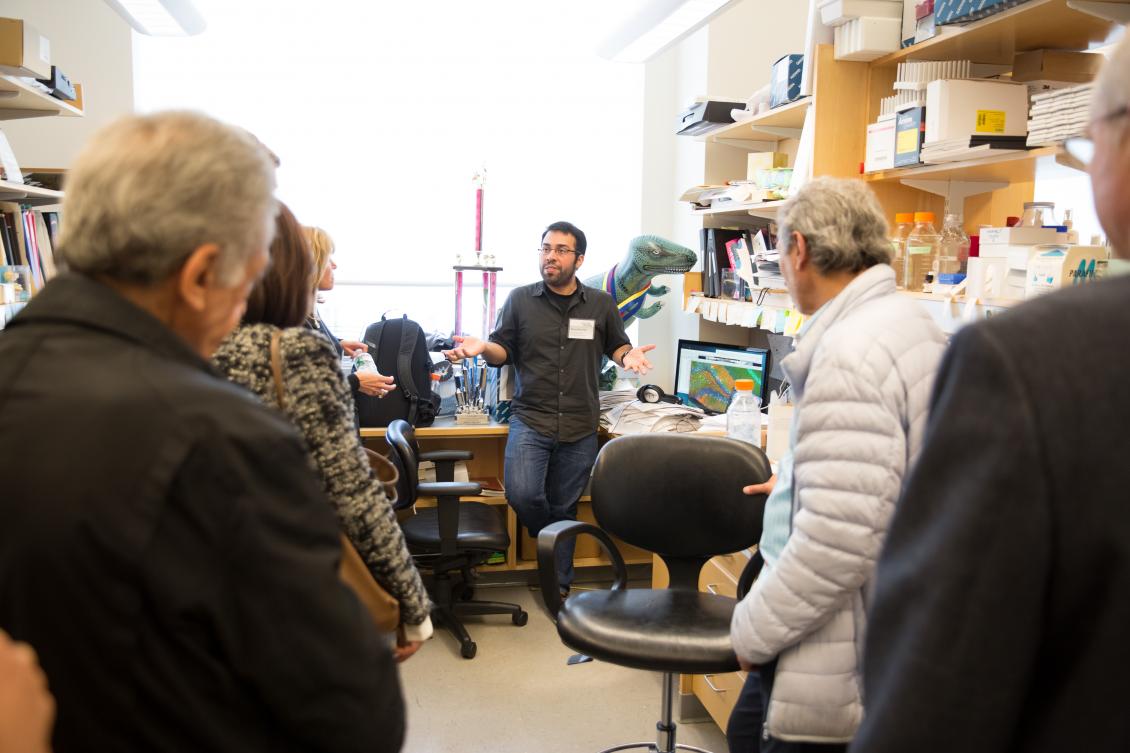
BCSNSS15 -50th Anniversary First PhDs Steve Ramirez.jpg

When I was going into college I had no idea what I wanted to do. I loved everything from biochemistry and music to Shakespeare, and I wasn’t sure if it was possible to combine these things. My sophomore year I was working in a lab and a piece of equipment broke, so I had to go to another lab to use their equipment. I show up there, and using the piece of equipment was the girl I had a crush on all sophomore year. I ask her how to use the equipment, we made small talk about our interests, and she pointed me in the direction of a professor who within a year’s time became the director of Boston University’s undergraduate neuroscience program. During that initial meeting with him, it clicked that by studying the most multidisciplinary organ you inadvertently get access to everything. Neuroscience study seemed like a natural fit for my broad interests.

At the end of college, I started thinking about applying for grad schools. For me, acceptance at MIT was the ultimate dream, but maybe a stretch.  I was nervous about applying, because I was a B student in high school, and a B and A student in college.  And then I did, and met everyone through interviews and there was a palpable synergy. I knew it was the place I could do all of the research in learning in memory that I wanted to because half the building was dedicated to it.

The research question interesting me at the moment is whether or not there is there a way to turn memory into an anti-depressant. Right now, depression and anxiety are usually treated with drugs that flood the brain with serotonin.  As helpful as these drugs can be, serotonin has many other effects on the brain outside of helping with these disorders and may not be the best way to treat them long term. Instead, why not go in and hijack the internal machinery of the brain that we know can produce feelings of warmth, and positivity, and turn it on?  I want to be able to activate positive memories when people are going through an anxiety attack or depressive state, bridging the fields of memory and psychiatric disorders to come up with an effective, less invasive treatment, and to understand more clearly what exactly memory is and how it works.

Research is the great equalizer. It doesn’t matter how brilliant you are, you have to work hard. You have to work hard to figure stuff out. On top of that, you have to learn to roll with the punches.  My dad came from El Salvador in the late 70s to get away from the civil war and to give me, my brother, sister and mom a fighting chance to have a great future.  My dad’s Mr. Optimism.  He’s unbreakable in every way and his attitude rubbed off on me.  He likes to say “It’s not a matter of if, it’s a matter of when and how.”  That’s definitely something that is both of my parent’s mottos – get your hands dirty, solve one thing at a time, and over time that amounts to a successful career or a successful life. 

Steve Ramirez was a trainee in the BCS Neurobiology of Learning and Memory (NLM) training program, funded by the National Institutes of Mental Health (NIMH). He is currently a member of the Society of Fellows at Harvard University. 

Don't miss our next newsletter!
Sign Up

Footer menu

  • Contact Us
  • Employment
  • Be a Test Subject
  • Login

Footer 2

  • McGovern
  • Picower
Brain and Cognitive Sciences

MIT Department of Brain and Cognitive Sciences

Massachusetts Institute of Technology

77 Massachusetts Avenue, Room 46-2005

Cambridge, MA 02139-4307 | (617) 253-5748

For Emergencies | Accessibility

Massachusetts Institute of Technology