

Main navigation

  • About BCS
    • Mission
    • History
    • Building 46
      • Building 46 Room Reservations
    • Leadership
    • Employment
    • Contact
      • BCS Spot Awards
      • Building 46 Email and Slack
    • Directory
  • Faculty + Research
    • Faculty
    • Areas of Research
    • Postdoctoral Research
      • Postdoctoral Association and Committees
    • Core Facilities
    • InBrain
      • InBRAIN Collaboration Data Sharing Policy
  • Academics
    • Course 9: Brain and Cognitive Sciences
    • Course 6-9: Computation and Cognition
      • Course 6-9 MEng
    • Brain and Cognitive Sciences PhD
      • How to Apply
      • Program Details
      • Classes
      • Research
      • Student Life
      • For Current Students
    • Molecular and Cellular Neuroscience Program
      • How to Apply to MCN
      • MCN Faculty and Research Areas
      • MCN Curriculum
      • Model Systems
      • MCN Events
      • MCN FAQ
      • MCN Contacts
    • Research Scholars Program
    • Course Offerings
  • News + Events
    • News
    • Events
    • Recordings
    • Newsletter
  • Community + Culture
    • Community + Culture
    • Community Stories
    • Outreach
      • MIT Summer Research Program (MSRP)
      • Conferences, Outreach and Networking Opportunities
    • Post-Baccalaureate Research Scholars Program
    • Get Involved (MIT login required)
    • Resources (MIT login Required)
  • Give to BCS
    • Join the Champions of the Brain Fellows Society
    • Meet Our Donors

Utility Menu

  • Directory
  • Apply to BCS
  • Contact Us

Footer

  • Contact Us
  • Employment
  • Be a Test Subject
  • Login

Footer 2

  • McGovern
  • Picower

Utility Menu

  • Directory
  • Apply to BCS
  • Contact Us
Brain and Cognitive Sciences
Menu
MIT

Main navigation

  • About BCS
    • Mission
    • History
    • Building 46
    • Leadership
    • Employment
    • Contact
    • Directory
  • Faculty + Research
    • Faculty
    • Areas of Research
    • Postdoctoral Research
    • Core Facilities
    • InBrain
  • Academics
    • Course 9: Brain and Cognitive Sciences
    • Course 6-9: Computation and Cognition
    • Brain and Cognitive Sciences PhD
    • Molecular and Cellular Neuroscience Program
    • Research Scholars Program
    • Course Offerings
  • News + Events
    • News
    • Events
    • Recordings
    • Newsletter
  • Community + Culture
    • Community + Culture
    • Community Stories
    • Outreach
    • Post-Baccalaureate Research Scholars Program
    • Get Involved (MIT login required)
    • Resources (MIT login Required)
  • Give to BCS
    • Join the Champions of the Brain Fellows Society
    • Meet Our Donors

News

News Menu

  • News
  • Events
  • Newsletters

Breadcrumb

  1. Home
  2. News
  3. Feng Zhang named a runner-up for TIME’s 2016 Person of the Year
December 7, 2016

Feng Zhang named a runner-up for TIME’s 2016 Person of the Year

by
School of Science
Image
MIT-Feng-Zhang-02.jpg
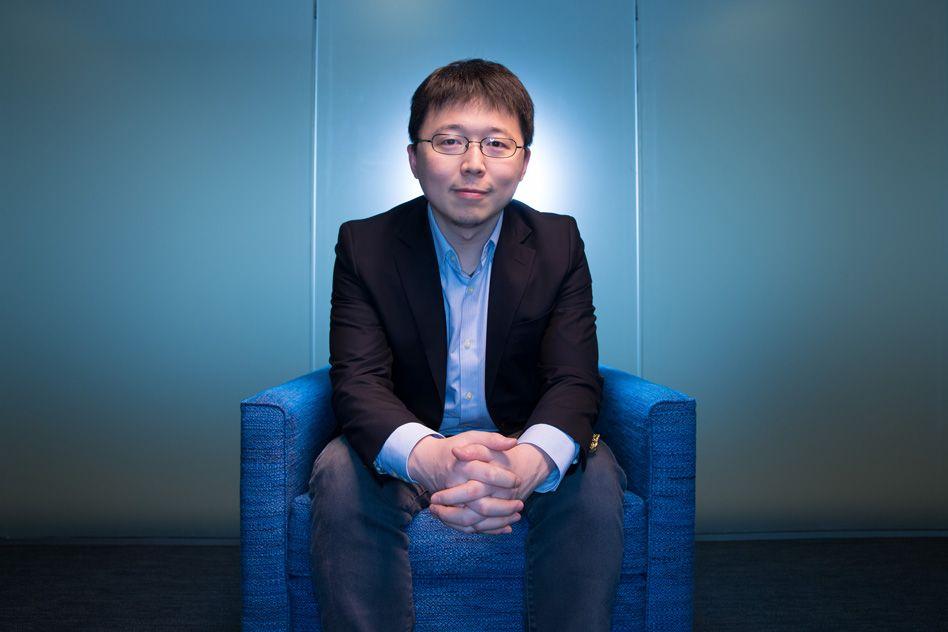
Feng Zhang of MIT and the Broad Institute was named a runner-up for TIME's 2016 Person of the Year for his work on CRISPR gene editing. Zhang shared the honor with Emmanuelle Charpentier at the Max Planck Institute in Berlin; Jennifer Doudna at the University of California at Berkeley; Carl June at the University of Pennsylvania; and Kathy Niakan at the Francis Crick Institute in London.

Feng Zhang, a core institute member of the Broad Institute of MIT and Harvard, an investigator at the McGovern Institute for Brain Research at MIT and the W. M. Keck Career Development Associate Professor in MIT’s Department of Brain and Cognitive Sciences (BCS) with a joint appointment in the Department of Biological Engineering, has been named a runner-up for TIME magazine’s 2016 Person of the Year for his role in the development of the CRISPR-Cas9 gene-editing system.

TIME’s Person of the Year, and its short-list of nominees, highlights those who have made the most impact on the events of the year. Zhang shares the recognition with Emmanuelle Charpentier at the Max Planck Institute in Berlin; Jennifer Doudna at the University of California at Berkeley; Carl June at the University of Pennsylvania; and Kathy Niakan at the Francis Crick Institute in London.

“Feng Zhang is a visionary scientist,” says BCS department head Jim DiCarlo. “His work on CRISPR-Cas9 has transformed biological science, enabling researchers to make targeted mutations in genomic DNA with far more ease and precision than any previously available gene-editing tool.”

In 2013, Zhang and his team were the first to report CRISPR-based gene editing in mammalian cells. Since then, that paper has become the most highly-cited paper in the CRISPR field, and the Zhang team has shared CRISPR-Cas9 components with more than 30,000 labs and trained many more in its use. Zhang and his team have continued to make new and better gene-editing tools, as well as use them to improve our understanding of the nervous system and develop new approaches to the treatment of neurological and psychiatric diseases.

Zhang joined MIT and the Broad Institute in 2011 after spending a year as a junior fellow at the Harvard Society of Fellows, where he worked with professors Paola Arlotta and George Church and first began to focus on gene editing. In his doctoral studies at Stanford University, Zhang worked with Karl Deisseroth and Edward Boyden, who is now also a professor at MIT, to develop optogenetics, an innovative technique that controls neuronal activity with light. In 2012, Zhang, Deisseroth, and Boyden shared the Perl-UNC Prize in Neuroscience in recognition of these efforts.

Zhang has also received the National Science Foundation’s Alan T. Waterman Award, the Jacob Heskel Gabbay Award in Biotechnology and Medicine (shared with Charpentier and Doudna), the Tsuneko and Reiji Okazaki Award, the Human Genome Organization (HUGO) Chen New Investigator Award, the Canada Gairdner International Award (shared with Charpentier and Doudna, as well as Rodolphe Barrangou from North Carolina State University and Philippe Horvath from DuPont Nutrition and Health), and the 2016 Tang Prize (shared with Charpentier and Doudna). 

Read the Original Article
Don't miss our next newsletter!
Sign Up

Footer menu

  • Contact Us
  • Employment
  • Be a Test Subject
  • Login

Footer 2

  • McGovern
  • Picower
Brain and Cognitive Sciences

MIT Department of Brain and Cognitive Sciences

Massachusetts Institute of Technology

77 Massachusetts Avenue, Room 46-2005

Cambridge, MA 02139-4307 | (617) 253-5748

For Emergencies | Accessibility

Massachusetts Institute of Technology