

Main navigation

  • About BCS
    • Mission
    • History
    • Building 46
      • Building 46 Room Reservations
    • Leadership
    • Employment
    • Contact
      • BCS Spot Awards
      • Building 46 Email and Slack
    • Directory
  • Faculty + Research
    • Faculty
    • Areas of Research
    • Postdoctoral Research
      • Postdoctoral Association and Committees
    • Core Facilities
    • InBrain
      • InBRAIN Collaboration Data Sharing Policy
  • Academics
    • Course 9: Brain and Cognitive Sciences
    • Course 6-9: Computation and Cognition
      • Course 6-9 MEng
    • Brain and Cognitive Sciences PhD
      • How to Apply
      • Program Details
      • Classes
      • Research
      • Student Life
      • For Current Students
    • Molecular and Cellular Neuroscience Program
      • How to Apply to MCN
      • MCN Faculty and Research Areas
      • MCN Curriculum
      • Model Systems
      • MCN Events
      • MCN FAQ
      • MCN Contacts
    • Research Scholars Program
    • Course Offerings
  • News + Events
    • News
    • Events
    • Recordings
    • Newsletter
  • Community + Culture
    • Community + Culture
    • Community Stories
    • Outreach
      • MIT Summer Research Program (MSRP)
      • Conferences, Outreach and Networking Opportunities
    • Post-Baccalaureate Research Scholars Program
    • Get Involved (MIT login required)
    • Resources (MIT login Required)
  • Give to BCS
    • Join the Champions of the Brain Fellows Society
    • Meet Our Donors

Utility Menu

  • Directory
  • Apply to BCS
  • Contact Us

Footer

  • Contact Us
  • Employment
  • Be a Test Subject
  • Login

Footer 2

  • McGovern
  • Picower

Utility Menu

  • Directory
  • Apply to BCS
  • Contact Us
Brain and Cognitive Sciences
Menu
MIT

Main navigation

  • About BCS
    • Mission
    • History
    • Building 46
    • Leadership
    • Employment
    • Contact
    • Directory
  • Faculty + Research
    • Faculty
    • Areas of Research
    • Postdoctoral Research
    • Core Facilities
    • InBrain
  • Academics
    • Course 9: Brain and Cognitive Sciences
    • Course 6-9: Computation and Cognition
    • Brain and Cognitive Sciences PhD
    • Molecular and Cellular Neuroscience Program
    • Research Scholars Program
    • Course Offerings
  • News + Events
    • News
    • Events
    • Recordings
    • Newsletter
  • Community + Culture
    • Community + Culture
    • Community Stories
    • Outreach
    • Post-Baccalaureate Research Scholars Program
    • Get Involved (MIT login required)
    • Resources (MIT login Required)
  • Give to BCS
    • Join the Champions of the Brain Fellows Society
    • Meet Our Donors

News

News Menu

  • News
  • Events
  • Newsletters

Breadcrumb

  1. Home
  2. News
  3. Empowering faculty partnerships across the globe
March 3, 2020

Empowering faculty partnerships across the globe

by
MISTI
Image
Department-of-Architecture-digital-mapping-Machu-Pichu-Gonzales-Nagakura-MIT-00_2.jpeg
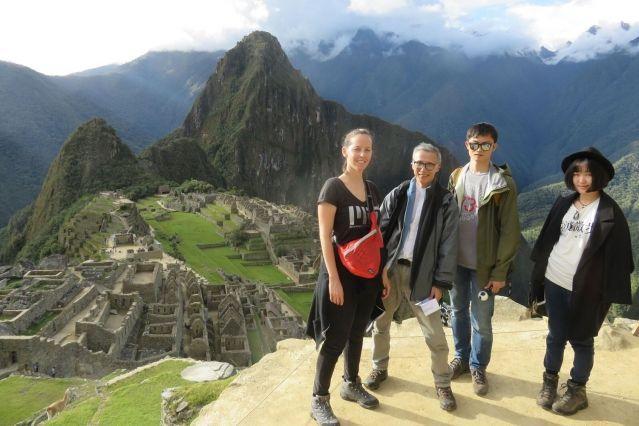
Left to right: The Machu Picchu Design Heritage project is a past Global Seed Fund recipient. Paloma Gonzalez, Takehiko Nagakura, Chang Liu, and Wenzhe Peng pose with a panoramic view of Machu Picchu in Peru. They are part of an MIT team that has worked to digitally document the site.

MIT faculty share their creative and technical talent on campus as well as across the globe, compounding the Institute’s impact through strong international partnerships. Thanks to the MIT Global Seed Funds (GSF) program, managed by the MIT International Science and Technology Initiatives (MISTI), more of these faculty members will be able to build on these relationships to develop ideas and create new projects.

“This MISTI fund was extremely helpful in consolidating our collaboration and has been the start of a long-term interaction between the two teams,” says 2017 GSF awardee Mehrdad Jazayeri, associate professor of brain and cognitive sciences and investigator at the McGovern Institute for Brain Research. “We have already submitted multiple abstracts to conferences together, mapped out several ongoing projects, and secured international funding thanks to the preliminary progress this seed fund enabled.”

This year, the 28 funds that comprise MISTI GSF received 232 MIT applications. Over $2.3 million was awarded to 107 projects from 23 departments across the entire Institute. This brings the amount awarded to $22 million over the 12-year life of the program. Besides supporting faculty, these funds also provide meaningful educational opportunities for students. The majority of GSF teams include students from MIT and international collaborators, bolstering both their research portfolios and global experience.

“This project has had important impact on my grad student’s education and development. She was able to apply techniques she has learned to a new and challenging system, mentor an international student, participate in a major international meeting, and visit CEA,” says Professor of Chemistry Elizabeth Nolan, a 2017 GSF awardee.

On top of these academic and research goals, students are actively broadening their cultural experience and scope. “The environment at CEA differs enormously from MIT because it is a national lab and because lab structure and graduate education in France is markedly different than at MIT,” Nolan continues. “At CEA, she had the opportunity to present research to distinguished international colleagues.”

These impactful partnerships unite faculty teams behind common goals to tackle worldwide challenges, helping to develop solutions that would not be possible without international collaboration. 2017 GSF winner Emilio Bizzi, professor emeritus of brain and cognitive sciences and emeritus investigator at the McGovern Institute, articulated the advantage of combining these individual skills within a high-level team. “The collaboration among researchers was valuable in sharing knowledge, experience, skills and techniques … as well as offering the probability of future development of systems to aid in rehabilitation of patients suffering TBI.”

The research opportunities that grow from these seed funds often lead to published papers and additional funding leveraged from early results. The next call for proposals will be in mid-May.

MISTI creates applied international learning opportunities for MIT students that increase their ability to understand and address real-world problems. MISTI collaborates with partners at MIT and beyond, serving as a vital nexus of international activity and bolstering the Institute’s research mission by promoting collaborations between MIT faculty members and their counterparts abroad.

Read the Original Article
Don't miss our next newsletter!
Sign Up

Footer menu

  • Contact Us
  • Employment
  • Be a Test Subject
  • Login

Footer 2

  • McGovern
  • Picower
Brain and Cognitive Sciences

MIT Department of Brain and Cognitive Sciences

Massachusetts Institute of Technology

77 Massachusetts Avenue, Room 46-2005

Cambridge, MA 02139-4307 | (617) 253-5748

For Emergencies | Accessibility

Massachusetts Institute of Technology