




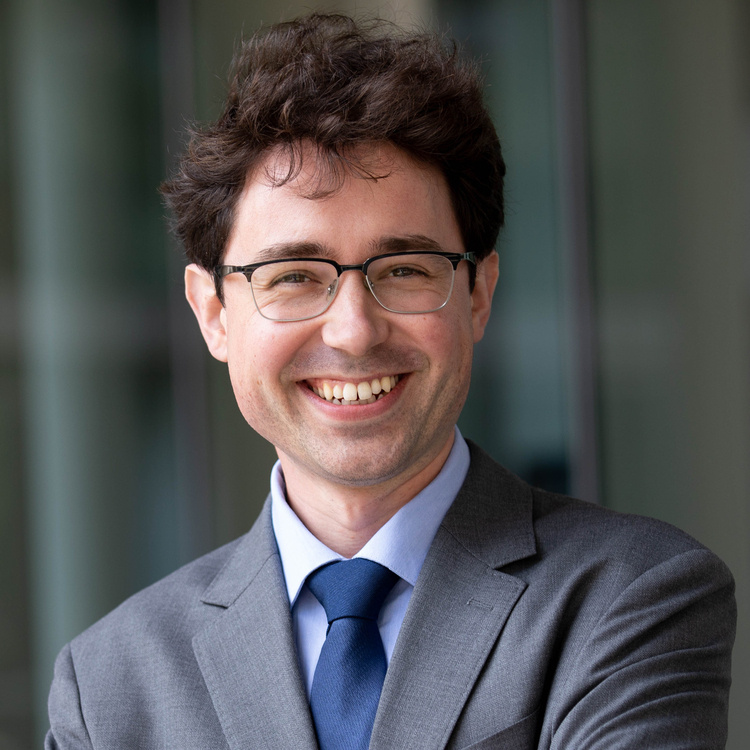
SCSB Colloquium Series with Dr. Tom Nowakowski: Building a Brain, One Cell at a Time: Reading the Developmental Instructions Behind Human Neural Diversity
Description
Date: Wednesday, October 7, 2026
Location: 46-3002 (Singleton Auditorium). Please note this talk will not be recorded
Time: 4:00pm-5:00pm ET, followed by reception
Speaker: Tom Nowakowski, Ph.D.
Affiliation: Associate Professor, UCSF
Host: Dr. Linlin Fan
Talk title: Building a Brain, One Cell at a Time: Reading the Developmental Instructions Behind Human Neural Diversity
Abstract: The human brain assembles itself over many months of prenatal development, generating thousands of distinct types of nerve cells that must be produced in the right numbers, at the right times, and wired into the right circuits—a process that, when disrupted, underlies many psychiatric and neurodevelopmental disorders. My laboratory studies the “instruction manual” behind this feat by asking a deceptively simple question: which cells give rise to which, and when? To answer it, we tag individual neural stem cells with unique genetic “barcodes”—inherited by all of a cell’s descendants—and then use single-cell sequencing to reconstruct family trees of brain cells at massive scale, tracing hundreds of thousands of cells back to their origins in both mouse and human tissue. This approach has let us map where the brain’s two great classes of neurons (the excitatory cells that drive activity and the inhibitory cells that restrain it) come from, revealing surprises about how the human cortex expands relative to other species and how certain neurons continue to be born far later in development than textbooks predict. By extending the same barcoding logic to a modified rabies virus that jumps between connected neurons, we can now also chart the earliest wiring diagrams of the developing human brain, including fleeting circuits that exist only transiently before birth. Together, this work aims to turn brain development from a black box into a legible, quantitative program—one whose logic may ultimately explain how small genetic changes tip development toward disease.