




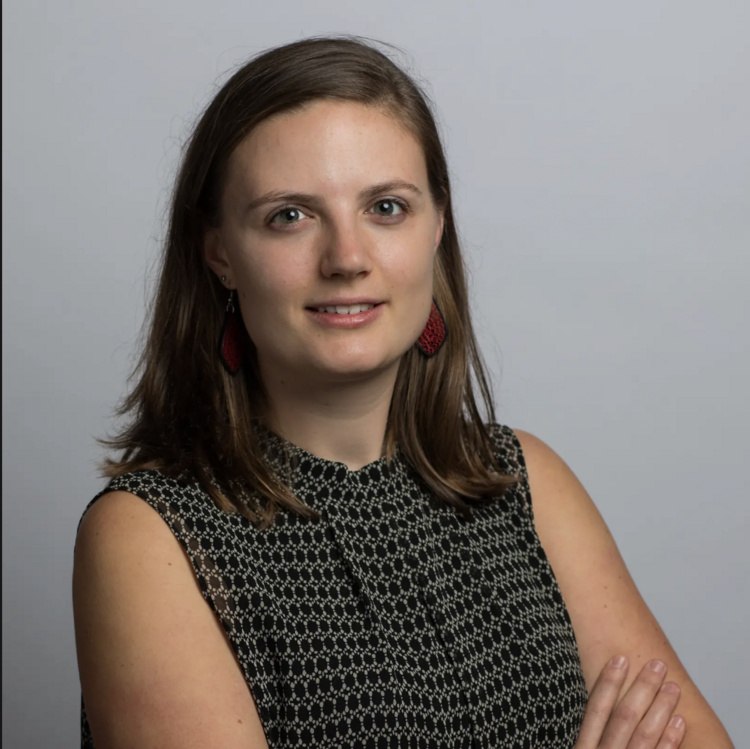
Colloquium on the Brain and Cognition with Enny van Beest
Description
Talk Title: Brainwide representation of navigation
Abstract: Tracking one’s position in the environment during navigation requires integrating multiple incoming signals into an internal spatial representation. Spatial representations have been identified in the hippocampal formation and in other cortical and thalamic regions. However, studies focusing on different regions used different methods to distinguish spatial representations from other correlated signals. It is thus not known whether these regions – and other regions – carry similar representations.
To answer these questions, we recorded neurons across the brain in mice navigating a virtual corridor that decoupled position from other incoming signals. Most neurons were modulated by running speed, likely reflecting arousal. Many were also modulated by sensory signals and reward. Spatial position was represented most precisely and uniformly in hippocampus, but was nonetheless encoded in a similar percentage of neurons across regions. Spatial position and other navigational signals are thus represented widely, albeit not uniformly, across the brain.
These findings raise the question of when and where such distributed representations originate, a question I am now pursuing. To do so, I developed tools to track the same neurons across week- to month-long recordings, which I will use alongside causal perturbations to trace the emergence of these representations across the brain.
Bio: Enny van Beest is a Senior Research Fellow at University College London, working with Matteo Carandini and Kenneth Harris. Her research uses brainwide chronic electrophysiology and virtual reality to study how distributed neural populations build and recruit spatial representations during navigation. She is the developer of (Deep)UnitMatch, widely-used open-source tools for tracking neurons across recordings spanning weeks to months. She completed her PhD with Pieter Roelfsema, Matthew Self, and Ingo Willuhn at the Netherlands Institute for Neuroscience, has received excellence awards for both her PhD and postdoctoral work, and is a recipient of a Marie Skłodowska-Curie Individual Fellowship.
Followed by a reception with food and drink in 3rd floor atrium